
Carlos Alcaraz runs over Alexander Bublik and advances on clay at the Monte Carlo Masters 1000

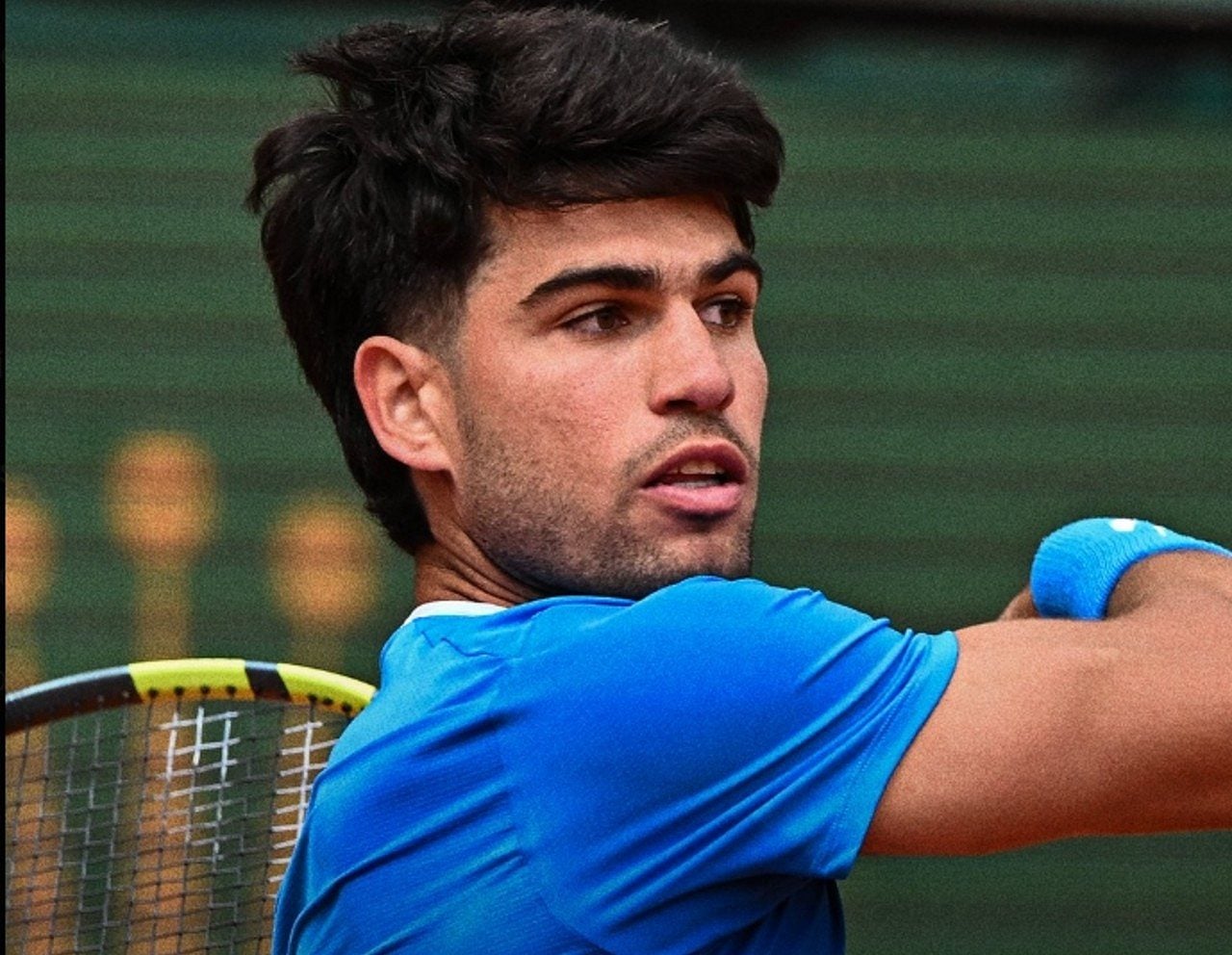
The Spanish tennis player Carlos Alcaraz demonstrated total technical superiority this Friday by defeating the Kazakh Alexander Bublik in the quarter-finals of the Masters 1000 of Monte Carlo. The match, held at the emblematic Court Rainier III, ended with partials of 6/3 and 6/0, highlighting the excellent physical and strategic preparation of the young talent on European clay. Alcaraz needed just over an hour to seal his classification and maintain the intense pace in search of another title in the 2026 season.
The solid victory reaffirms Alcaraz’s status as one of the main favorites for the trophy in Mônaco, especially given the way he controlled the opponent’s game variations. Bublik, known for his unpredictable style and powerful serves, was unable to find answers to the Spaniard’s deep returns and impeccable movement on the other side of the net. The result puts the tournament’s number one in a prominent position for the decisive rounds that take place over the weekend.
During the confrontation, the statistical numbers revealed the disparity between the athletes on clay, a surface where patience and building points are fundamental. Alcaraz recorded a 68% success rate of points won on the first serve, while Bublik suffered from an excess of unforced errors and double faults at critical moments of the match. The Spaniard’s controlled aggression allowed him to break his opponent’s serve on six of the ten chances created over the two sets.
- Alcaraz converted six break points crucial to victory.
- Bublik committed two double faults that compromised his performance.
- The Spaniard won 59 total points against just 38 from his opponent.
- The sequence of five consecutive games in the second set sealed the score.
Absolute dominance of Carlos Alcaraz at the back of the court
The emotional control of Alcaraz was the difference in nullifying the attempts to climb the network by Bublik, who tried to shorten the points to escape long exchanges. The Spaniard masterfully used his famous shorts, forcing the Kazakh to constantly move forward, which generated visible physical wear and tear in the second set. Mesmo Under the bright afternoon sun at Monte Carlo local time, the intensity of Alcaraz’s footwork remained unchanged from start to finish.
The strategy put together by the Spaniard’s technical team focused on attacking the second serve of Bublik, which had a low success rate of just 47% of points won in these conditions. By putting constant pressure on the returns, Alcaraz prevented his opponent from gaining the confidence to dictate the pace with his powerful forehand. Essa offensive posture resulted in 31 points receiving the serve, almost double what the Kazakh managed to produce in his return games throughout the match.
Tactical efficiency on clay Principado
The first set started evenly, with both players maintaining their initial serves, but the consistency of Alcaraz soon prevailed over the irregularity of Bublik. After achieving the first break in the fourth game, the Spaniard managed the advantage with authority, serving with precision and varying the weight of the ball to destabilize his opponent. Bublik tried to react with deep slices, but Alcaraz’s defensive ability neutralized any chance of recovery in the first stage score.
In the second set, the scenario of dominance became even more evident with the application of the so-called “tire” by the young man from El Palmar. Sem giving up no game, Alcaraz demonstrated a very high level of tennis, connecting spectacular passes when the opponent tried to pressure the volley. Bublik’s frustration was clear in his reactions between points, as each attempt to change the dynamics of the game was met with surgical precision by the Spaniard.
Physical preparation and head-to-head statistics
Carlos Alcaraz’s physical endurance has been one of the pillars of his Monte Carlo victorious campaign in this edition of the tournament. Ele covered considerable distances on the court to look for balls that seemed lost, transforming defenses into devastating attacks with his crossed backhand. Essa vitality forces opponents to always play at the limit of risk, which often results in accumulated errors, as seen in Bublik’s performance today.
The final game data shows that Alcaraz had a 57% first serve on the court, a solid number for the slow clay conditions. Além Furthermore, the ability to win 65% of the points when having to play with the second serve guaranteed the necessary security to risk more on returns. Alexander Bublik, on the other hand, managed to convert just one break point into two chances, which was insufficient to threaten his rival’s lead in Court Rainier III.
Impact on world ranking ranking
Alcaraz’s rise in the ATP rankings continues to be driven by resounding victories in category Masters 1000 tournaments. By reaching the semifinals, he secures important points that keep him in direct contention for the leadership of the men’s professional circuit. Sua adaptability to different types of clay courts reinforces the status of successor to the great experts in the history of tennis, attracting the attention of fans and experts around the world.
The current performance suggests that the Spaniard has reached his technical peak at the right time of the season, aiming for the next challenges in Madri and Paris. Especialistas point out that the confidence gained after a score of 6/0 in a quarter-final of Masters 1000 is a warning sign for the next opponents. Alcaraz’s winning mentality, combined with his near-impeccable technical execution, makes him the player to beat for the remainder of this week’s competition at Principado.
Next challenges and expectations for the semi-final
With his place guaranteed, Carlos Alcaraz is now awaiting the definition of his next opponent, who will emerge from the confrontation between the other four-finalists in the upper bracket. The local fans and tourists who fill the Monte Carlo complex are waiting for another gala performance from the young Spaniard in the decisive rounds. The event organizers confirmed that the semi-finals will follow the official Saturday schedule, maintaining the high level of competitiveness expected for this level of tournament.
The difficulty level is expected to increase significantly from now on, requiring Alcaraz to maintain the focus and precision demonstrated against Bublik. However, the Spaniard’s recent record in knockout matches suggests that he handles the pressure of being the favorite on big stages well. The balance between power and subtlety in your shots continues to be your greatest weapon in overcoming the best players today on the world tennis circuit.
Technical performance of Alexander Bublik
Despite the defeat, Alexander Bublik had moments of brilliance at the beginning of the first set, showing why he is one of the most dangerous athletes on the circuit. Seus three aces served to remind us that he has a powerful serve, capable of unbalancing any opponent when he is on an inspired day. Contudo, the lack of regularity on clay weighed against him, especially in the backcourt exchanges that favor Carlos Alcaraz’s style of play.
The Kazakh tennis player ends his participation in Monte Carlo with a positive campaign, having overcome difficult opponents in the previous rounds to reach the quarterfinals. Ele must now focus on the European clay season, seeking to adjust its defensive consistency for future competitions. Para Bublik, facing a player of Alcaraz’s caliber serves as a high-level test to identify areas of improvement in his game system for the remainder of the year.
Atmosphere no Court Rainier III
The atmosphere in the stands at Monte Carlo was one of total admiration for the Spaniard’s performance, with frequent applause after each successful play. The central court, located on the edge of Mar Mediterrâneo, offers a stunning setting that perfectly matches the plastic sneakers displayed by Alcaraz. The public present was able to witness the evolution of an athlete who seems to have no limits in his quest for records and historic achievements in sport.
The organizers highlighted the importance of having stars like Alcaraz in the final stages to guarantee the international prestige of Masters 1000 of Monte Carlo. The tournament, one of the most traditional on the calendar, continues to attract big names and provide sporting spectacles of high technical quality. International journalistic coverage follows every step of the Spanish jewel, predicting that this could be another successful chapter in her promising professional career.
Detailed statistical analysis of the match
When analyzing the data in detail, it is clear that Alcaraz’s efficiency in the decisive moments was what prevented any attempt at Bublik reaction. Nos short points of up to four exchanges, the Spaniard won the majority, showing sharp reflexes and quick decision-making. Já in the longer rallies, over nine exchanges, Alcaraz’s advantage was absolute, winning almost 90% of these points due to his superior physical preparation and strategic patience.
The 15 double faults accumulated by Bublik throughout the tournament show a vulnerability that Alcaraz knew how to exploit with precision this Friday. By returning aggressive serves to his opponent’s feet, the Spaniard forced an immediate error or gained total control of the point from the start. Essa Psychological pressure is a trademark of Alcaraz, which gives opponents no breathing space and maintains a suffocating pace of play throughout the duration of the confrontation on the court.





