
Carlos Alcaraz x Alexander Bublik seek a place in the semifinals of the Monte Carlo Masters 1000; where to watch the game live

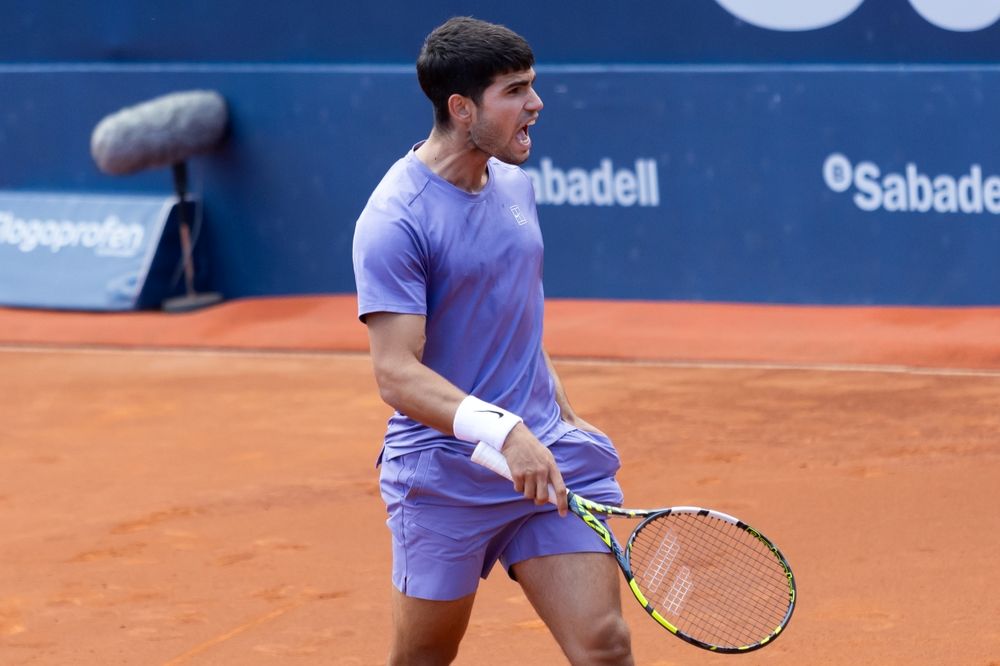
Carlos Alcaraz and Alexander Bublik enter the court this Friday at Court Rainier III to compete for a place in the semifinals of Masters 1000 of Monte Carlo. The confrontation, scheduled for 10:55 am local time in Mônaco, brings young Spanish talent face to face with the unpredictability of the Kazakh tennis player in one of the most prestigious tournaments in the world on clay.
The winner of this duel will advance to the next stage of the competition, consolidating their position in the ATP rankings and increasing their chances of winning the first major title of the European clay season. Public expectations are high for this game, which marks a meeting of different styles between the physical power of Alcaraz and the varied strikes of Bublik.
- The game takes place at Court Rainier III, the center court of the Monte Carlo complex.
- The transmission to Brasil will be done via closed sports channels and via specialized streaming.
- Carlos Alcaraz arrives as the favorite, but Bublik is known for surprising opponents in the top 10.
- The match time is subject to change depending on the completion of previous matches on the same court.
Broadcast times and details on Masters 1000 of Monte Carlo
Fans who wish to watch the game live must tune in to the channels holding the broadcasting rights from 10:55 am, following the time of Mônaco. The organizers of the event confirmed that this will be the second big game of the day on the main court, attracting the attention of sports analysts from around the world who evaluate the athletes’ performance on clay.
On Brasil, Masters 1000’s full coverage of Monte Carlo allows tennis enthusiasts to watch every point across digital platforms and pay television. It is important to check the local schedule, as delays in previous games may push the start of the match between Alcaraz and Bublik to the afternoon in the European time zone.
Carlos Alcaraz’s performance in the European clay season
Carlos Alcaraz demonstrates quick adaptation to the slow conditions of Monte Carlo, using his aggressive forehand to dominate points from the back of the court. The Spanish tennis player seeks to regain the lead in the world rankings and sees the Monegasque tournament as the ideal opportunity to add crucial points before Roland Garros.
Alcaraz’s physical consistency has been his biggest asset in recent months, allowing him to win long, grueling exchanges in the hot sun. Especialistas point out that his ability to cover the net and precise drop shots will be fundamental tools to neutralize the powerful serve of his Kazakh opponent in this decisive round.
Alexander Bublik’s irreverent style challenges favorites
Alexander Bublik reaches the quarter-finals after a solid winning streak, proving that his game can be effective even on surfaces that are not as conducive to his serve-and-volley style. The Kazakh is known for using underhand serves and rhythm variations that often take away the concentration of more methodical players like Alcaraz.
To beat the Spaniard, Bublik will need to maintain a low percentage of unforced errors and take advantage of every chance of service break that arises during the sets. The tennis player’s strategy involves keeping the points short and preventing Alcaraz from dictating the pace of the plays with his quick and defensive lateral movement.
Technical preparation and conditions of Court Rainier III in Mônaco
The central court of Monte Carlo, Court Rainier III, presents specific conditions that directly influence the ball’s trajectory and bounce after contact with the ground. Moisture coming from the sea Mediterrâneo can make the clay heavier at certain times of the day, requiring players to adjust their racquet stringing tension.
Both the technical teams of Alcaraz and Bublik carried out intensive training on the secondary courts to simulate the pressure environment they will encounter in the quarterfinals. Maintaining the clay between sets is another factor that athletes monitor, as the surface may show irregularities after hours of continuous use under the impact of sudden movements.
History of clashes and expectations for the tournament semi-final
Although Alcaraz and Bublik have different trajectories on the professional circuit, today’s meeting is seen as a test of maturity for both in the Masters 1000 of Monte Carlo. Recent history favors the Spaniard in large tournaments, but Bublik’s record on slow surfaces has improved significantly in recent seasons.
The local fans tend to support players who demonstrate creativity on the court, which can create a divided atmosphere during the match. Quem emerging victorious will face a theoretically difficult path in the semi-final, coming across other big names who still feature in the main draw of the competition organized by the ATP.
Importance of ranking and awards on Masters 1000 of Monte Carlo
In addition to the sporting prestige, advancing to the semifinals guarantees a substantial financial prize and a score that can define the seedings for the next tournaments in the Masters series. The accumulated score in Mônaco is essential for players who aim to guarantee a direct place in the Finals at the end of the regular tennis season.
The Masters 1000 of Monte Carlo is traditionally the starting point for defining the favorites for the French Grand Slam title. Portanto, Alcaraz’s performance today will serve as a thermometer for his physical and technical condition, while for Bublik it represents the chance to consolidate his best campaign in tournaments of this level on clay.
Game strategies and the impact of weather on athletes’ performance
The weather forecast for the time of the match indicates clear skies with moderate winds, which could interfere with the accuracy of Alexander Bublik’s highest serves. Alcaraz tends to deal well with the wind, adjusting his ball strike to ensure that it lands within the side lines without losing the depth necessary to corner the opponent.
Hydration and energy management will be vital if the match extends into a long third set, something common in balanced duels on clay. Both players’ physiotherapists closely monitor any signs of wear and tear, ensuring that the athletes enter the court in their physical fitness for this high-level clash.





