Global warming puts emperor penguins and elephant seals at risk of extinction in Antarctica
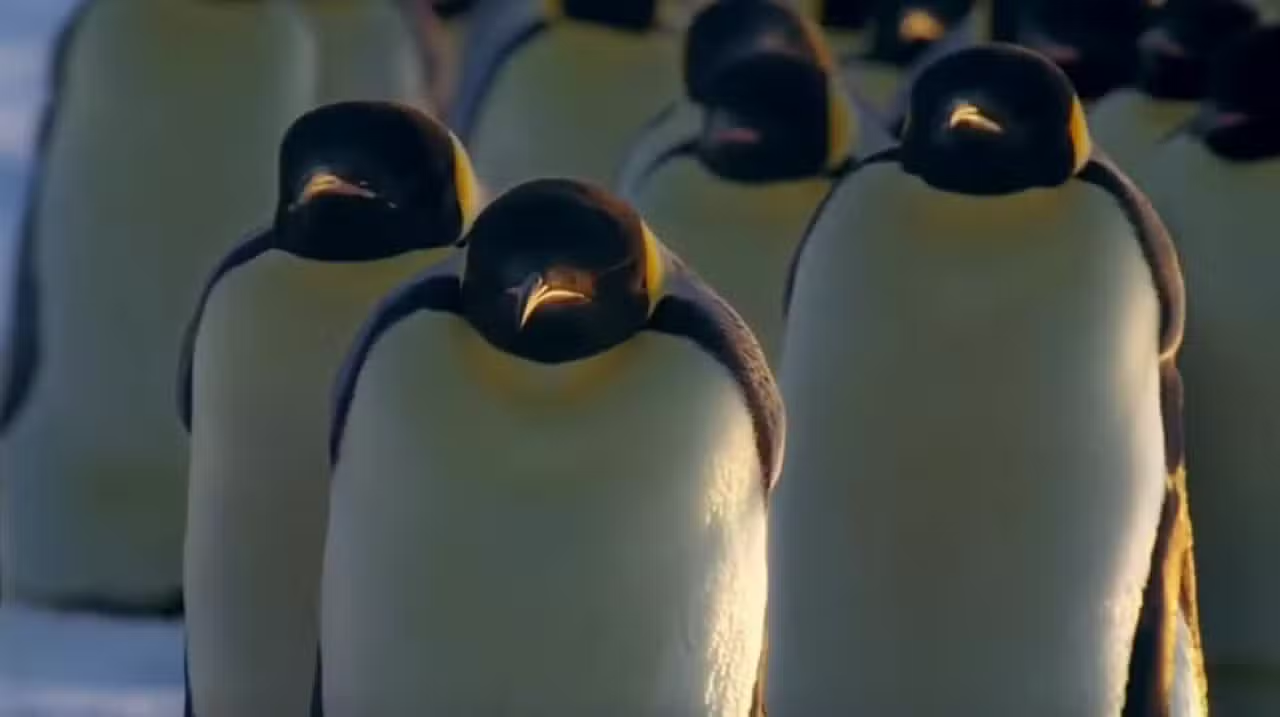
União Internacional to Conservação of Natureza (IUCN) officially included the emperor penguin and southern elephant seal in the category of endangered species in its most recent update of Lista Vermelha. The measure, based on extensive field surveys and satellite monitoring, reflects the direct damage caused by warming of ocean waters and the drastic reduction in sea ice coverage on the Antarctic continent. Pesquisadores point out that the change in conservation status results from a detailed analysis of population trends in recent decades, which show a continuous loss of habitats essential for the reproduction, rest and feeding of polar fauna. The current scenario requires quick responses from global environmental authorities, as climate projections indicate that sea surface temperatures will continue to rise.
These animals are strictly dependent on the extreme environmental conditions of the region, which makes them highly vulnerable to any thermal variation. The integrity of ice shelves is a non-negotiable biological requirement for maintaining the life cycle of both species.
Continuous monitoring of the region revealed critical factors that motivated the environmental reclassification by international experts:
- The early melting of ice shelves compromises the incubation of eggs and the early development of chicks.
- The migration of krill to deeper waters drastically reduces the food supply in traditional hunting areas.
- The loss of adult individuals of reproductive age accelerates the demographic decline of mapped colonies.
Accelerated melting of sea ice harms reproductive cycle
The emperor penguin, which was previously in the near-threatened category, now faces a high risk due to the instability of its breeding habitat. Colonies of this species depend on sea ice fixed to the coast, which acts as a safe platform during the winter months for laying eggs and raising young. Quando ocean temperatures rise and the ice breaks up before the predicted time, the chicks, which have not yet developed the waterproof plumage and the layer of insulating fat, end up falling into the freezing water, which results in high mortality rates due to hypothermia or drowning.
Records obtained from high-resolution satellite images documented a loss of more than 20,000 adult penguins between 2009 and 2018, a number that represents approximately 10% of the global adult population of the species. Furthermore, the data indicates that almost half of the known colonies spread across the Antarctic continent recorded severe reproductive failures as of 2016. Esse specific year marked an inflection point in the extent of Antarctic sea ice, which began to present successive historical lows, hindering the natural demographic recovery of seabirds.
Krill shortage affects survival of mammals in the Southern Ocean
The southern elephant seal has also undergone a drastic change in its conservation status, moving from the category of least concern directly to that of a threatened species. Demographic assessments point to a reduction of more than 50% in the number of individuals between 1999 and the most recent surveys consolidated in Lista Vermelha.
The main cause of this population decline is closely linked to the availability of food, specifically Antarctic krill. As surface water temperatures increase, these small crustaceans tend to migrate to deeper, colder oceanic areas, changing the entire foraging dynamics of local predators.
To compensate for the lack of prey in the upper layers of the ocean, elephant seals are forced to undertake much deeper and longer dives. Essa Changing behavior requires considerably greater energy expenditure, which compromises the accumulation of fat reserves essential for survival.
Adult females and nursing puppies are the groups most affected by this change in diet. Sem Due to adequate nutrition, females have difficulty maintaining lactation, resulting in malnourished cubs with less chance of resisting the harsh polar winter.
Thermal changes unbalance the region’s food chain
The decrease in the biomass of accessible krill does not affect elephant seals in isolation, but generates a cascade effect throughout the food web of the Antarctic ecosystem. Diversas species of fish, birds and other marine mammals use crustaceans as the primary base of their daily diet.


Emperor penguins themselves, in addition to suffering from the loss of ice, also face food shortages, as they consume both krill and the fish species that feed on them. The overlapping of these environmental pressures creates a scenario of chronic stress for local fauna.
Oceanographic monitoring programs seek to quantify the exact volume of prey reduction in traditional hunting areas. Scientists use this information to map new distribution routes for marine species and understand the reconfiguration of polar biodiversity.
Global data update guides new conservation policies
IUCN Lista Vermelha serves as the main global inventory on the conservation status of biological species, using rigorous and standardized assessment criteria. The inclusion of the emperor penguin and southern elephant seal is based on accurate metrics of population decline, home range shrinkage, and climate modeling projections.
Experts from the organization emphasize that the new classification should serve as a warning for the formulation of international public policies. The creation of new marine protected areas in Oceano Austral and the strict regulation of industrial fishing in the region are highlighted as essential measures to mitigate pressure on food stocks.
Monitoring of seals in the northern hemisphere reveals pattern of risk
While the focus of recent updates is on Antarctic fauna, researchers note that environmental changes are affecting polar ecosystems globally, with severe impacts also recorded in Ártico. Espécies such as hooded seals, ringed seals and harbor seals, which inhabit Atlântico Norte and the Oceano Ártico, present population decline trends very similar to those observed in the Southern Hemisphere. Esses Northern marine mammals also depend on ice shelves for the birth and nursing of their young, in addition to using the frozen edges as rest areas between hunting periods. Comparing data obtained at the two poles of Terra allows scientists to draw a comprehensive overview of the biological mechanisms that make fauna adapted to extreme cold so susceptible to climate variations. The simultaneous retreat of sea ice in Ártico and Antártica confirms that global warming imposes a physical and nutritional barrier that transcends geographic boundaries, requiring an integrated conservation approach on a planetary scale.
Climate projections indicate the need for species adaptation
Transformations in the polar environment occur at a speed that exceeds the natural evolutionary adaptation capacity of marine species. Sem time to modify their reproductive or physiological patterns, animals are restricted to increasingly smaller areas that still maintain ideal conditions for survival.
Mathematical modeling indicates that, if global greenhouse gas emissions remain at current levels, the emperor penguin population could be reduced by half by the 2080s. Esse scenario projects the complete disappearance of several local colonies.
International actions seek to mitigate damage to polar ecosystems
The formal recognition of the threatened status of these species provides the necessary technical basis for international treaties, such as Sistema, Tratado, Antártica, to implement more severe restrictions on commercial exploitation of the region. Preservation of remaining habitats becomes the main viable strategy to ensure the long-term stability of wild populations.
Veja Tambem em Latest News (EN)

Atlético-MG confirms agreement with defender Léo Duarte after period of prominence in Turkish football

Tiger shark bites 19-year-old girl and rips off her leg in Boa Viagem, Recife

2026 World Cup will have 32 athletes who play in Brazilian football

OnePlus develops portable video game with Android system focused on competitive shooters

New BYD Seal 6 DM-i Touring hybrid station wagon debuts in Europe with ample interior space and super-efficient engine

Costco reaches historic volume in gasoline sales in the United States with prices below market

June PlayStation Plus Catalog Brings Grounded and Warhammer 40,000 Darktide to Subscribers

Disney+ brings Avatar Fire and Ash finale to The Bear and new Pixar animation in June

Netflix updates June catalog with new season of Avatar and classic cinema sagas

Geely Xingyuan electric compact gains 47 kWh battery and autonomous driving system in China

Episode 1156 of One Piece marks arrival at Elbaf with decisive actions by Shanks and Blackbeard