
João Fonseca exceeds 3 million dollars in prizes after great campaign in Monte Carlo

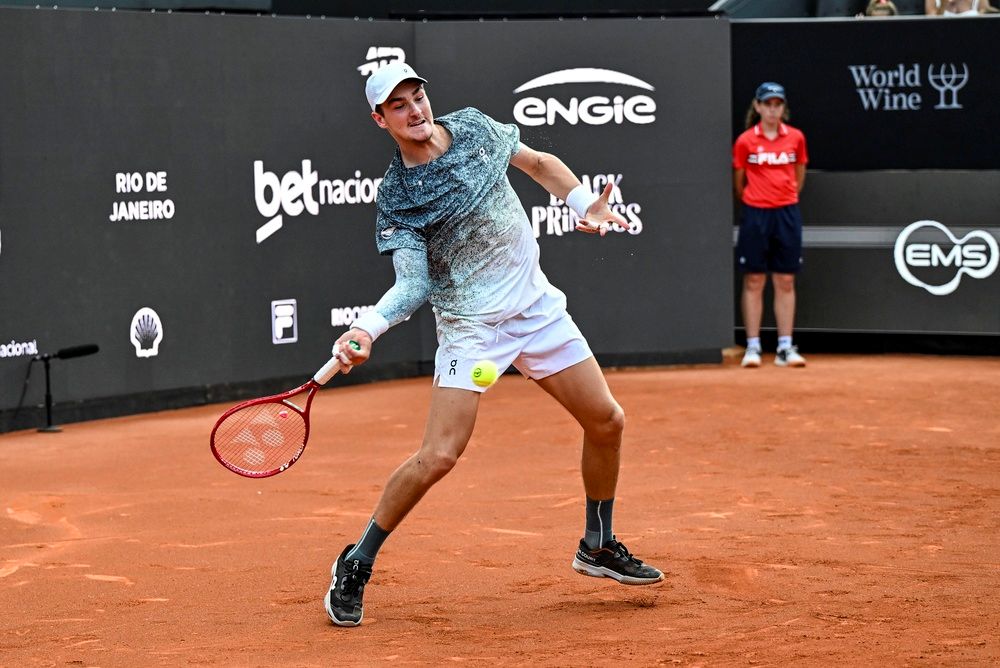
The young tennis player João Fonseca ended his participation in the Masters 1000 of Monte Carlo this Friday, April 10, 2026, reaching a historic financial level in his brief professional career. Após reaching the quarter-finals of the prestigious clay tournament in Mônaco, the 19-year-old Brazilian guaranteed a prize of 158.7 thousand euros, a value that corresponds to approximately 940 thousand reais at the current price. Este result consolidates the meteoric rise of the athlete from Rio, who has now surpassed the accumulated barrier of 3 million dollars in official prizes from Associação of Tenistas Profissionais.
The athlete’s journey in the principality was marked by resounding victories against established names on the world circuit, raising the level of Brazilian tennis on the European scene. Mesmo with the elimination in the quarter-finals, the technical performance and mental solidity demonstrated on the court reaffirm Fonseca’s potential as one of the protagonists of the new generation. The accumulated amount only reflects the achievements in official entity approvals, without taking into account sponsorship agreements or private exhibitions held recently.
- The amount of official prizes exceeded the mark of 15.1 million reais in direct conversion.
- The tennis player’s professional career is only in its second full season on the elite circuit.
- The financial increase in Mônaco represents one of the largest individual checks of the athlete’s career to date.
- Significant results on slow surfaces demonstrate the player’s quick adaptation to international clay.
Financial rise and brands in professional tennis
The evolution of João Fonseca’s earnings impresses sports experts due to the speed with which the values were accumulated in such a short career span. Antes before disembarking for the dispute in Monte Carlo, the Brazilian had around 2.96 million dollars in prizes, approaching the historic mark that was confirmed with the victory in the previous round. Este financial growth accompanies the jump in the world rankings, where the tennis player seeks to consolidate himself among the best players on the planet in this 2026 season.
The values reported by the men’s tennis regulatory body only consider on-court performance in competitive tournaments that distribute points for the ranking. Last month, the Rio de Janeiro native also earned around 300 thousand dollars by winning an exhibition tournament in Estados Unidos, a value that, although significant, is not included in the official career prize count. The young man’s career management has been focused on major events, prioritizing competitions at level Masters 1000 and Grand Slams, which offer the highest remuneration and global visibility.
Prize structure in the principality of Mônaco
The Masters 1000 of Monte Carlo is recognized as one of the most profitable events on the European calendar, distributing a total of 6.3 million euros in prizes in this edition. Houve a positive adjustment of almost 3% in the amounts paid to athletes compared to the previous year, reflecting the commercial growth of the tournament. The winner of the singles bracket in 2026 will receive a share of more than 974 thousand euros, the equivalent of almost 6 million reais, in addition to the thousand fundamental points for the world classification.
The tournament’s appreciation annually attracts the biggest names in the sport, which increases the level of difficulty for athletes looking to advance in the main draws. Financial distribution is staggered to ensure that even tennis players eliminated in the early rounds have support to cover the costs of their coaching teams and travel. In the case of doubles, the values are also attractive, with the champions sharing an amount that exceeds 290 thousand euros, reinforcing the prestige of the competition in all categories played on clay.
- Singles champion: 974,370 euros.
- Singles finalist: 532,120 euros.
- Semifinalists: 290,960 euros each.
- Quarter finals: 158,700 euros.
- Round of 16: 84,890 euros.
- Second round: 45,520 euros.
- First round: 25,220 euros.
Technical performance and appreciation of the sports market
The consistency presented by João Fonseca on clay courts has been the difference in achieving these financial and sporting results in 2026. When facing experienced opponents and former champions of major tournaments, the Brazilian demonstrates a tactical maturity that is rarely seen in 19-year-old players. Essa Security in decisive moments allows him to advance in difficult keys, guaranteeing not only the financial return, but also the confidence necessary for the next stages of the circuit.
The advertising market is also closely following this growth, as success on the court attracts investors and global brands interested in the athlete’s profile. Exceeding the 3 million dollar mark places the tennis player in a select group of Brazilian athletes who have achieved full financial viability in the short term. Especialistas indicate that, if the winning pace continues, Fonseca could double this sporting heritage in the next two years, consolidating itself as an economic powerhouse in national sport.
Detailed prizes for the doubles brackets
The doubles category at Monte Carlo also presented robust numbers for the current season, with prizes that encourage the participation of big names in the sport. The winners of the doubles final receive around 298 thousand euros per team, which represents essential support for the development of stable partnerships on the circuit. Mesmo for those who end their participation in the first round, the amount of 14,770 euros helps mitigate the high operating costs of a high-level international season.
The organization of the event seeks to balance visibility between the singles and doubles brackets to maintain the interest of the public and sponsors throughout the week of competition. Para doubles quadruple finalists, the prize is approximately 49 thousand euros, an amount that grows significantly as the pair advances to the final stages. Essa solid financial structure is one of the reasons why the Mônaco tournament has remained a favorite of professional players for decades, being a mainstay of the European spring season.
Next steps and maintenance of performance on clay
After the end of the campaign at Mônaco, the Brazilian tennis player’s focus turns to the next major competitions on the clay calendar. The main objective is to maintain regularity to reach ideal conditions for competing in the following tournaments, where scores and prizes remain at high levels. The athlete’s technical team works on physical recovery and fine-tuning his shots to face the sequence of intense games that the professional circuit requires at this time of year.
Strategic planning involves carefully choosing which tournaments to play in to avoid excessive wear and tear and injuries that could compromise the season. With the accumulated capital, the João Fonseca support structure can be expanded, with dedicated full-time professionals for physiotherapy, nutrition and performance analysis. Essa Off-court stability is considered fundamental for technical talent to translate into consistent results and significant titles on the global stage.
Impact on investments and support infrastructure
The financial success of an elite athlete like João Fonseca allows for constant reinversion in your own career, which generates a positive cycle of results. By surpassing million-dollar marks, the player is able to afford a more robust team, which generally translates into greater longevity and less risk of sudden drops in performance. Tennis is an individual sport with high costs, and reaching such a level of prize money at the age of 19 is an indication that long-term planning is being executed with precision.
In addition to direct gains, increasing the ranking allows the athlete to enter directly into the main draws of important tournaments, saving energy that would be spent in qualifying phases. Essa Competitive advantage is crucial to face the marathon runners on the circuit in better physical and mental conditions. The scenario for the remainder of 2026 is optimistic, with the Brazilian appearing as one of the biggest promises of return on investment for his sponsors and for national sport as a whole.
Historical comparison of values in elite tournaments
The comparison between the 2025 and 2026 editions of Masters of Monte Carlo reveals a trend of continued appreciation of prizes in professional tennis. The 2025 champion received around 946 thousand euros, while the current winner takes home almost 30 thousand euros more for the same sporting feat. Esse adjustment of approximately 2.93% follows the increase in television broadcasting revenues and the total return of the public to large stadiums after periods of global restrictions.
These numbers place tennis at a prominent level among the individual sports that pay the most for their high-level players. Transparency in the disclosure of these values by the ATP helps to professionalize the market and establish clear goals for young players seeking professionalism. Para or Brasil, having a representative reaching these figures and sporting marks is vital to foster the interest of new practitioners and guarantee the future of sport in the country.





