
João Fonseca suffers setback to Alexander Zverev and ends historic campaign on clay in Monte Carlo

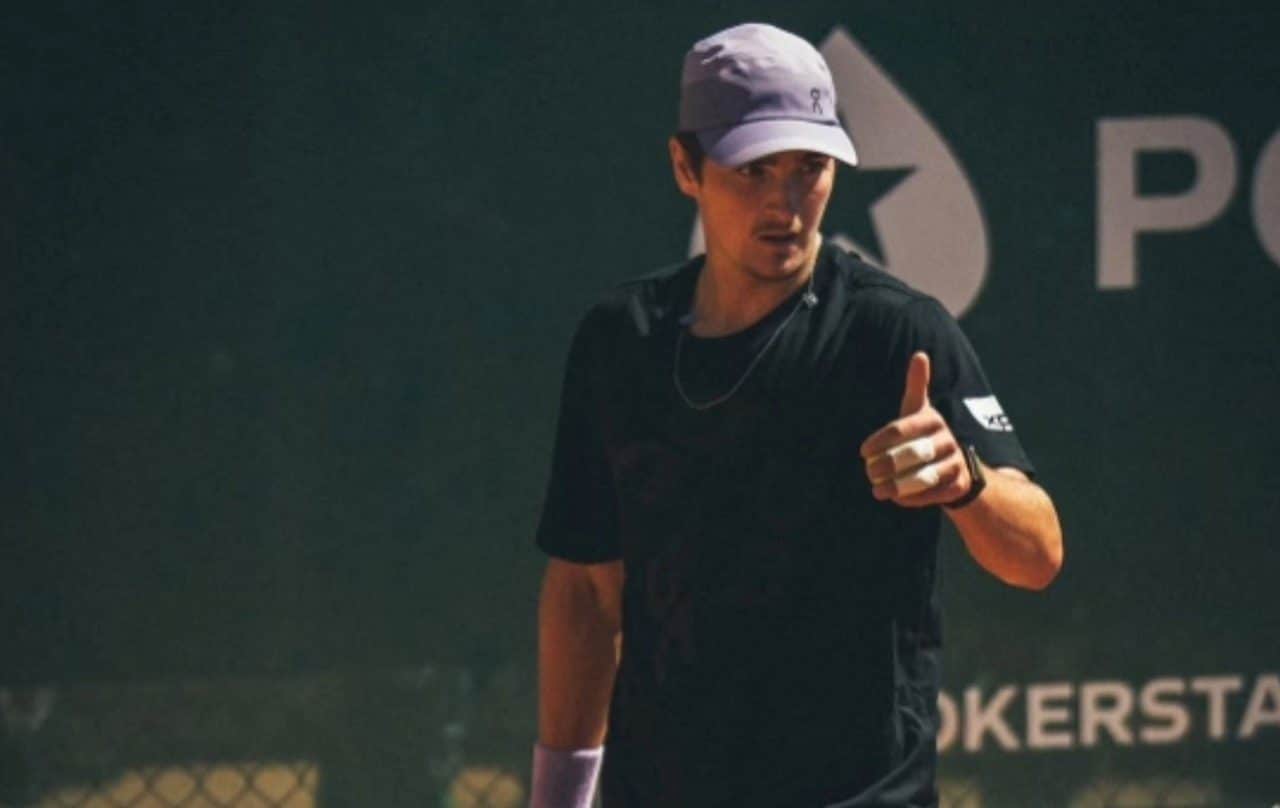
The athlete from Rio ended his participation in the Masters 1000 level tournament held in the European principality this Friday. The quarter-final clash required a high technical level from both competitors on the central court of the Monegasque sports complex.
The match lasted exactly two hours and forty minutes, marking one of the longest clashes in the current round of the competition. The final score recorded partials of 7/5, 6/7 (3) and 6/3 in favor of the European tennis player, who advanced to the next stage of the event’s main draw.
Outrageous pass 😨@AlexZverev #RolexMonteCarloMasters pic.twitter.com/7g1fPHGTD0
— Tennis TV (@TennisTV)April 10, 2026
The result interrupts a sequence of victories for the 19-year-old, currently number 40 in the world rankings of Associação of Tenistas Profissionais. The performance on clay cements the South American athlete’s position among the main names of the new generation on the international circuit.
Initial strategies and dominance of the European tennis player in the first half
The start of the match was characterized by an intense exchange of balls at the back of the court, with the national representative seeking to dictate the pace through angled strikes and strategic approaches to the net. The tactic aimed to destabilize the position of third place in the world rankings, forcing constant lateral movements. Durante In the first ten games, the equality on the scoreboard reflected the efficiency of the servers, who maintained their services with a high rate of success in the first serve and few break opportunities granted to the receiver.
The dynamics of the opening half underwent a significant change in the eleventh game, when the athlete from Alemanha increased the depth of his returns. Aproveitando a brief oscillation in his opponent’s right shots, the European achieved the necessary break of service to take the lead on the scoreboard. Afterwards, using serves that exceeded the two hundred kilometers per hour mark, the seed confirmed his service game and closed the set in 47 minutes of uninterrupted competition.
Tactical reaction and tiebreak victory force tiebreaker set
The second stage of the clash presented a scenario of greater instability for both sides of the network. The German tennis player achieved an early break, establishing a 3-1 lead on the scoreboard and indicating a possible quick resolution of the confrontation on the center court.
The 19-year-old athlete’s response occurred immediately, adjusting his positioning to receive the serve and lengthening the ball exchanges. The return of the break rebalanced the actions and led to the definition of the partial for the tiebreaker game, demanding maximum concentration from the competitors.
In the tiebreak, technical dominance quickly changed sides. The current number 40 in the world executed aggressive returns and forced unforced errors from his opponent, winning the partial 7-3 and ensuring the match continued for a third and decisive set.
Experience in large tournaments defines the outcome of the clash
The final set highlighted the Tóquio Olympic champion’s ability to adapt in moments of high pressure on the professional circuit. Após the first games of much study and quick service confirmations, the German intensified the use of his parallel backhand, a blow that proved to be fundamental in opening up spaces in the opponent’s defense. The decisive break of service occurred in the sixth game, allowing the European to establish a 4-2 lead on the scoreboard. From that moment on, the strategy adopted consisted of managing the difference through a high percentage of successes on the first serve, limiting the opponent’s chances of recovery. In the eighth game, the South American representative still tried to change the dynamics with shorter returns, but the regularity of the third-placed player in the ranking prevailed. The final point of the match was defined after a long exchange of balls, which ended with a mistake at the net by the young man from Rio, sealing the favorite’s classification after almost three hours of court time.
Sequence of clashes against the elite of world sport
The campaign on Monegasque clay represents a relevant statistical milestone for national sport. Presence in the quarterfinals of an event in this category has not occurred since the 2001 season, highlighting the degree of difficulty of the main draw.
The current tournament marks the third consecutive competition in which the national athlete crosses paths with a member of the group of the three best in the world. Esta sequence of matches against the tennis elite has provided continuous exposure to the highest level of technical and physical demands.
In previous weeks, clashes took place on fast courts on the North American continent. The matches against the Italian Jannik Sinner and the Spanish Carlos Alcaraz served as direct preparation for the current European clay tour.
The ability to compete on equal terms against opponents with multiple Grand Slam titles demonstrates a quick adaptation to the adult professional circuit. The points added guarantee that you will remain in the group of the forty best tennis players today.
German athlete’s path towards the semi-final stage of the event
With victory assured, Alexander Zverev advances to the penultimate round of the tournament and keeps the search for an unprecedented trophy in his career alive. The tennis player has already reached the semi-final stage of this competition on two previous occasions, but is looking for his first participation in the final in the principality.
The next challenge in the singles bracket will be against the winner of the duel between Canadian Felix Auger-Aliassime and Italian Jannik Sinner. Preparation for the next round will involve physical recovery sessions, given the wear and tear accumulated in the three-set match played this Friday.
Upcoming appointments on the European clay calendar
The planning of the technical team, led by Guilherme Teixeira, has already established the direction for the next few weeks of competition at Europa. Boarding for Alemanha is scheduled for the next few days, where the athlete will compete in the ATP 500 level tournament in the city of Munique, aiming to gain new points in the world rankings.
Assessment of physical performance and improved technical fundamentals
The physical performance presented during the two hours and forty minutes of the game met the expectations of the coaching staff. The resistance demonstrated in prolonged rallies at the back of the court confirms the effectiveness of the conditioning work carried out during the pre-season.
Sports analysts highlighted specific fundamentals that showed notable developments during the week of games in the principality. The consolidation of these technical characteristics will be fundamental for the next gravel tour events:
- Increase in the average speed of the first serve, making it difficult for returners to position themselves.
- Greater precision when executing short balls to break the rhythm of end-of-court exchanges.
- Ability to quickly recover between points after rallies with more than fifteen hits.
- Maintaining tactical stability even in situations of disadvantage on the scoreboard.
Preparation focused on high score tournaments
The consolidation of the game on clay establishes a solid basis for participation in the second Grand Slam of the sporting calendar. The accumulation of hours on the court against specialists on this type of surface accelerates the tactical maturation process required in matches played in best of five sets.
The immediate focus is on maintaining physical health and preventing injuries during the transition between European tournaments. The multidisciplinary team monitors wear rates daily to ensure that the athlete arrives at the main events in their ideal athletic condition.





