
Researchers identify ancient two-sided dice used by Native Americans 12,000 years ago

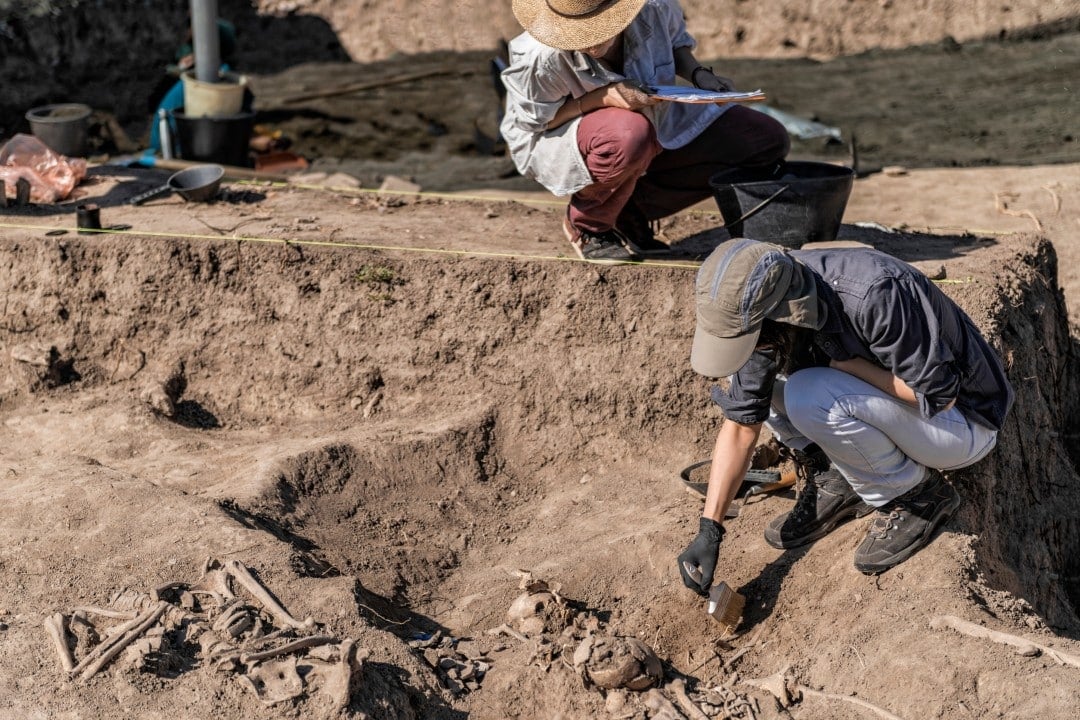
New research published in a scientific journal suggests that the indigenous people of Américas already played games involving elements of luck around 12 thousand years ago. The analyzed artifacts consist of flat, two-sided objects made of wood or bone, similar to an early version of a coin toss. Esses items were found at archaeological sites of the Folsom culture, located in the US states of Wyoming, Colorado, and Novo México. Analysis indicates that these objects functioned as binary dice and may have been employed in games or random decision activities during the end of the last glacial period.
The researchers re-evaluated hundreds of pieces previously classified differently. Eles established a four-step criteria for identifying these artifacts as data. This made it possible to recognize more than 600 assemblages at 45 archaeological sites in the west of Estados Unidos. The objects date from a range between 12,800 and 12,200 years ago, covering from the end of Pleistoceno to more recent periods before European contact.
- The dice were usually flat and had markings or designs on each face.
- The toss determined binary results, such as heads or tails.
- Later historical evidence shows continued use of these items in games among indigenous peoples.
Analysis of ancient artifacts gains new identification criteria
The team responsible for the study developed a systematic method to distinguish these objects from other artifacts. The main author, a doctoral candidate in archeology from Universidade Estadual of Colorado, based part of the work on ethnographic analyzes carried out at the beginning of the 20th century. Esse approach allowed us to reinterpret pieces that were previously seen only as markers or decorations.
Binary dice differ from the six-sided cubes known in Velho Mundo. Enquanto Traditional dice arose around 3,000 years before Cristo in regions such as Mesopotâmia and Indo Valley, American artifacts are significantly older. The research highlights that the use of double-sided objects for games may have preceded the invention of polyhedral dice by thousands of years.
Game archeology experts consider the find relevant to understanding ancient social practices. Eles observe that playful activities with random elements appear in different cultures and may have served both for entertainment and decision rituals. The presence of these items in varied archaeological contexts reinforces the idea that leisure was part of everyday life even in remote periods.
Discovery expands understanding of cultural practices on the American continent
The sites where the artifacts were recovered belong to the Folsom culture, associated with hunter-gatherers who lived at the end of the last glaciation. Nessa time, the environment of Américas was undergoing significant climate change, with the retreat of glaciers and changes in the available fauna and flora. The objects found suggest that recreational activities coexisted with daily survival.
The research gathered data from multiple American states and traced an extensive timeline. Researchers argue that the use of this binary data has persisted for millennia, with evidence ranging from the early period to documented historical epochs. Essa continuity indicates that the practice was not isolated, but part of a broader cultural tradition among indigenous peoples.
Critics of the interpretation, such as an anthropology professor at Universidade at Califórnia at Davis, question whether all identified objects actually serve as data. Eles argue that classification must consider the complete archaeological context, avoiding attributing specific functions solely based on shape. Apesar Of the caveats, the team that conducted the study maintains that the accumulated evidence is consistent with use in games.
Experts debate the interpretation of objects as gaming instruments
A Dutch archaeologist specializing in ancient games praised the work’s contribution to the field of playful archaeology. Ele highlighted that, before the creation of multi-sided dice, societies used simple items like bones, shells or sticks to generate random results. Essa perspective suggests that the origin of gambling practices may be even older than previously imagined.
The study was published on April 7, 2026 in the journal American Antiquity. The authors emphasize that many similar artifacts may have gone unnoticed in archaeological collections around the world. Eles propose that the same analysis criteria be applied to other contexts to identify possible binary data in different regions.
The research also contributes to discussions about the cognitive and social development of the first inhabitants of Américas. Atividades that involve luck and strategy may have served to reinforce social ties, resolve disputes or simply provide fun in nomadic or semi-nomadic groups.
Research rescues objects that spent years without proper classification
Many of the artifacts analyzed had been in collections for decades and had not been associated with games. The application of the new protocol made it possible to reclassify parts that previously received generic descriptions. The researchers highlight that the combination of morphological analysis with later historical records strengthens the hypothesis of playful use.
The objects generally measure a few centimeters and fit easily in the hand, which would facilitate repeated throwing. Marcas on one or both sides helped to differentiate the two possible outcomes. Essa Simplicity of design contrasts with the complexity of later data, but fulfills the same basic function of introducing randomness.
Although part of the scientific community asks for more contextual evidence, such as association with other game items or artistic representations, the study authors consider that the data set is already sufficient to propose a revision in the understanding of the history of games on the continent.
Evidence suggests continuity of recreational practices for long periods
The temporal range covered by the artifacts, which goes from the end of Pleistoceno until contact with Europeans, indicates that the use of binary data was not a passing phenomenon. Registros Ethnographic studies of indigenous peoples in more recent periods document the use of similar objects in games of chance or decision-making. Essa The connection between the remote past and historical eras gives greater weight to the interpretation presented.
Archaeologists involved in the work note that game archeology still receives less attention than other areas of the discipline. However, studies like this demonstrate that the analysis of playful artifacts can reveal important aspects about the social, cognitive and cultural life of ancient societies.
The research paves the way for further investigations at other Américas archaeological sites. Equipes can now review existing collections in search of objects that meet the established criteria, potentially expanding the distribution map of these artifacts.
The authors conclude that the identification of this ancient data represents an advance in understanding how early Americans organized their leisure time and made decisions based on luck. The discovery reinforces the idea that recreational practices have been a fundamental part of the human experience since ancient times.





