
US and Iran negotiate end to war in tense climate; Trump threatens and Tehran demands release of assets

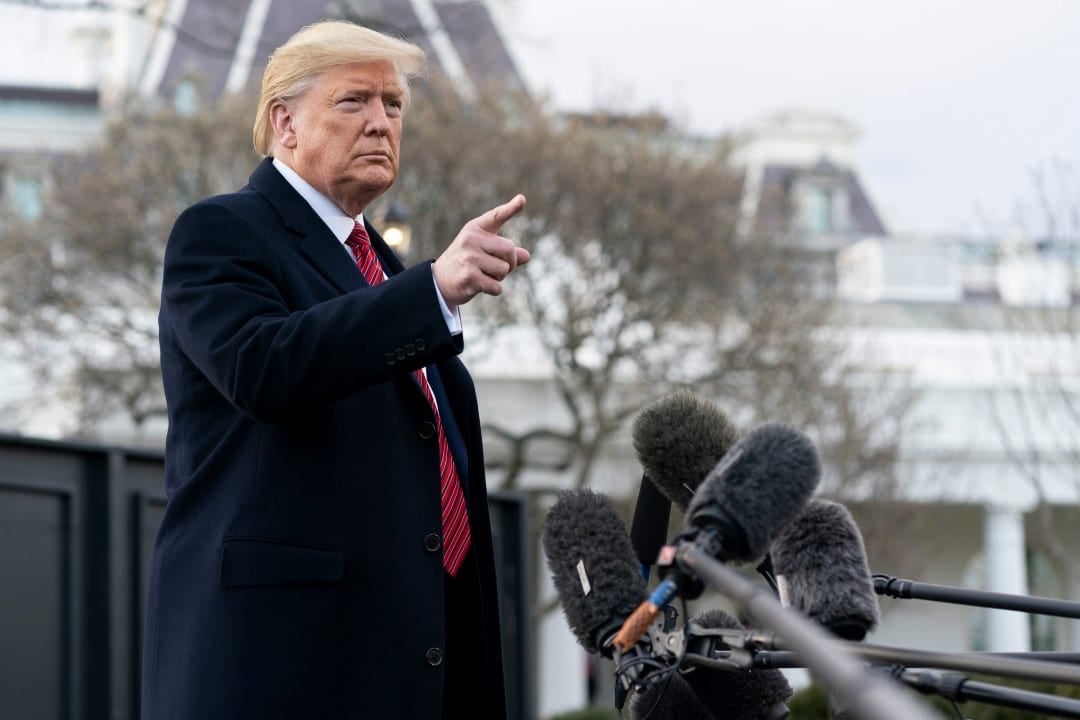
On the eve of a crucial meeting at Paquistão to negotiate an end to a protracted conflict, the scenario between Estados Unidos and Irã remains charged with tension. The negotiations, which aim to establish a lasting peace, are preceded by strong statements from the former US president, Donald Trump, and explicit conditions imposed by the Iranian government. The dialogue will take place amid an extremely fragile ceasefire, the violation of which is already a reason for accusations between the parties, including Israel.
Diplomacy will unfold on Islamabad from this Saturday, April 11, 2026, with the aim of seeking a path to regional stability. Contudo, the bellicose rhetoric and reciprocal demands signal that the path will be challenging. The international community watches with apprehension, aware of the complexity of the interests involved and the history of mutual distrust.
In such delicate moments, each statement carries significant weight. The speeches of Trump, together with Iranian impositions, shape the atmosphere of the conversations before the delegations even sit down at the table. The expectation is that the parties will demonstrate flexibility, despite their initial firm positions, so that progress can be made towards an agreement.
The conflict, which has destabilized Oriente Médio for years, requires an urgent resolution. The search for a consensus that respects sovereignty and guarantees the security of all involved is imperative, and the meeting at Paquistão represents a window, albeit narrow, for this possibility.
The Escalation of American Rhetoric
Former President Donald Trump raised the tone of his statements against Irã, stating that the Persian nation “is only alive today to negotiate.” In a post on his social network Truth Social, Trump suggested that the Iranians did not have significant bargaining power, beyond an alleged “short-term extortion of the world through the use of international waterways.” Essa statement adds a layer of pressure on Teerã, before negotiations even begin.
In an interview with the North American newspaper “The New York Post”, the American leader reinforced the US’s aggressive stance. Ele mentioned that the country’s army is “loading the ships with the best ammunition” and the “best weapons ever made” in case peace negotiations with Irã are unsuccessful. Trump indicated that the effectiveness of these weapons has already been proven in previous clashes, signaling a willingness to use force if dialogue fails.
Asked about the probability of success of the negotiations, Trump stated that “we will find out soon, in about 24 hours”, demonstrating impatience with the process. Ele also criticized Iran’s war capacity, claiming that “the Iranians are better at dealing with the fake news press and ‘public relations’ than at fighting”, which accentuates distrust towards their counterpart.
Furthermore, the former American president accused the Iranian regime of presenting contradictory information about uranium enrichment and the development of nuclear weapons, both in the public and private spheres. Essas allegations, reiterated before the negotiations, certainly add an element of suspicion and make it difficult to build a basis of trust between delegations.
The conditions imposed by Teerã
Irã, in turn, did not shy away from establishing its own conditions for advancing negotiations, making it clear that the path to dialogue is conditioned on compliance with certain requirements. The Iranian Relações Exteriores minister, Abbas Araqchi, declared that the Estados Unidos must honor their pre-established commitments and guarantee the inclusion of the Líbano in the current ceasefire. The cessation of Israeli attacks on Lebanese territory was identified as a crucial point, according to a report by Iranian state media on Friday, April 10.
The semi-official news agency Tasnim, known for its proximity to the Iranian Guarda Revolucionária, was even more incisive. Ela reported that the talks scheduled for Saturday would be unfeasible if Israel did not cease its attacks on Líbano, highlighting the interconnection of several regional conflicts with the dialogue between the USA and Irã.
At the same time, a senior representative of the Iranian Irã, Mohammad Bagher Ghalibaf, president of the Parlamento, used a social media platform to reiterate a fundamental condition. Ele stated that negotiations with the US could not begin until Iranian assets blocked abroad were released.
Ghalibaf detailed that “two of the measures agreed between the parties have not yet been implemented: a ceasefire in Líbano and the release of Iranian assets blocked before the start of negotiations.” Ele concluded that “these two issues need to be fulfilled before negotiations begin”, underlining the importance of reciprocity and compliance with prior agreements to restore trust.
The context of a fragile ceasefire
The backdrop to these talks is an extremely vulnerable ceasefire, which is hanging on by a thread and has been the subject of constant violations and accusations. The fragility of the truce agreement reflects the deep distrust and complexity of regional dynamics, where various state and non-state actors operate. The interruption of clashes, essential for any diplomatic advance, appears to be a momentary achievement that is constantly under threat.
Irã has been vocal in its complaints, asserting that the ceasefire has already been violated by its adversaries, with specific mention of Israel. Allegations of attacks and raids against Líbano, which Teerã considers a strategic ally in the region, demonstrate how tensions spill over the direct borders between the US and Irã, involving other countries and groups.
This scenario of instability is aggravated by the presence of military forces and armed groups operating on different fronts, making control and full adherence to the ceasefire difficult. The situation in Líbano, in particular, is a sensitive point, given Iranian influence and historical clashes with Israel. The parties involved therefore seek to protect their interests and spheres of influence, which complicates peacekeeping.
The persistence of military actions and bellicose rhetoric on both sides contribute to a cycle of escalation that makes the diplomatic path even more arduous. The need for a ceasefire verification and monitoring mechanism becomes evident, so that allegations of violations can be investigated and dealt with impartially, paving the way for constructive dialogue. The absence of a robust ceasefire considerably reduces the chances of successful negotiations.
Expectations and challenges of negotiations
US Vice President JD Vance, who will actively participate in the talks at Islamabad, struck a slightly more optimistic, albeit cautious, tone about the outcome of the meeting. Mais Early on Friday, Vance expressed that the American delegation is “looking forward to negotiation” and believes it “will be positive”, which contrasts with Donald Trump’s more severe stance.
However, Vance made a point of highlighting the conditionality of this optimism. Ele stated that success will depend on the Iranians’ willingness to “negotiate in good faith”, ensuring that if there is such an opening, Estados Unidos will be “willing to extend a hand”. Essa statement suggests that despite the desire to move forward, the US will keep a close watch on Teerã’s intentions.
The vice president warned that if the Iranians “try to deceive us”, the American negotiating team “will not be as receptive”, making it clear that patience has its limits. The speech reflects the complexity of dealing with a historical adversary and the need for a strategic approach that combines openness to dialogue with firm demands.
JD Vance also mentioned that former President Donald Trump provided “very clear guidelines” for negotiators, although he did not detail the content of these instructions. The existence of a predefined roadmap may indicate a cohesive American strategy, but it may also limit the team’s flexibility at crucial points, depending on the rigidity of the established guidelines.
The key participants in Islamabad
Even in the midst of a ceasefire that is barely holding, high-ranking figures from the governments of Estados Unidos and Irã will meet in the Pakistani capital, Islamabad, to begin negotiations that aim to put a definitive end to the conflict. The talks, scheduled to begin on Saturday, April 11, will be attended by important representatives from both sides, in a diplomatic effort that demonstrates the seriousness of the situation.
The delegation of Estados Unidos will be made up of important names in the American administration and political scene. The presence of these individuals highlights the importance attributed by Washington to these negotiations, indicating a high level of engagement.
On the Iranian side, representatives also have considerable political influence. The chancellor of Irã, Abbas Araghchi, and the president of Parlamento, Mohammad Bagher Ghalibaf, will lead the discussions. The composition of the Iranian team reflects the seriousness with which Teerã approaches the dialogue, sending figures who occupy crucial positions in the government and who have decision-making capacity.
The negotiations will take place in a luxury hotel in the Pakistani capital, Islamabad, highlighting the mediation role that Paquistão plays in this delicate process. The host country strives to create an environment conducive to dialogue, seeking to facilitate communication between the parties. Contudo, conversations are already beginning under the weight of a “war of versions” about adherence to the ceasefire, which represents an initial challenge to the success of the negotiations.
Geopolitical implications and the future of relations
The outcome of negotiations between Estados Unidos and Irã will have significant ramifications for global geopolitics, especially Oriente Médio. A successful agreement could reconfigure alliances, ease regional tensions and potentially pave the way for a new era of cooperation, impacting everything from energy markets to stability in neighboring countries. On the other hand, the failure of talks risks intensifying the conflict, deepening the humanitarian crisis and provoking a military escalation with unpredictable consequences, affecting security and the economy on an international scale.
[TAGS]Trump, Irã, peace negotiations, Paquistão, ceasefire, international relations[/TAGS]



