
X-ray analysis corrects identification of 300-million-year-old fossil as not an octopus

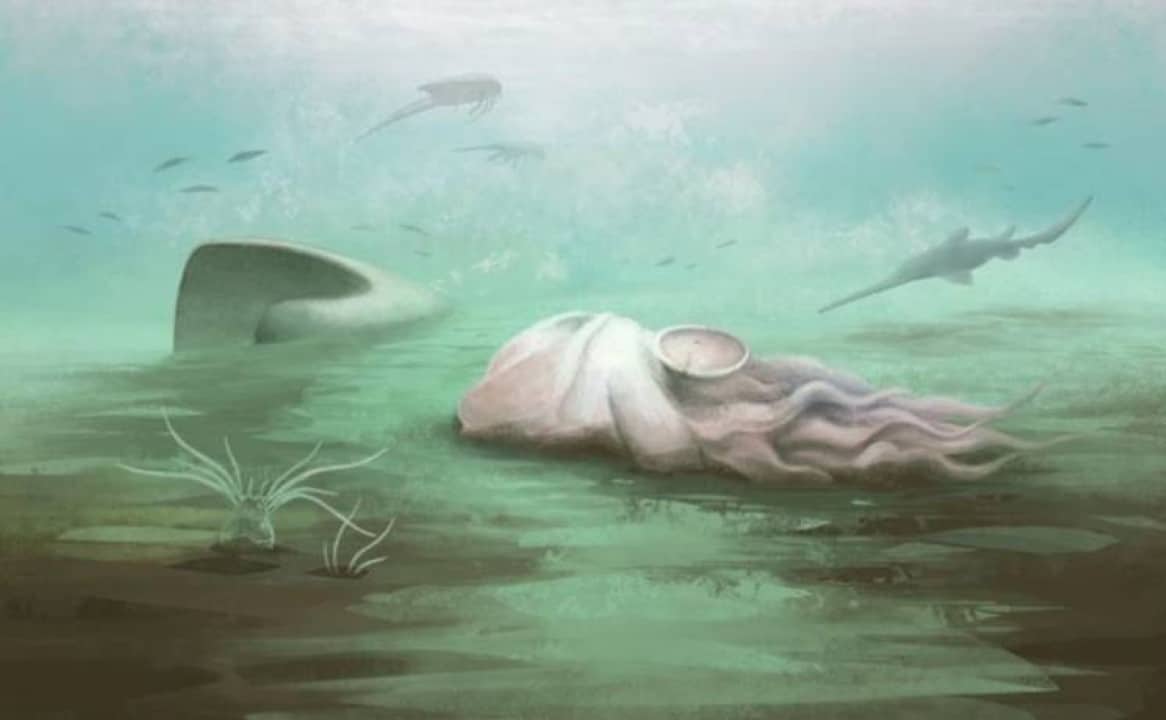
A fossil discovered south of Chicago, nos Estados Unidos, and considered for more than two decades to be the oldest record of an octopus in the world, has been reclassified by researchers. The approximately 300 million year old piece does not belong to the octopus group, but rather to an extinct relative of modern nautilus. The correction occurred thanks to advanced imaging techniques that revealed internal details hidden in the rock.
The analysis published on April 8, 2026 in the magazine Proceedings of the Royal Society B brought new elements about the structure of the fossil. Especialistas of Universidade of Reading, in Reino Unido, used synchrotron imaging, which produces the most powerful X-rays in the world. Esse method allowed us to visualize characteristics that did not appear in previous examinations carried out since the year 2000, when the specimen was initially described as an octopus.
Details of the reclassification of the fossil
The study led by Thomas Clements identified the presence of a radula, a typical feeding organ of molluscs, with at least 11 teeth arranged in a row. Polvos current teeth have between seven and nine teeth in this structure, which discarded the previous classification. The octopus-like shape arose because of an advanced decomposition process that lasted several weeks before the organism was buried.
Researchers observed that the supposed characteristics of long, thin arms also did not correspond to the pattern of cephalopods from group Octopoda. The fossil presented features more in line with the ancestors of nautilus, known for internal or external shells in different shapes. Decomposition altered the external appearance, creating the illusion of a soft body typical of an octopus.
Imaging Techniques That Changed Interpretation
The application of synchrotron allowed access to preserved internal structures without destroying the material. Essa technology generates light brighter than sunlight and reveals microscopic details invisible in scanning electron microscopes used in early investigations. The scientists highlighted that technological advancement was decisive in resolving the doubt that had persisted since the initial discovery.
The specimen was found in coal deposits south of Chicago, a site that preserves fossils of ancient marine animals. The age of 300 million years put it well before known records of octopuses, which date back to around 90 million years. The new conclusion adjusts the evolutionary timeline of cephalopods.
Implications for understanding the evolution of molluscs
The re-identification corrects a paleontological record that influenced discussions about the early origin of octopuses. With the correction, the fossil now represents a relative of the nautilus, a group that includes species with an external shell like the current nautilus. Essa change helps refine models on diversification of cephalopod molluscs in the period Carbonífero.
Experts emphasize that decomposition processes can significantly alter the morphology of soft-bodied organisms before fossilization. In the case analyzed, decomposition over weeks created an appearance that led to misinterpretation for more than 25 years. Estudos Futures should consider these effects when examining similar fossils.
Analysis of the internal structure revealed by the study
The presence of the radula with a greater number of teeth represented the key point in the reclassification. Essa characteristic is common in several groups of molluscs, but the specific pattern found does not fit with known octopuses. The researchers combined the imaging data with anatomical comparisons of living and fossil species.
The work was carried out by a team from Universidade of Reading in collaboration with institutions that provided access to the synchrotron. Publication in the British journal Proceedings of the Royal Society B guarantees peer review and scientific dissemination of the result. The fossil remains preserved at Estados Unidos, where it can be re-examined with new technologies.
Context of the initial discovery and previous doubts
Since the year 2000, when the fossil was described, paleontologists have already questioned some morphological aspects. The proportions of the arms and the absence of certain typical octopus markings generated debate, although the initial classification was maintained due to a lack of more conclusive evidence. The advancement of imaging techniques resolved this issue.
Carbonífero was a period rich in marine diversity, with conditions favorable to the preservation of soft-bodied organisms in certain environments. South of Chicago offers deposits that record this ancient fauna. The reclassification contributes to a more precise understanding of the distribution and evolution of cephalopods in this geological era.
Importance of using advanced technologies in paleontology
The use of a synchrotron demonstrates how state-of-the-art equipment can change established interpretations. The ability to visualize internal structures without damaging the fossil opens up new possibilities for reevaluating other dubious specimens in collections around the world. Pesquisadores hope more studies follow this example.
The correction does not diminish the scientific value of the fossil, which remains relevant to the history of marine molluscs. Ele now represents additional evidence about the nautilus relatives in Carbonífero. The paleontological community is following developments to integrate the new information into existing evolutionary models.
The approximately 300 million year old fossil found in the south of Chicago, Estados Unidos, is no longer considered the oldest record of an octopus after a detailed analysis published in April 2026. The reclassification as a relative of nautilus corrects a misconception that lasted more than two decades and reinforces the need for constant review with modern tools. Essa update contributes to accurate knowledge about the evolution of cephalopods without altering the historical significance of the fossilized piece.





