
James Webb Telescope detects record levels of deuterium in interstellar comet 3I/ATLAS

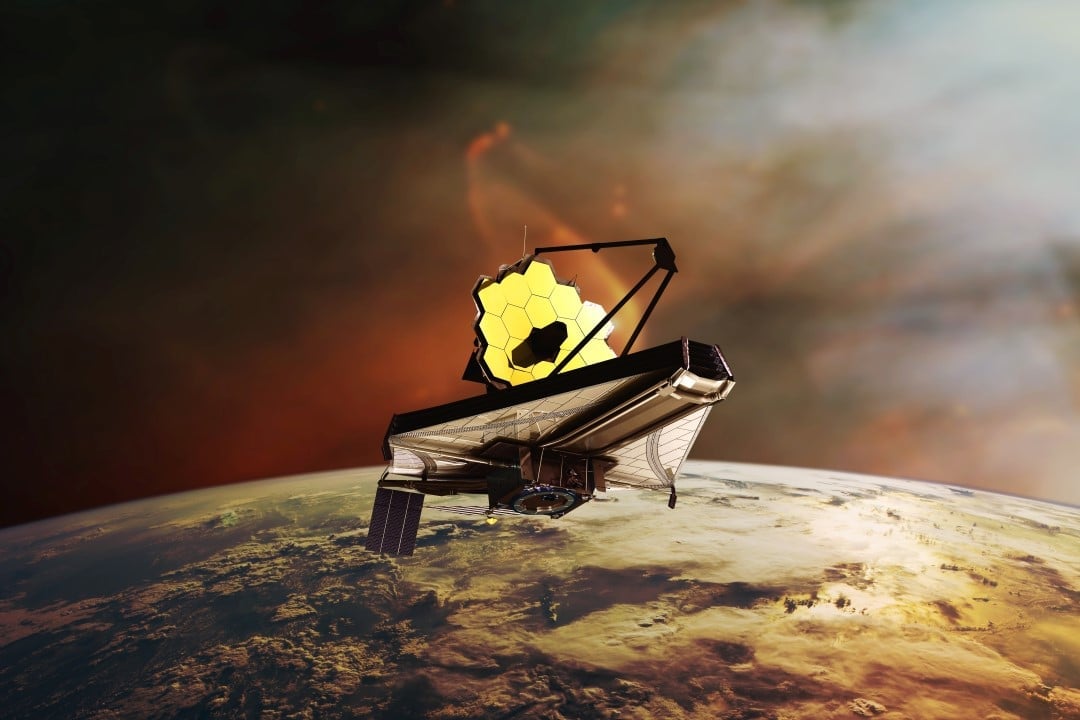
Space telescope James Webb made an unprecedented discovery by identifying exceptionally high concentrations of deuterium in the interstellar object 3I/ATLAS. Spectroscopic data collected from the gas plume surrounding the celestial body revealed an isotopic ratio much higher than known standards, especially in water and methane. Duas scientific research published in March 2026 details these measurements and establishes direct comparisons with other celestial bodies already catalogued. The results point to a significant discrepancy in relation to the levels found in Sistema Solar. The observation marks a breakthrough in understanding the chemistry of materials originating outside our cosmic neighborhood. The spacecraft used its high-precision infrared sensors to capture chemical signatures as the comet moved away from Sol.
Spectroscopic analysis and the chemical composition of the object
The spectra collected by the space observatory allowed the clear identification of the atoms ejected by 3I/ATLAS during its passage. The gas plume was examined at specific wavelengths, which revealed emission lines corresponding to deuterium with extreme clarity. The scientists derived the isotopic ratio from these direct measurements, confirming consistency between different observation sessions. The method used provided robust quantitative data on the internal structure and surface of the object.

The results demonstrate a unique enrichment of deuterium in two fundamental molecules for astrophysics. The ratio of deuterium to hydrogen in water reached the 0.95% mark, a value that exceeds the common ratios of known comets by more than an order of magnitude. In the case of methane, the proportion reached an impressive 3.31%. The researchers also analyzed carbon ratios, observing values that exceed standards found in both Sistema Solar and nearby interstellar clouds.
Comparison with Sistema Solar and previous missions
The proportion of deuterium in Sistema Solar is widely documented through measurements carried out on Sol and on the planet Júpiter. The primordial value, generated in the first few minutes after Big Bang during nucleosynthesis, corresponds to approximately one deuterium atom for every 40 thousand hydrogen atoms. Nos Terra oceans, the abundance is considerably greater due to isotopic fractionation processes that occurred throughout the history of the planet’s formation. The comets in our system usually present intermediate values between these two extremes.
To establish a comparison parameter, scientists retrieved data from probe Rosetta, which studied comet 67P. European equipment recorded a much lower proportion than that now observed in 3I/ATLAS. The methane released by the interstellar visitor has an abundance 14 times greater than the rate measured on 67P. Essa substantial difference indicates that the object formed under environmental conditions drastically different from those that shaped our planetary system.
Meteorites and other rocky bodies reinforce the isotopic patterns typical of our cosmic neighborhood, making the 3I/ATLAS measurements an extreme and isolated case in modern astronomy. The data provided by James Webb allows a direct comparison that enriches theoretical models of planetary formation. The telescope’s ability to see through cosmic dust was key to ensuring the accuracy of these readings.
Extreme formation conditions in interstellar environments
The authors of the scientific articles suggest that the high isotopic ratio derives from the formation in a protoplanetary disk with extremely low temperatures, lower than 30 Kelvin. Esse hostile environment would have existed about 10 to 12 billion years ago in remote regions of the universe. Low temperatures favor the capture and enrichment of deuterium in volatile molecules, such as water and methane, before they freeze into dust grains. Modelos Current theorists connect these processes directly to complex interstellar chemistry.
However, the temperature of the cosmic microwave background radiation during the formation epoch imposes strict limits on the possible conditions. Discos Ancient protoplanetaries could not cool below the heat generated by this background radiation, which creates an obstacle for astrophysicists. The researchers evaluate whether alternative explanations apply to the specific case of 3I/ATLAS. The association with old, metal-poor stars has been considered, but presents theoretical limitations regarding the retention of heavy elements.
The high abundance may reflect unique isotopic enrichment processes during the condensation phase of the original material. Telescope data continues to be analyzed by international teams to refine cosmological models. The observations contribute to understanding the chemical diversity of materials that roam deep space before crossing the paths of other stars.
The role of deuterium in science and energy generation
Deuterium is a stable isotope of hydrogen that has an extra neutron in its nucleus, giving it twice the mass of ordinary hydrogen. Essa specific nuclear structure allows fusion reactions to occur at relatively lower temperatures than those required by other elements. Combining this isotope with tritium produces helium-4 and releases highly energetic neutrons, a process that is the basis of modern fusion reactor research. The element is considered a viable fuel for future clean energy generation in Terra.
The feasibility of chain reactions involving deuterium has a deep historical context, having been debated in 1942 during the initial studies of Projeto Manhattan. At the time, physicist Edward Teller questioned whether the extreme temperatures of a detonation could initiate the fusion of the isotope present in Earth’s oceans. Scientist Hans Bethe calculated that the loss of energy through radiation would prevent any chain reaction from continuing. Esses Historical calculations illustrate the element’s behavior in extreme nuclear scenarios and its importance for physics.
Details of scientific publications from March 2026
The technical details of the findings were divided into two complementary publications that underwent rigorous peer review. The first article, published on March 6, 2026, focused on analyzing the water present in the 3I/ATLAS gas plume. The second study, released on March 24 of the same year, focused exclusively on the methane molecule ejected by the celestial body. Ambas research used advanced spectroscopy techniques to isolate chemical signatures from space background noise.
The data presented in the publications establish quantitative milestones that will serve as a basis for future space exploration missions. Precise measurements include margins of error rigorously calculated by the telescope’s instruments. The main numbers consolidated by the studies include:
- Proportion of deuterium in the comet’s water established at 0.95%, with a margin of uncertainty of 0.06%.
- Proportion of deuterium in methane fixed at 3.31%, with uncertainty calculated at 0.34%.
- Abundance in methane classified as three orders of magnitude higher than that found on the giant planets of Sistema Solar.
The interstellar object follows its trajectory away from Sistema Solar after reaching its point of closest approach to Sol. Additional Observações by ground and space telescopes can provide more information about its orbit and structural composition. The scientific community uses these results to advance knowledge about the diversity of interstellar materials and the chemical evolution of the universe since primordial nucleosynthesis.





