
Michigan agency expands pumping at Cheboygan dam due to forecast of more rain

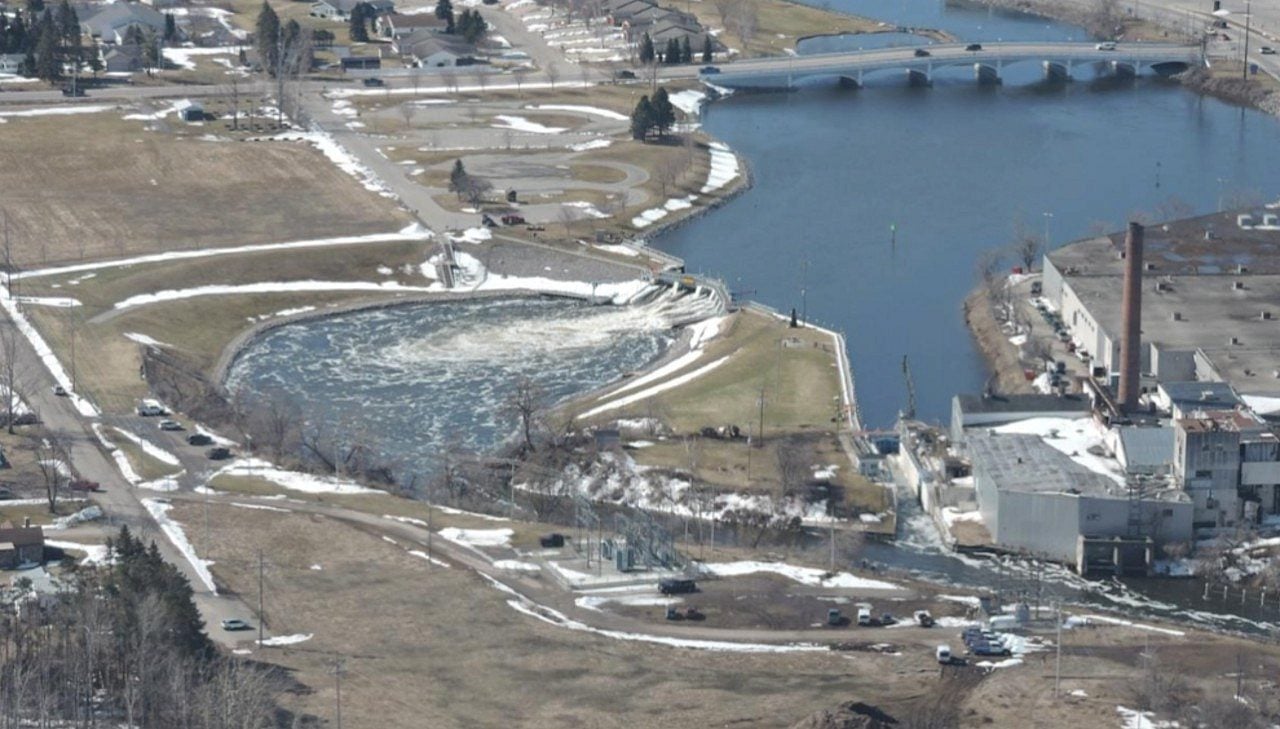
Crews from Departamento of Recursos Naturais (DNR) of Michigan added more pumps to divert water around Complexo of Eclusas and Barragem of Cheboygan over the weekend. The action was taken in response to the forecast of further rainfall for northern Península Inferior in the coming days. Water levels at the dam have risen significantly, prompting the governor Gretchen Whitmer to declare a state of emergency on Friday. By Sunday afternoon, the water was just 15 inches (approximately 38 cm) from the top of the dam. Recursos Naturais1 ask that residents of the region prepare for possible flooding and future evacuations.
Teams intensify actions at the dam
With up to 2 inches (about 5 cm) of rain expected over the next few days in the watershed that feeds the dam, DNR crews activated five pumps to divert the water. Duas pumps were already operational on Friday, and three more were added and operated until dark on Saturday. Essas pumps are crucial for moving water from behind the dam to the spillway in front, allowing it to flow toward the Lago Huron.
Richard Hill, supervisor of Distrito of Gaylord for Divisão of Parques and Recreação of the DNR, confirmed that the floodgates at the department-managed dam are fully open to handle the flow. Ele emphasized that pumps increase this flow capacity. The team is actively working to acquire additional bombs and maintain control of the situation.
The DNR also reported that it is in constant contact with Comissão Federal of Regulamentação of Energia (FERC), which oversees the dam. The aim is to explore options for reopening a hydroelectric station at the site, which would further increase water movement capacity. Atualmente, part of the water is already passing through the diversion valves in this section of the dam, demonstrating the complexity of flow management.
Water levels and emergency alert
Governor Whitmer’s declaration of a state of emergency on Friday came as the river was 18 inches (45 cm) below the top of Barragem, a rise of 3 inches (7.6 cm) overnight. However, there was a fluctuation: on Saturday the level was 20 inches (50 cm) below the top, but fell back to 15 inches on Sunday afternoon. The combination of rain and snowmelt upstream has been the main cause of rising levels.
Melting snow, following a record snowy March, and melting ice on the lakes above the dam have contributed significantly to the current situation. Esses factors, added to recent precipitation, create a challenging volume of water for the system. Autoridades warn that the high flow represents serious risks, including the possibility of bank erosion and the dragging of people and objects by the river’s fast currents.
The situation requires continuous vigilance and the mobilization of all available resources to mitigate risks. The emergency declaration allows the state to utilize additional resources to support local response and recovery operations. Governor Whitmer urged residents to sign up for local alerts and stay informed about developments.
Preparations and evacuation plan
The community of Cheboygan is being advised to follow a three-stage safety protocol, known as “ready, set, go”, to organize in the face of rising waters. Este plan aims to ensure that residents have adequate time to react to a possible flooding scenario. Measures are staggered as the water level approaches the top of the dam, protecting lives and property.
Departamento of Recursos Naturais installed approximately 2,000 sandbags around the structure to serve as a protective barrier against rising water. The expectation is that, if necessary, more sandbags can be added to strengthen this protection. Essas Barriers are designed to channel water flow and protect vulnerable areas near the dam.
In addition to the pumps and sandbags, crews removed an old wooden debris screen located in front of Comporta No. 6 of the dam. The assessment indicated that removal would not cause damage to the structure. The measure aims to facilitate greater water flow, which would help reduce the level of water accumulated behind the dam. US Serviço Geológico also installed additional equipment to monitor the water level.
The stages of the “ready, set, go” protocol are:
- Ready:Quando water is 12 inches (30 cm) below the top of the dam and rising 3 inches (7.6 cm) or more per day, people should plan or pack their things in case an evacuation is ordered.
- Get ready:Residents should pack their bags and prepare their families and pets for a possible exit when water reaches 6 inches (15 cm) below the top of the dam, with levels rising 3 inches per day or with water expected to overtop the dam within 48 hours.
- Go:An evacuation order will be issued when the water level is 1 inch (2.5 cm) below the top of the dam, with a high probability of overflow and the possibility of structure failure. People should follow evacuation orders and be aware that roadblocks may be in place.
Meteorological scenario and causes of elevation
Patrick Bak, meteorologist at Gaylord’s Serviço Nacional office, reported Sunday afternoon that the Cheboygan area has received less than an inch (2.5 cm) of rain since Saturday night. Precipitation was heaviest in southern communities, such as Charlevoix and Gaylord. Bak predicted a break in rain on Sunday night, but warned that more precipitation was expected later on Monday and into Tuesday.
The rise in water levels at the lock and dam of river Cheboygan is the result of a combination of recent factors. Chuvas intense snowfall and melting snow, which followed a record snowfall in March, are the main causes. Além In addition, ice has been breaking up in the lakes located above the dam, contributing to the volume of water flowing into the complex.
DNR spokesperson John Pepin stressed that the number one priority in all coordinated efforts is the safety of residents. Ele emphasized that preparation is key, and the more informed and prepared people are for potential danger, the safer they will be if the situation escalates. Governor Whitmer reinforced the importance of preparation and continuous monitoring.



