
NASA’s Artemis II mission records historic moment of Earth setting on the lunar horizon

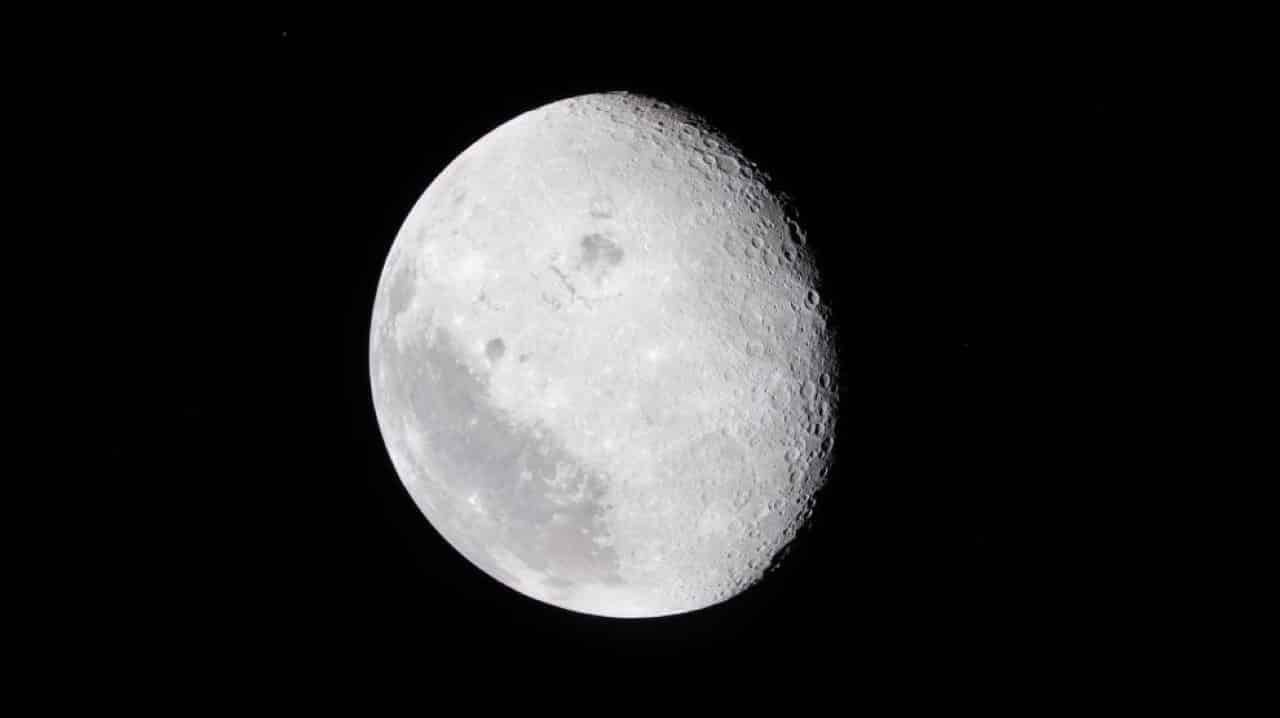
Agência Espacial Americana (NASA) released an unprecedented photograph that shows Terra setting below the lunar horizon, a view considered the most distant view of the planet ever recorded by humanity. The feat was achieved by probe Orion, part of mission Artemis II, on April 6, during its journey around Lua.
The image, captured at 6:41 pm ET, marks a significant point in space exploration. Probe Orion, with four astronauts on board, recorded the event as Lua disappeared over the horizon, offering a unique perspective on the “setting of Terra” — a visual phenomenon distinct from what is observed from our planet.
The rare view of the sunset Terra
The photograph of Terra setting, seen up close from Lua, offers a fascinating perspective on our planet in the vast landscape of space. Diferentemente of a sunset, where the star disappears into the horizon due to the rotation of Terra, this is a “Terra sunset” for lunar observers. Lua’s orbit and its synchronous rotation with Terra mean that our planet appears to hover in the lunar sky, and its “setting” occurs when the spacecraft or astronauts move to a position where Lua or the lunar horizon obscures it. The image highlights the fragility and beauty of Terra, a blue and white dot surrounded by the darkness of space, with the contrasting lunar surface in the foreground.
The moment was accurately captured and immediately transmitted, allowing scientists and the public to view Terra from an unprecedented distance. Essa Visualization is not just a technical feat but also a powerful reminder of our position in the cosmos. The clarity of the image and the scale it represents reinforce the complexity and engineering involved in mission Artemis II, which aims to expand the limits of human presence in deep space. The experience of seeing one’s home planet disappear beneath the lunar horizon is a privilege few have had, and NASA is committed to sharing these moments with the world.
Mission Artemis II and its objectives
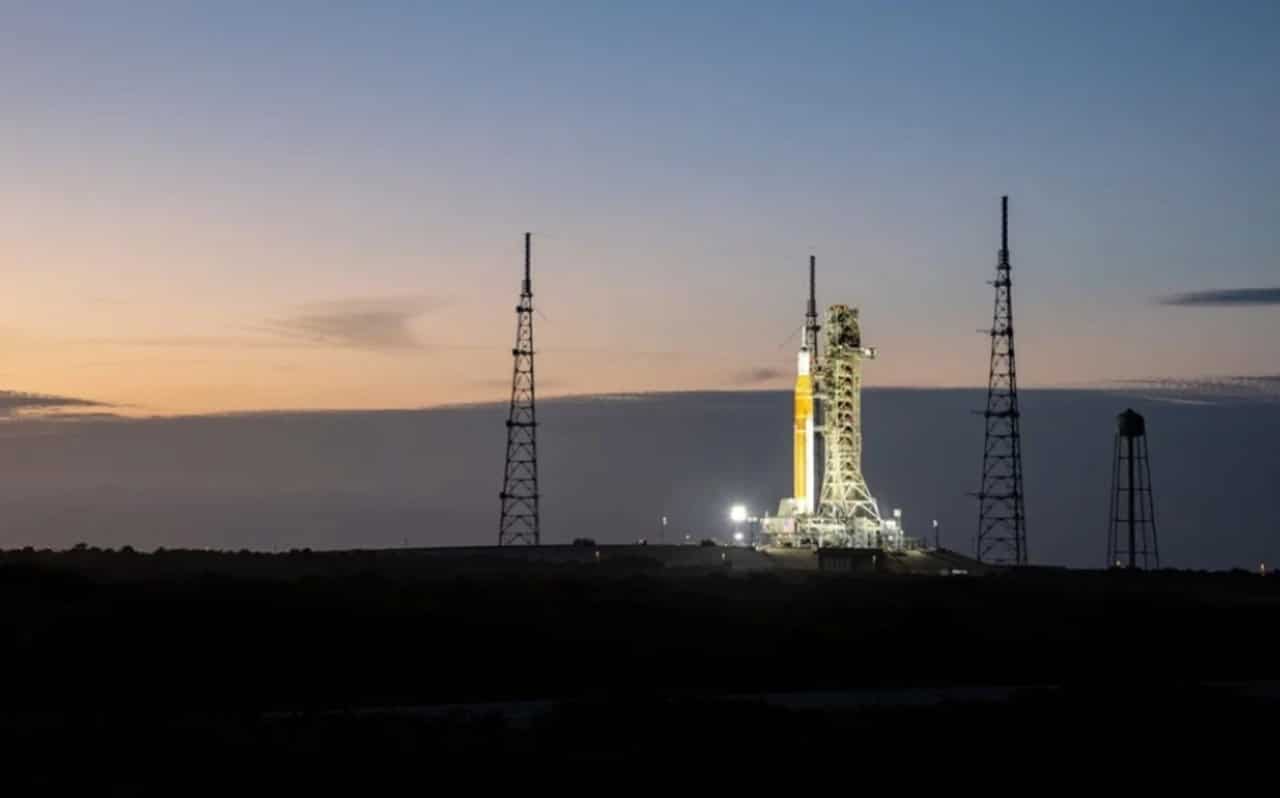
Mission Artemis II represents a crucial step in NASA’s ambitious program to return humans to the surface of Lua. Este’s main objective is to validate the Orion spacecraft’s systems in a deep space environment. The crew, made up of four astronauts, will not land at Lua, but will make a flyby, circling the natural satellite before returning to Terra. The mission aims to ensure that all essential components — including the life support system, communications and navigation — work perfectly for future landing missions.
During the journey, probe Orion embarked on a 40-minute observation flight on the far side of Lua. Este segment of the mission is vital to testing the craft’s ability to operate outside of direct contact with Terra, relying on autonomous and pre-programmed systems. The experience and data collected during this flight will provide crucial information for the development of the next phases of the Artemis program.
- Testing the life support systems of spacecraft Orion in deep space.
- Validate Orion operations in a lunar environment prior to crewed landing.
- Perform essential flight maneuvers and check the performance of the heat shield upon return to the Earth’s atmosphere.
- Surpass the Terra distance record ever achieved by a manned spacecraft.
- Evaluate the ship’s communication and tracking during the flight around Lua.
Breaking space distance records
Mission Artemis II surpassed the record for “Terra’s greatest distance ever reached by humanity”, previously set by Apollo 13. Probe Orion reached approximately 406,771 kilometers away from our planet. Este milestone is a testament to the technological advancement and perseverance of modern space engineering, demonstrating NASA’s ability to design and operate vehicles capable of traveling far beyond low Earth orbit. The record-breaking Apollo 13, a mission famous for its resilience and the ability of its astronauts to return to Terra after a critical failure, underscores the safety and reliability of the new systems developed for the Artemis program.
The feat is not just a matter of numbers, but of validating new technologies and procedures for long-duration space flights. The distance reached by Orion, although significant, is just one of many parameters that have been tested and verified. The ability to keep a crew alive and functional at such a distance, with all systems operating as planned, is critical for future missions that aim to not only return to Lua, but also explore Marte and other destinations in the solar system. Este record is a key indicator of humanity’s progress in venturing deeper into space.
Flight on the far side of Lua
During the observation phase, probe Orion performed a 40-minute flight on the far side of Lua. Esta part of the mission is strategically important. The far side, which is not visible from Terra due to tidal coupling from Lua, presents a unique environment for testing and observations. When passing through this region, Orion operated without direct communication with ground stations, relying on its own autonomous systems for navigation and flight maintenance. Este scenario simulates the conditions that future missions to Marte and other distant celestial bodies will face, where communication windows with Terra are intermittent or non-existent.
The dark-side flying experience allows NASA engineers to evaluate the resilience of Orion’s systems in a communications isolation environment. The data collected during these 40 minutes is crucial to understanding how the spacecraft and its crew will behave in situations where ground assistance is not readily available. Além Furthermore, the flyby offers a rare opportunity for the crew to observe and photograph the hidden side of Lua, which has distinct geological characteristics and may contain important clues about the formation and evolution of the natural satellite.
Next steps to return to Lua
The successful completion of Artemis II will pave the way for Artemis III, the mission that will return the first humans to the lunar surface in more than 50 years. The Artemis program is not just limited to landing on Lua, but also establishing a sustainable presence by building a base and utilizing lunar resources. Esta long-term initiative aims to prepare humanity for future missions to Marte, using Lua as a “stepping stone” into deep space. The photograph of Terra setting on the lunar horizon, as well as the distance record, serve as symbols of the progress made and the ambitious vision driving space exploration.
The Artemis program represents an international effort, with partnerships between space agencies and private companies, seeking to democratize and accelerate access to space. The expectation is that, by establishing a lasting presence at Lua, new technologies and knowledge will be developed, benefiting humanity in various ways, from scientific advances to technological innovations for terrestrial use. The image of Terra seen from Lua reinforces the interconnection of our planet with the cosmos and the continuous need to explore and understand the universe that surrounds us.




