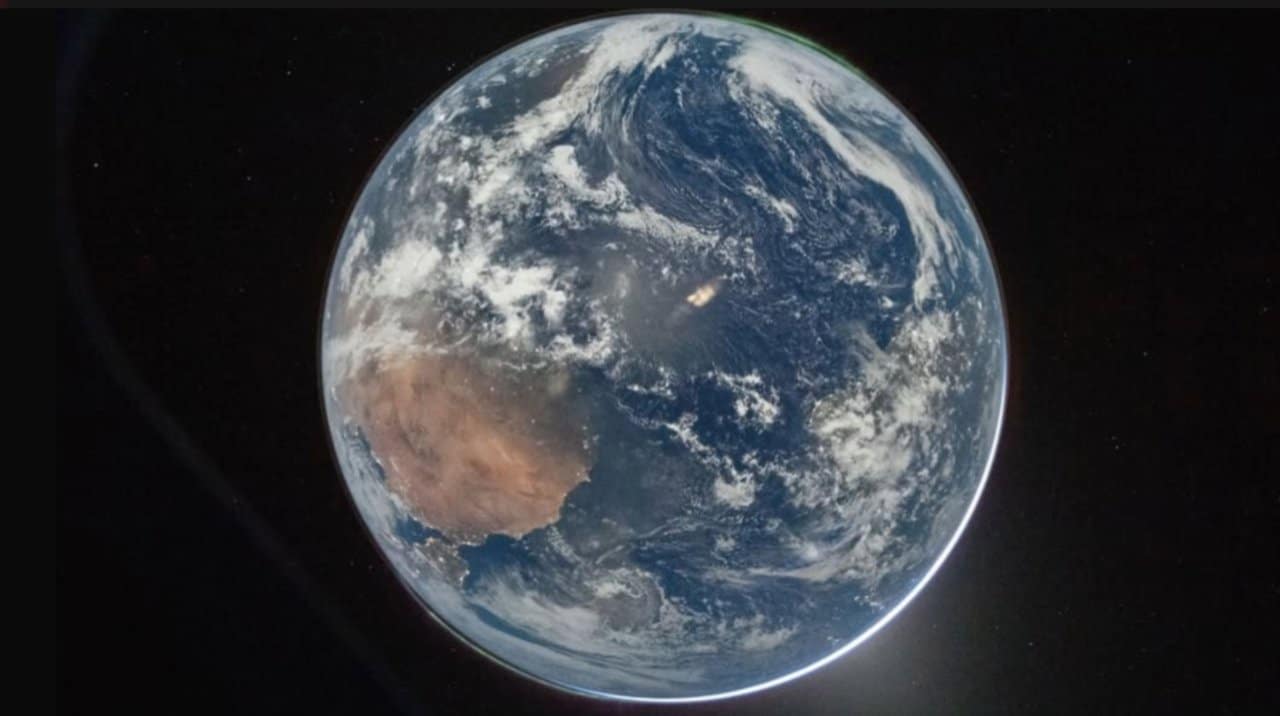
The length of days in Terra is gradually increasing, a natural process that, in the distant geological future, will bring a full day to 25 hours. Embora the prospect of an extra hour seems appealing, this change occurs at such an imperceptible pace that no current or next human generation will feel the difference.
Scientific studies indicate that the planet’s rotation has been continuously slowing down for billions of years, mainly due to the gravitational interaction with Lua. The projection of 25-hour days is estimated for approximately 200 million years from now, maintaining the current slowing rate.
To Influência Gravitacional from Lua
The main driving force behind the slowdown in the Earth’s rotation is the gravitational interaction of Lua. The natural satellite exerts a constant pull on the planet’s oceans, resulting in the formation of tides. Este phenomenon creates significant friction between the vast mass of sea water and the ocean floor. Este friction acts as a natural brake for the rotation of Terra a complex energy transfer mechanism.
During this process, the kinetic energy of the Earth’s rotation is gradually transferred to the lunar orbit. Consequentemente, Terra rotates more and more slowly around its own axis. In contrast, Lua progressively moves away from the planet. Esse separation occurs at an average rate of approximately 3.8 centimeters per year, a figure that exemplifies the constant dynamics between the two celestial bodies.
Rhythm Imperceptível from Mudança Terrestre
The slowdown in the rotation of Terra is a phenomenon that operates on a time scale that completely transcends any human reference or perception. According to research, days increase by an average of just 1.7 milliseconds every century. Esta measurement equates to 0.0017 seconds per 100-year period, a minute change that accumulates only over vast geological intervals.
To measure what this rhythm represents, it would take more than 39 thousand years for the sum of these small differences to result in an accumulation of just six milliseconds in the length of a day. Historicamente, the rotation of Terra has shown a systematic slowdown since its formation, around 4.5 billion years ago. In the distant past, approximately 600 million years ago, an Earth day lasted just 21 hours. Atualmente, a complete solar day lasts about 23 hours, 56 minutes and 4 seconds, although this value may vary slightly due to geophysical and seasonal factors.
Data Chave from Desaceleração Terrestre
Understanding the lengthening of days at Terra is based on long-term observations and calculations, which outline a scenario of continuous changes on a geological scale. The process, although slow, is one of the most consistent in the history of our planet. Pesquisadores monitor this data to improve climate and geophysical models.
See the main points about the deceleration of the Earth’s rotation:
- Desaceleração Rhythm:Days increase by an average of 1.7 milliseconds every 100 years.
- Removal from Lua:The satellite moves away from Terra at an approximate rate of 3.8 centimeters per year.
- Day Antigo:Há 600 million years ago, the length of a day was approximately 21 hours.
- Day Solar Atual:Corresponde at 23 hours, 56 minutes and 4 seconds, with small variations.
- Projection for 25 Horas:The 25-hour day is estimated to last about 200 million years from now.
This data reinforces the idea that the Terra-Moon system is dynamic and constantly evolving, with impacts that span geological eras. Modern science allows for increasingly precise measurement of these subtle changes.
Implications Científicas and Monitoramento Contínuo
Researcher Fernando Roig, from Observatório Nacional, linked to Ministério from Ciência and Tecnologia, highlights that this process has been the subject of in-depth study since the 18th century. The observation of the slowdown in the Earth’s rotation is not a recent discovery, but the refinement of measurements and the understanding of the mechanisms behind it continue to evolve. The planet’s rotation is closely monitored using advanced technologies such as atomic clocks and global positioning systems (GPS), which make it possible to identify even the smallest variations.
This research is crucial for understanding Earth’s geodynamics, including phenomena such as the movement of tectonic plates and changes in the gravitational field. Embora direct implications for human life in the short and medium term are nil, the study of rotational deceleration offers valuable insights into the history and distant future of the planet. Ele allows scientists to build more accurate models about the evolution of planetary systems and complex celestial interactions.