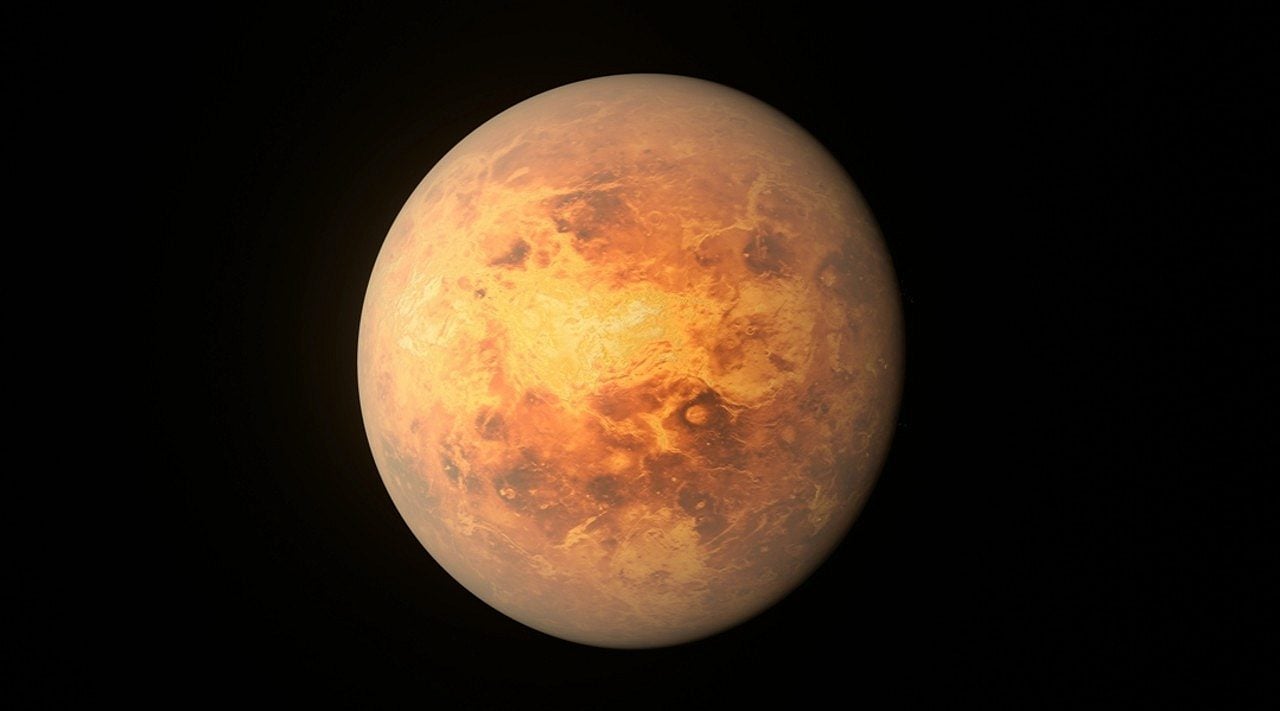
Mercury and Venus enter a simultaneous period of apparent retrograde motion starting this Saturday (24) and lasting through Friday, November 13, 2026. This astronomical and astrological overlap marks the only window in the 2026 calendar in which both inner planets remain in this state at the same time, bringing the total number of retrograde planets in the sky to five.
The shift for Mercury takes place in the sign of Scorpio, representing its final retrograde cycle of the year, shifting from 20 degrees 59 minutes down to 5 degrees of Scorpio. Venus has already been in apparent backward motion since October 3, 2026, when it began its transit at 8 degrees 29 minutes of Scorpio, and it moves back into the sign of Libra on Sunday (25), a date that coincides with the second round of municipal runoff elections in Brazil. “These are about three weeks in which the calendar calls for review, and in which a decision made on impulse usually comes back to the table,” said tarot reader and columnist Leo Chioda.
Key dates and exact times for the overlapping planetary transits
The combined cycle spans roughly three weeks and features specific directional shifts across the zodiac calendar. Observers tracking the movement in Brasilia time (BRT) and Coordinated Universal Time (UTC) can follow the main milestones of the transit below:

- October 3, 2026: Venus begins its apparent retrograde motion at 8 degrees 29 minutes of Scorpio.
- October 24, 2026, at 3:59 a.m. BRT: Mercury enters retrograde motion in Scorpio, initiating the simultaneous overlap with Venus.
- October 25, 2026, at 5:59 a.m. BRT: Retrograde Venus leaves Scorpio and returns to the sign of Libra, coinciding with Brazil’s second-round election day.
- November 13, 2026: Both Mercury and Venus resume direct motion within a few hours of each other in the Brasilia time zone, while references in Coordinated Universal Time (UTC) record the conclusion of the Venus cycle on November 14.
Optical illusion in astronomy and practical meaning in astrology
In astronomical science, apparent retrograde motion does not indicate a real change in a planet’s orbital path in space. Instead, it is an optical illusion caused by differences in orbital speed and position as viewed from Earth against the background of fixed stars. In astrological interpretation, however, the phase represents a period for internal review and practical reorganization rather than launching brand-new projects, uniting the areas governed by both celestial bodies over a continuous stretch of 20 to 21 days, depending on how the initial and final days are counted.
“Retrograde does not mean that the planet walks backward. It is an effect of perspective, seen from here on Earth. What changes is the symbolic reading: instead of launching, the period is suited for reviewing,” said astrologer Marcia Fervienza.
Check out: 3I/ATLAS interstellar comet shows high carbon dioxide levels during solar system passage
While astrologers associate Mercury with communication, thought processes, data, deadlines, contracts, and daily commutes, Venus governs emotional bonds, love, personal values, self-esteem, pleasure, and finances. With both planets operating together in this format, astrological guidance advises prioritizing the verification of pending tasks, taking extra care with misunderstandings or delays, and avoiding signing documents without prior reading or making high-value impulse purchases. “The most important thing is to realize that what was running on autopilot may need to be reviewed,” stated astrologer and columnist Titi Vidal. General interpretations linking the transit to reunions with figures from the past and encouragement for therapy and self-knowledge were also originally attributed to tarot reader Isabel Fogaça, though the exact authorship of those explanations was not independently confirmed in direct statements.
Outer planets in retrograde and orbital cycle frequencies until 2028
Mercury’s entry into this cycle raises the total number of planets in simultaneous retrograde motion to five starting this Saturday (24). Alongside Mercury and Venus, three more distant bodies in the Solar System are already undergoing similar phases during the second half of the year. Neptune has been in retrograde motion since July 7 and remains so until December 13, 2026; Saturn holds this condition from July 27 to December 11, 2026; and Uranus began its stage on September 10, 2026, extending it through February 8, 2027.
The frequency with which each celestial body experiences this apparent backward shift varies according to its orbit around the Sun. Mercury turns retrograde three to four times a year, always for about three weeks at a time, with its immediately preceding cycle having ended on July 23, 2026. Venus follows a less frequent retrograde calendar that lasts approximately 42 days per occurrence, and after the conclusion scheduled for November 13, 2026, the Venusian phenomenon will only repeat in the year 2028.