
Geely launches the i-HEV hybrid system with record consumption of 45 km/l

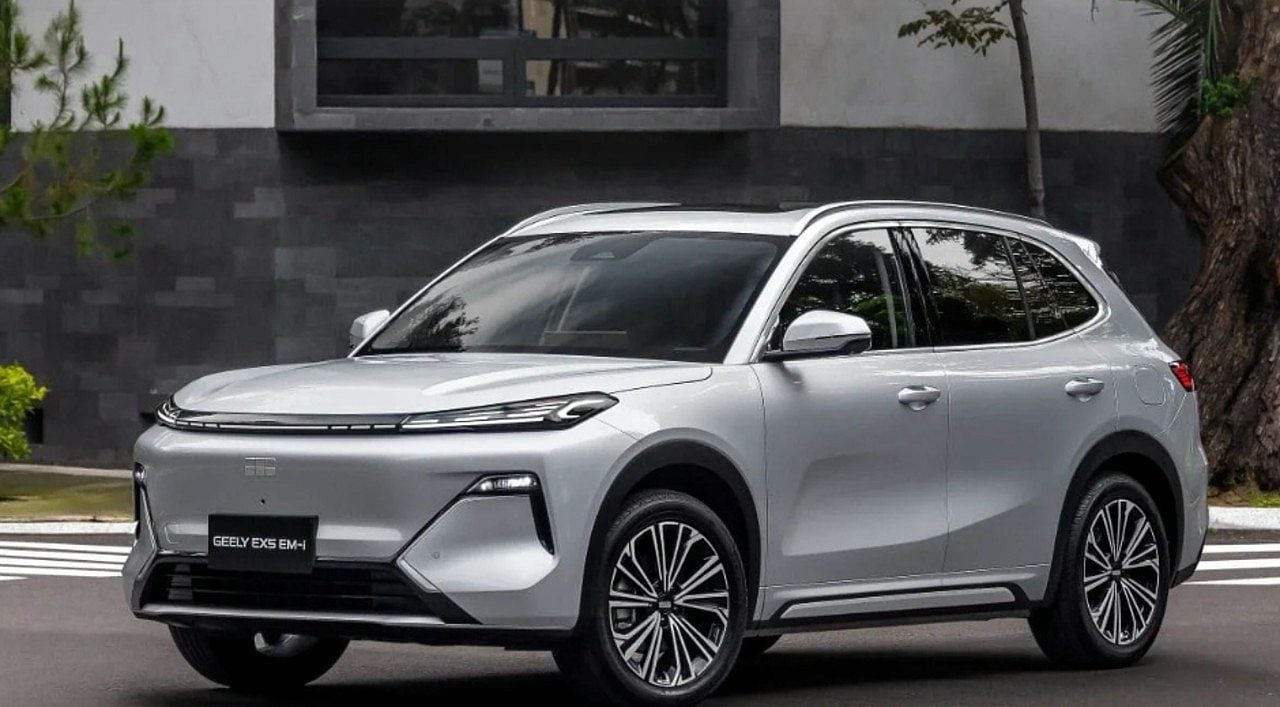
Geely Auto launched the i-HEV hybrid system this Monday. The set uses artificial intelligence to manage energy and achieved consumption of 2.22 liters per 100 kilometers in a road test with a sedan Emgrand. The brand claims that the result sets a new world record approved by Guinness World Records. The system does not require external recharging and seeks to compete in the self-charging hybrid segment.
The i-HEV integrates an AI-driven energy management platform. Ela analyzes conditions such as temperature, humidity and altitude in real time to adjust the operation of the engine and electrical system. Geely highlights that the technology improves overall energy efficiency. The launch took place at an event on China.
Details of the consumption record
Sedan Geely Emgrand equipped with the i-HEV recorded 2.22 liters per 100 kilometers, equivalent to around 45 km/l, in a road test. Geely reported that Guinness World Records validated the performance. The value refers to specific highway conditions.
The company also released WLTC consumption figures for other models. The Preface i-HEV scores 3.98 liters per 100 kilometers. The Monjaro i-HEV registers 4.75 liters per 100 kilometers. Esses Data shows gains under different conditions of use.
The system’s combustion engine achieves a thermal efficiency of 48.41%. Essa rate represents the peak for mass production engines, according to Geely. The electrical package delivers 230 kW of power. Ele allows acceleration from 0 to 30 km/h in 1.84 seconds.
Functioning with artificial intelligence
The AI platform called AI Cloud Power adjusts the energy strategy predictively. Sensores environmental factors feed the system, which decides when the combustion or electric engine should operate. Geely explains that the objective is to keep the engine in the highest efficiency zone.

The system operates most of the time in electric mode at low speed. In the city, the electric motor takes over for up to 80% of the time without the need for a plug. Funções Power steering and adaptive management are also part of the package.
The i-CMA architecture supports integration of intelligent driving, cockpit and chassis into a central unit. Geely mentions that the computational power makes it possible to predict more than 50 types of failures in real time. The battery has IP68 protection.
Strategy against established competitors
Geely targets the full hybrid segment that does not depend on recharging. Esse market has been dominated by Japanese brands since the launch of the Prius in 1997. The i-HEV represents an offensive by the Chinese industry in this niche after a previous focus on plug-in hybrids.
The company plans to apply the technology to several models later this year. The list includes the executive sedan Preface, the medium-large SUV Monjaro, the compact SUV Starray and the Emgrand. Versões hybrids of these vehicles are expected to reach the Chinese market in 2026.
- Preface i-HEV with WLTC consumption of 3.98 l/100 km
- Monjaro i-HEV with WLTC consumption of 4.75 l/100 km
- Emgrand i-HEV with record 2.22 l/100 km in road test
- Starray as part of the initial pipeline
- Engines available in 1.5, 1.5TD or 2.0TD combined with 11-in-1 electric drive
Expansion and next steps
Geely has not released an exact schedule for markets outside of China. Modelos current brands from Brasil, such as the EX5, may receive the technology in the future, but there is no official confirmation. The company indicates that the i-HEV will enter mass production immediately.
The system offers three power combinations. Elas combine combustion engines of different sizes with the 230 kW electric unit. Geely highlights gains in low-speed drivability and energy recovery.
Industry analysts are following the movement as part of the expansion of hybrids on China. The technology arrives at a time of demand for efficient options without dependence on charging infrastructure.
Main technical characteristics
The i-HEV combines high-efficiency thermal engine with advanced electrical support. AI management optimizes energy flow according to the external environment. The company claims that the set outperforms conventional hybrids in overall efficiency by more than 10%.
Maximum speed in pure electric mode reaches 66 km/h. Initial acceleration prioritizes the electric motor for better response. The design prioritizes savings in mixed use without sacrificing basic performance.
Geely positions the launch as a strategic advance. The focus is on volume vehicles that do not require an outlet for daily recharging.



