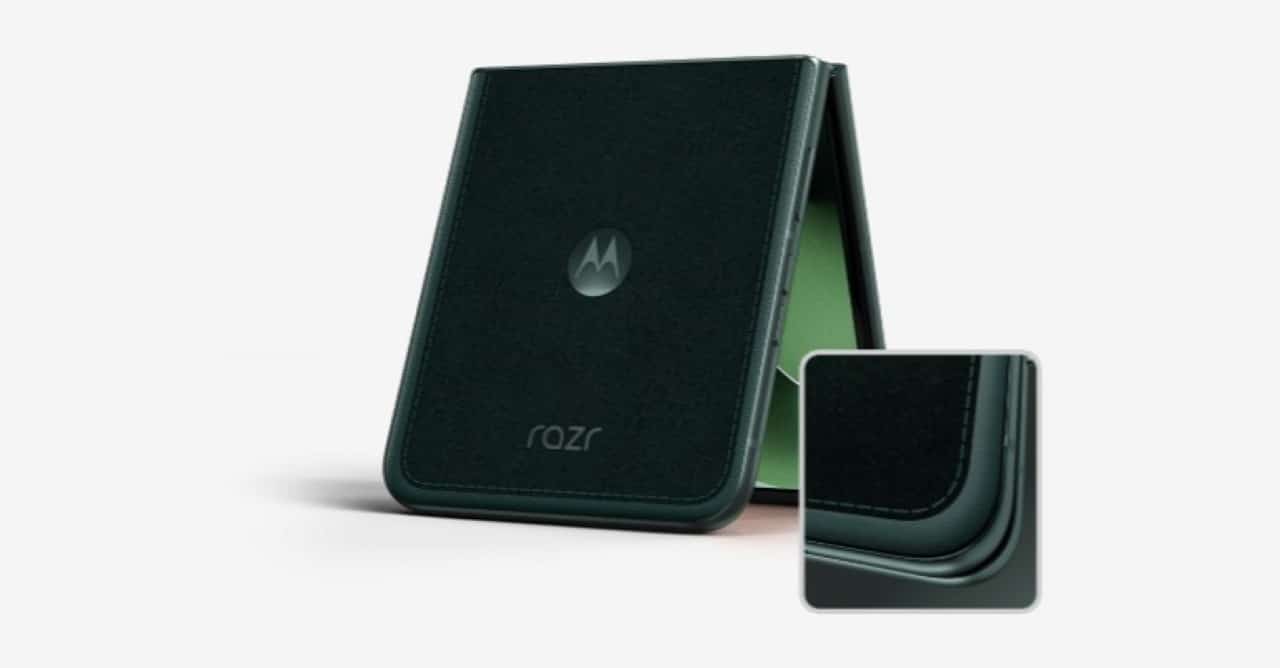
Unofficial press images of the new Motorola Razr Ultra 2026 have appeared on the internet and preview the look of the brand’s next foldable smartphone. The published material shows the device in two external finish options that deviate from the traditional industry standard. The manufacturer continues to focus on textured surfaces to attract consumers looking for a different tactile experience.
The leaks highlight the variants in colors Orient Blue Alcantara and Pantone Cocoa Wood, which feature imitation leather and dark wood texture, respectively. Essa The choice of materials reinforces the visual identity that the company established in previous generations of the line. Today’s premium mobile device market is largely dominated by glass and smooth metal constructions. The brand’s strategy seeks to create a competitive differentiator directly on the shelves and in the sensation of daily use. The manufacturer tries to attract a demanding public with this commercial tactic.

The manufacturer’s tactile design strategy
The option in color Orient Blue Alcantara features a back panel covered in material that simulates leather, accompanied by a diamond-shaped stitching pattern. Esse type of finish offers greater grip in the hands and reduces fingerprint marks that tend to accumulate on mirrored devices. On the other hand, version Pantone Cocoa Wood delivers a panel with a wood texture in a darker tone than seen in past releases. The use of elements that refer to nature or luxury automotive fabrics creates a perception of exclusivity for the product. Consumers in the high-cost segment value aesthetic details that differentiate their devices from the large mass of identical cell phones. Motorola realized this demand and transformed the texture into a visual signature of the Razr family. The commercial success of previous editions with this same tactile appeal justified maintaining the design language for the 2026 version. Analistas of technology point out that customer loyalty occurs not only through the software, but through the physical sensation of holding the equipment. The maintenance of these characteristics indicates that the company has found a profitable niche and is willing to invest in differentiated design.
The device’s flip form factor remains unchanged from its direct predecessor. The symmetrical edges and the positioning of the side volume and power buttons follow the pattern already known by users of the brand. Essa visual continuity suggests that the manufacturer prioritizes an incremental refinement of the chassis rather than promoting radical changes to the external structure.
Screen dimensions and possible internal changes
The leaked images corroborate the technical details that had already appeared in renderings based on industrial designs weeks ago. The new foldable should hit the market with a large external screen measuring approximately 4 inches, which occupies almost the entire upper half of the device. Esse secondary display completely surrounds the dual rear camera module and LED flash. The purpose of this giant screen is to allow the user to perform most daily tasks without having to open the phone. Responder messaging, controlling music playback and using navigation apps become practical actions with the device closed.
When the user decides to open the equipment, they will find a flexible internal screen with an estimated size of 7 inches. The proportions indicate that the 2026 model has a slightly greater thickness compared to last year’s generation. Esse Subtle increase in physical measurements could represent excellent news for consumers who require more time away from the outlet. A thicker chassis opens up space inside the device to accommodate a larger capacity battery. Além Furthermore, the manufacturer gains scope to install more efficient cooling systems for the main processor.
The mystery about the internal front camera
A peculiar detail in the leaked promotional arts caught the attention of mobile technology experts. The latest images do not show any type of cutout or hole for the front camera on the device’s internal screen. Essa Absence sparked immediate debates about the possible technologies that the manufacturer would be implementing in the new generation. Algumas Speculations suggest that the brand could adopt a photographic sensor hidden under the flexible display. Essa technology already exists on the market, but it tends to compromise the quality of selfies and the sharpness of the area of the screen that covers the lens. However, the most likely explanation accepted by the technical community is that it was just an omission during the production of the advertising material. Renderizações, based on manufacturing diagrams, clearly showed the presence of a centralized hole in the upper part of the panel. Companies often simplify press images to highlight the product’s clean design before the official announcement. Confirmation of the exact positioning of the camera for video calls will only occur during the presentation event.
The absence of a confirmed date for the official launch keeps the market on hold. The accumulation of leaks of high-resolution images and technical specifications indicates that the global announcement should take place in the coming weeks. The company usually holds dedicated events to reveal all the hardware and software details of its premium line.
Impact on the foldable smartphone market
The segment of phones with flexible screens grows every year and attracts heavy investments from the main technology giants. Competition requires manufacturers to find creative ways to justify the high prices charged for this equipment. Motorola’s strategy of focusing on premium materials and highly functional outdoor screens has ensured a prominent position in global sales. The model Ultra represents the pinnacle of the brand’s engineering and serves as a technological showcase to attract new consumers. Direct competition with other flip format lines requires constant updates and improvements that are noticeable to the public.
The current competitive landscape shapes design decisions and features implemented in new devices. The evolution of the foldable category presents remarkable characteristics that set the industry standard for the year 2026. Key development points include:
- Significant increase in the usable area of external screens to reduce the need to open the chassis.
- Replacing slippery materials with textures that guarantee greater safety in daily handling.
- Optimization of internal space to accommodate larger batteries without compromising the portability of the flip format.
- Improved mechanical hinges to reduce the visible crease in the center of the flexible display.
- Integration of advanced artificial intelligence features directly into the device’s operating system.
These factors demonstrate the maturation of a technology that has gone from being just a futuristic concept to becoming a mass consumer product. Users who previously feared the fragility of foldable screens now find devices that are robust and prepared for intense use. Water and dust resistance certification has become a basic requirement for any launch in this price range. The North American manufacturer needs to ensure that the new model meets all these requirements to maintain its relevance in the sector. Product success will depend on balancing innovative design and delivering consistent performance.
Expansion of the premium finish to other lines
The approach focused on materials with tactile appeal is not limited exclusively to the company’s family of foldable devices. Informações Recent industry behind-the-scenes footage indicates that the brand’s next mainstream model, the Edge 70 Pro, will also receive a similar visual treatment. The leaks point to the availability of finishing options that simulate fabrics such as nylon and brushed metal surfaces. The inclusion of variants with wood texture in the traditional line reinforces the intention of unifying the aesthetic identity of the entire premium portfolio. Essa Standardization helps consumers immediately recognize a brand’s device, regardless of its physical format. Building your own design language is essential in a market where most phones adopt the generic glass bar format. The strategy of offering multiple material choices allows customers to customize their shopping experience according to their personal style. The company is betting that the pleasant sensation of touch could be the deciding factor for a user to abandon a competing brand. The expansion of this design philosophy demonstrates confidence in public acceptance and the feasibility of large-scale production.
The market is now awaiting the manufacturer’s official position on the suggested prices for the new generation of smartphones. Maintaining the compact format, combined with subtle hardware and finishing refinements, creates positive expectations among technology enthusiasts. The next few months will be decisive in confirming whether the company’s visual bets will translate into significant global sales figures.