
250 million year old fossil confirms eggs in mammal ancestors in South Africa

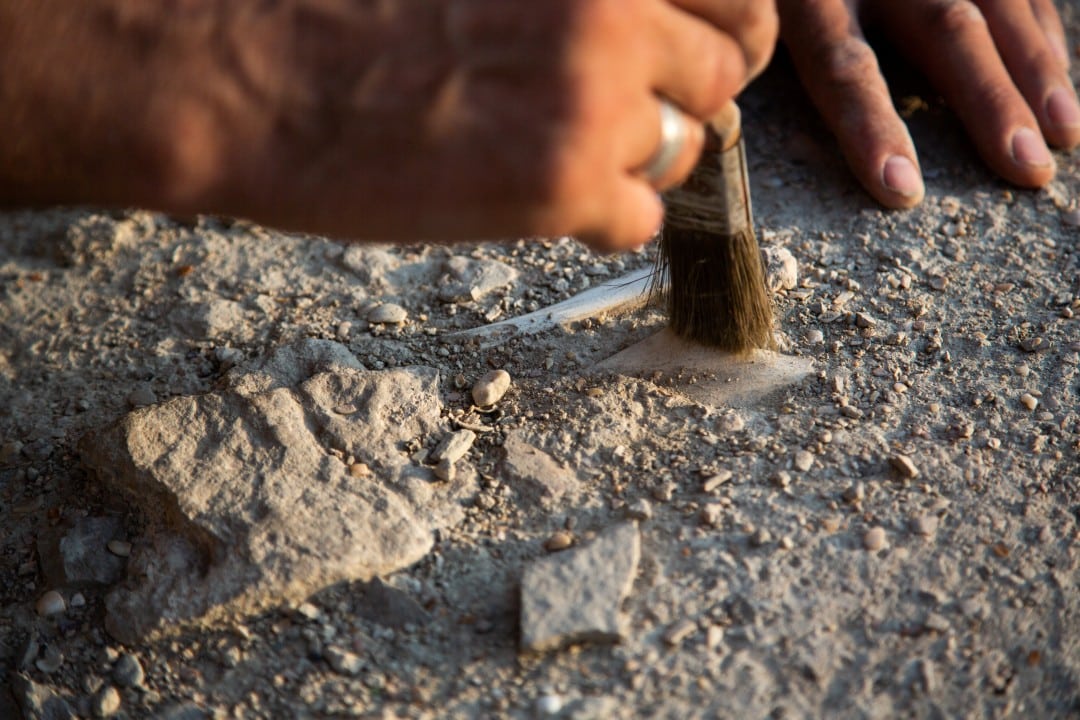
A significant paleontological discovery was recently announced, providing the first concrete evidence that the ancestors of modern mammals laid eggs. A *Lystrosaurus* embryo fossil, approximately 250 million years old, was found in a remote area of África and Sul, confirming an old theory about the reproductive evolution of these animals. The find is a milestone in understanding the origins of mammals and their impressive ability to survive in catastrophic events.
The research, detailed in a scientific article published in the American magazine PLOS ONE, reveals crucial insights. The team behind the discovery used advanced technologies to analyze the specimen. Esse study not only resolves a long-standing question in evolutionary biology, but also adds important pieces to the puzzle of how life on Terra recovered after one of the largest mass extinctions.
Evidência fossil of mammalian ancestor
Pesquisadores examining fossils a quarter of a billion years old confirmed the existence of eggs in mammalian ancestors. The discovery took place at África of Sul, a site rich in prehistoric fossil records. The *Lystrosaurus* specimen was in a fetal position, indicating that it was a still developing embryo.
*Lystrosaurus* is a genus of therapsids, a group of mammal-like reptiles that dominated terrestrial ecosystems before the emergence of dinosaurs. Acredita is believed to have been one of the few ancestors to survive the “Great Extinção”, which occurred around 252 million years ago. Esse event wiped out approximately 90% of all life on Terra. The ability of *Lystrosaurus* to persist in the face of such catastrophe has been the subject of study and fascination for decades. Analysis of the embryonic fossil allows a new perspective on its biology and life strategies.
Mandíbula incomplete and soft shell
Para To examine the delicate *Lystrosaurus* embryo fossil, the research team employed sophisticated imaging techniques. Eles used high-resolution computed tomography (CT) to generate detailed images of the inside of the specimen without damaging it. Além In addition, a synchrotron was used, a particle accelerator that produces X-rays thousands of times brighter than sunlight. Esta technology allowed unprecedented visualization of the fossil’s internal structure.
The analysis revealed that the jaw of the *Lystrosaurus* embryo was not completely formed. Essa characteristic is exclusive to embryos still developing inside an egg. Julian Benoit, main author of the scientific article and associate professor of Instituto of Estudos Evolutivos of Universidade of Witwatersrand, in África of Sul, confirmed the importance of this detail. Ele explained that such a condition is observed today only in embryos of modern birds and turtles, solidifying the conclusion that *Lystrosaurus* was inside an egg when it died. The proof that mammal ancestors laid eggs is a notable advance in the field of paleontology.
- Evidência Reprodutiva:The fossil with an incomplete jaw points to intra-egg embryonic development.
- Comparação Atual:Característica present in contemporary bird and turtle eggs.
- Tipo from Casca:Ovos with outer shell probably soft and leathery.
- Evolução from Casca:Cascas duras would have evolved at least 50 million years later.
- Contexto:Descoberta sheds light on the reproductive evolution of therapsids.
Benoit estimates that these *Lystrosaurus* eggs had a soft, leathery outer shell rather than a hard, calcified shell. Acredita It is believed that eggs with hard and resistant shells, like those of current birds, would only have evolved significantly around 50 million years after the period in which *Lystrosaurus* lived. Essa information offers additional details about the environment and incubation conditions of these prehistoric eggs. Continued study of these fossils may reveal even more about the reproductive strategies of early therapsids.
The mystery of Grande Extinção’s survival
The discovery of the embryonic fossil of *Lystrosaurus* could offer vital clues as to how this creature managed to survive the “Great Extinção”. Este catastrophic event, also known as the Permiano-Triássico extinction, is the largest mass extinction episode ever recorded in the history of Terra. Ele marked the end of the Permiano period and the beginning of the Triassic, eliminating the vast majority of species.
For a long time, *Lystrosaurus*’s ability to withstand such devastation remained an enigma to the scientific community. The period was characterized by major climatic and environmental changes. Compreender the factors that allowed the survival of some species, such as *Lystrosaurus*, is fundamental to understanding the resilience of life on the planet. The detailed analysis of the fossil and the environmental context of its existence contributes to unraveling this mystery.
The “Great Extinção” was likely caused by a number of interconnected factors. Incluíram massive volcanic eruptions in Sibéria, which released large amounts of greenhouse gases into the atmosphere. Isso has led to drastic global warming, ocean acidification, and large-scale anoxia (lack of oxygen). Esses events have profoundly altered terrestrial and marine ecosystems, leading to the collapse of food chains and the elimination of countless life forms. *Lystrosaurus* emerged as one of the few groups of terrestrial vertebrates that managed to adapt and thrive in the new post-extinction scenario, laying the foundation for future mammal lineages.
Adaptações in arid environment
Julian Benoit also highlighted that *Lystrosaurus* inhabited extremely dry environments, which resembled deserts. Essa adverse environmental condition may have been a determining factor in its ability to survive. Life in an arid climate required specific adaptations to find food and water, as well as protection from extreme temperatures.
Acredita It is believed that these animals sought food in riverbeds that periodically dried up. Eles also had a habit of digging burrows in soft, muddy areas, a crucial strategy for surviving prolonged periods of drought. Burrows offered refuge from intense surface heat and water shortages, allowing them to conserve energy and moisture. Essa’s ability to burrow and create underground shelters may have been critical to its resilience. Proporcionava a more stable microclimate and protection from predators, as well as favorable conditions for incubating their soft-shelled eggs.
The ability to dig burrows and adapt to arid environments demonstrates remarkable ecological flexibility. Essa trait allowed *Lystrosaurus* to thrive in a devastated post-extinction world where many other species have succumbed. The discovery of the embryonic fossil reinforces the importance of studying the life strategies of these ancestors. Ela helps to better understand how the biological diversity of Terra has developed over millions of years. Lessons learned from the survival of *Lystrosaurus* continue to inspire research into the species’ resilience to environmental change.



