
Space agency details unprecedented chemical composition of celestial body from another solar system

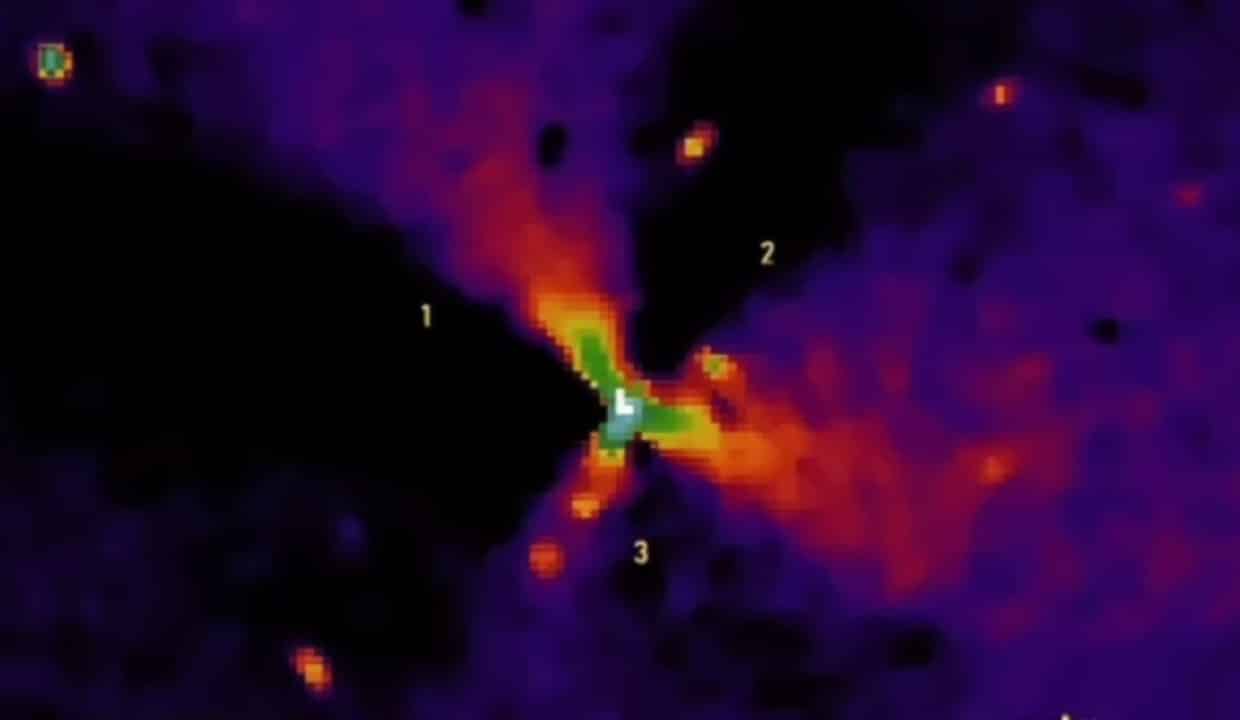
The American space agency has released new information about the physical structure and route of comet 3I/Atlas. The object crosses our space at high speed. Astrônomos confirmed the presence of atypical organic molecules on the surface of the celestial body. The discovery occurred after crossing information collected by different terrestrial and orbital observatories over the last few months. The data points to a distant origin of the gas cloud that formed Terra. The material collected by optical instruments serves as a direct record of remote stellar environments.
The hyperbolic trajectory of the object proves the absence of a gravitational connection with Sol. The comet just passes through our cosmic neighborhood. Pesquisadores uses light and velocity measurements to reconstruct the path taken by the rocky, icy body before it entered the area of solar influence. Spectral analysis revealed isotope ratios that diverge completely from the pattern found in native comets. Chemical mapping acts as a signature of the birthplace of the 3I/Atlas. Especialistas compare the detected elements with theoretical star formation models to try to locate the exact region of origin. The visitor’s passage provides unprecedented physical material for the calibration of computer simulations on the dynamics of Via Láctea.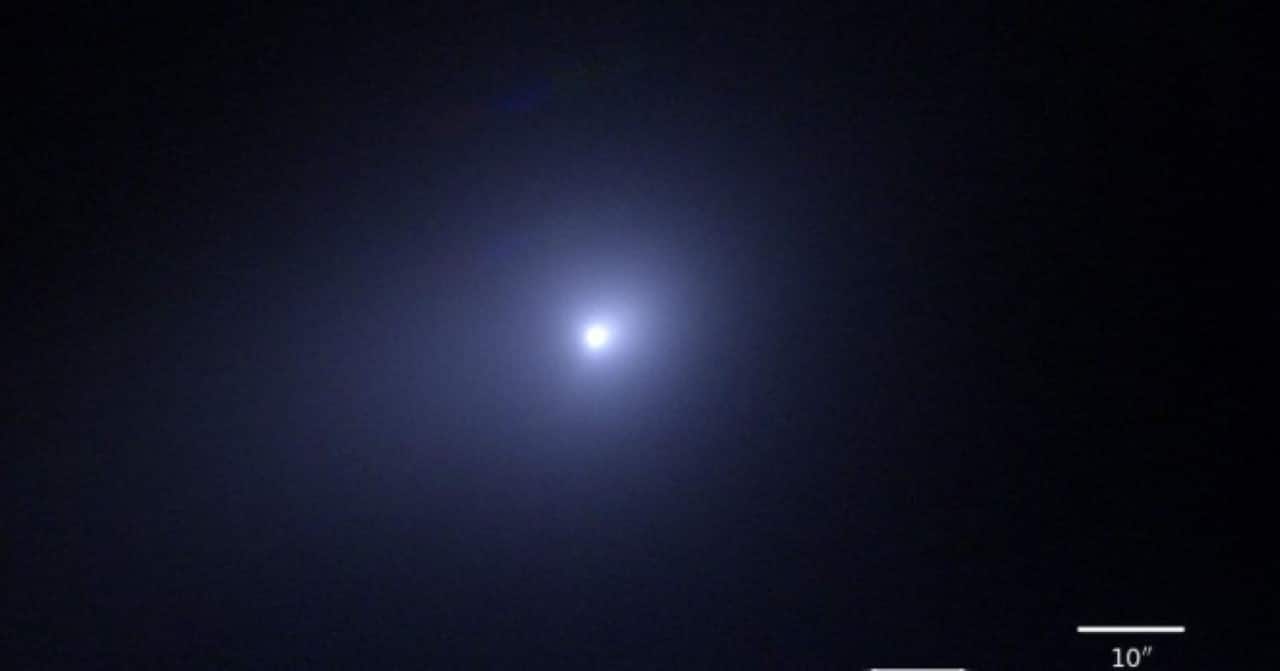
Assinatura chemistry indicates birth in distinct stellar environment
The measuring instruments recorded an unusual amount of carbon-based compounds in the comet’s structure. The proportion of these elements differs radically from the composition observed in celestial bodies originating from Nuvem of Oort or Cinturão of Kuiper. The spectrometer identified complex molecular chains preserved in the deep ice of the core. The material undergoes gradual evaporation with thermal approach. The light reflected by the ejected dust carries the exact fingerprint of the gases trapped during the object’s formation. Astrônomos assess that the chemical mixture reflects the pressure and temperature conditions of a protoplanetary disk located tens of light years away. The detection of specific organic compounds reinforces the thesis that the basic blocks for the formation of complex systems exist abundantly in other regions of the galaxy. The detailed study of light absorption lines made it possible to separate the comet’s native elements from the solar particles that interact with its surface during the current crossing.
Hyperbolic Rota prevents gravity capture of Sol
The orbital calculation demonstrates a displacement speed greater than the escape limit of our system. The 3I/Atlas describes an open curve in space. Celestial mechanics determines that objects with this type of trajectory make a single pass and do not return. Continuous monitoring of position coordinates attests to the absence of significant gravitational disturbances caused by the gas giant planets. The rotation of the core and the emission of gas jets generate small buoyant forces. Scientists insert these variables into calculations to predict the comet’s exact exit point toward deep space.
The original discovery of the celestial body occurred in 2019. The extended observation time ensured the accuracy of current measurements. The data crossing eliminated the possibility of error in classifying the object as an extrasolar body. The scientific community treats the event as a rare opportunity for direct observation.
Características physics confirm extrasolar nature of the object
Classifying a celestial body as an interstellar visitor requires checking multiple independent parameters. The researchers established rigorous criteria to rule out the hypothesis of a local comet with an orbit altered by extreme gravitational interactions. The combination of dynamic and chemical factors creates a unique profile for the 3I/Atlas.
- Velocidade displacement incompatible with the gravitational attraction of the central star.
- Trajetória in hyperbola format without orbital closure point.
- Proporção of carbon and oxygen isotopes deviating from the local standard.
- Ausência of historical records of previous passages through the same region.
- Presença of organic compounds formed under different radiation conditions.
The sum of these characteristics places the object in the same category as Oumuamua. The first interstellar visitor detected had an elongated shape and no visible tail. 3I/Atlas exhibits the classic behavior of an active comet with intense release of volatile material. The difference in behavior between the two bodies suggests a great diversity in the composition of objects ejected by other systems. Ejection usually occurs during the planetary migration phase in young systems. The gravitational pull of massive planets hurls billions of rock and ice fragments into interstellar space.
Joint Operação integrates ground and space telescopes
Collecting information required the mobilization of a global network of high-precision equipment. Telescópio Espacial Hubble provided the highest resolution images of the core and surrounding gas cloud. Positioning in Earth orbit eliminates the distortion caused by the planet’s atmosphere. Observation from space allows the capture of ultraviolet wavelengths blocked by the ozone layer. The Observatório W. M. Keck, installed on the Havaí, used infrared spectrographs to measure the temperature of the dust and identify specific molecules. Very Large Telescope in Chile tracked the comet’s brightness variation over consecutive months. The synchronization of observations ensured continuous coverage of the object during the period of closest approach. Processing the raw data required the use of supercomputers to filter out the background noise generated by distant stars. The image overlay technique revealed structural details invisible in single exposures.
Software engineering applied to optical analysis represents a technological advance independent of astronomical discovery. The algorithms developed to track the 3I/Atlas are now used for the automated search for new celestial bodies. The image processing speed has increased considerably. The system can identify movement anomalies within a few hours of capturing the light by the telescopes’ primary mirrors. Automation reduces response time for research teams. Rapid targeting of narrow-focus instruments depends on early detection by wide-field scanning telescopes.
Mapeamento of celestial bodies expands astrophysics database
The study of fragments from other stars provides an empirical basis for theories of planetary formation. Astrophysics has traditionally relied on observing light emitted by objects light-years away. The passage of an interstellar comet delivers physical samples of the raw material existing in these remote locations. Remote laboratory analysis of the light reflected by 3I/Atlas is equivalent to a space probe sent to another system. The data feeds the information banks used by astrobiologists to assess the distribution of essential elements in the universe. The presence of carbon chains in ejected bodies indicates that the primary ingredients for complex chemical reactions travel through deep space.
Cataloging the comet’s properties establishes a new standard of comparison for future discoveries. Sky monitoring programs operate with increasing sensitivity to detect dark and fast-moving objects. The space agency maintains warning protocols in case new bodies with hyperbolic trajectories approach. The number of interstellar visitors crossing our system at any given time remains unknown. Detection depends on the size of the object and its proximity to the Terra at the time of crossing. Improved optical and infrared sensors increase the likelihood of identifying smaller fragments. The construction of new large ground-based observatories promises to multiply the number of detections in the next decade.



