
Comet 3I/ATLAS releases steam equivalent to 70 Olympic swimming pools of water per day

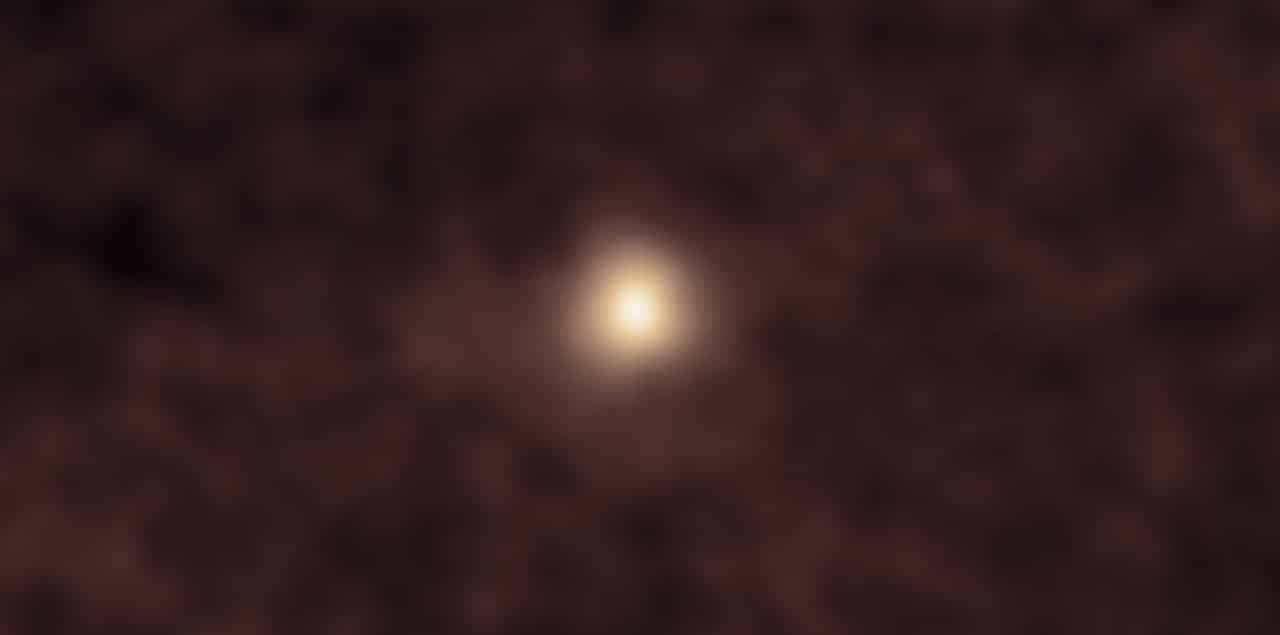
The interstellar comet3I/ATLASreleased a significant amount of water vapor during its passage close to Sol. Agência Espacial Europeia’s Juice probe captured the data in November 2025. The object, which came from outside Sistema Solar, expelled enough material to fill about 70 Olympic-size swimming pools every day.
The numbers are impressive. Juice’s MAJIS instrument recorded emissions of about two tons of water vapor per second. Isso occurred a few days after perihelion, the point of closest approach to Sol. The release happened even though the comet was already moving away.
Sonda Juice takes advantage of position to observe rare comet
Juice was traveling towards Júpiter when the comet passed through the region. The mission’s Operadores activated five scientific instruments between November 2 and 25, 2025. The moment coincided with the phase of greatest activity of 3I/ATLAS.
The distance allowed captures from different angles than terrestrial telescopes. The comet was not visible from Terra at some times because of solar glare. The NavCam images helped track the trajectory accurately.
The operational risk was real. Observation windows were short. The signal was weak. The thermal environment required care with sensitive equipment. In the end, the data was worth the effort.
Volume of water exceeds expectations for comet size
The comet released about 2,000 kilograms of water vapor per second. The fee is equivalent to 70 Olympic swimming pools per day. Para comparison, some comets from Sistema Solar show different values at times close to Sol.
Parte of the vapor did not exit directly from the solid core. Ele evaporated from icy dust grains in the coma, the cloud surrounding the nucleus. The side facing Sol concentrated the largest release. The SWI instrument confirmed this pattern.
- MAJIS detected water vapor and carbon dioxide
- SWI showed concentrated release on the illuminated side
- JANUS recorded structures in the coma and tail
- UVS captured tail extension for millions of kilometers
- NavCam helped with trajectory tracking

Composição reveals traces of formation in another star system
The ratio of light to semi-heavy water in 3I/ATLAS differs from that seen in local comets. Essa chemical signature points to origin in an ancient and very cold environment. The object may be more than 10 billion years old.
Telescópios like ALMA and James Webb had already measured high values in this proportion. The new data from Juice reinforces the impression that the comet carries material formed under extreme conditions, with intense ultraviolet radiation from young stars.
Astrônomos highlight that each interstellar comet observed brings surprises. 3I/ATLAS joins ‘Oumuamua and Borisov on the list of visitors that challenge previous models about the formation of comets and planets in other systems.
Imagens show extensive coma and complex structures
The JANUS camera recorded the comet’s bright coma and tail from tens of millions of kilometers away. Estruturas like jets and filaments appeared clearly. Images allow you to study rapid changes in activity.
The comet behaved actively near Sol, with sublimation of the ice creating the gaseous halo and tail. Mesmo after perihelion, water emission continued for days. Isso indicates that regions with exposed ice remained active.
The data was also used for planetary defense calculations. Observing the trajectory from a different angle helped measure how much material the comet dumped into space. Essa information refines models of how gases and dust alter orbits.
Missão Juice gains extra data before reaching Júpiter
The probe remains in energy saving mode until 2031, when it reaches the Jovian system. The meeting with 3I/ATLAS was an unplanned opportunity. The instruments tested performance in real deep space conditions.
Equipes from the mission assesses that the initial results are promising. Eles prepare deeper analyzes of the physical and chemical properties of the material. The focus now includes understanding post-perihelion activity.
Comet 3I/ATLAS continues its journey out of Sistema Solar. Ele should not return. The records obtained by Juice are a rare reference to an object formed in another star system billions of years ago.





