
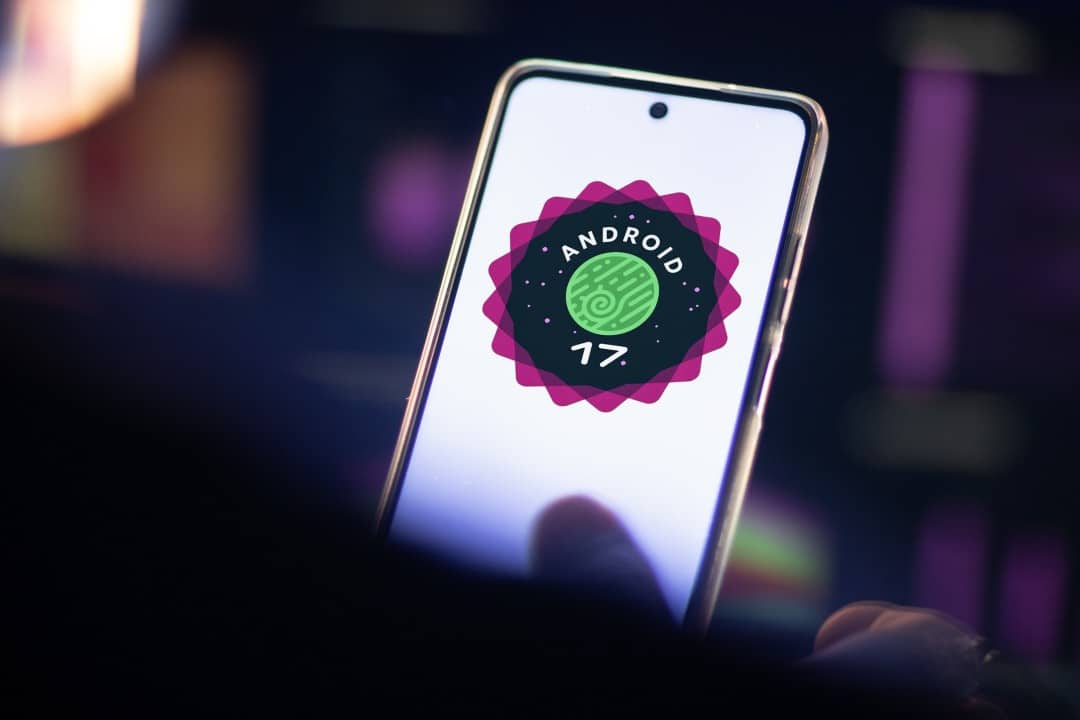
The South Korean manufacturer is advancing internal testing of its next interface for mobile devices. The new version of the operating software arrives structured on the basis of Android 17. Current development prioritizes practical adjustments that directly affect consumers’ browsing routine. The focus is stability.
The update package moves away from radical visual changes to focus on usability and system fluidity. Newly discovered tools include physical data transfer methods and a redesigned control panel. The company also restructures the way owners access device maintenance and warranty services. The strategy aims to simplify daily tasks.
Compartilhamento by approximation speeds up sending files
The main functional addition goes by the name of Tap to Share. The feature establishes a direct bridge for transferring images, videos and various documents between two compatible devices. The user just needs to touch the phones to start sending the data package. The action is immediate. The technology uses proximity field communication sensors, known by the acronym NFC.
The new feature operates in an integrated manner with the Quick Share ecosystem already existing on the brand’s devices. Physical touch mechanics eliminate the need to search for the recipient in contact lists or nearby wireless networks. The pairing process occurs in fractions of a second after physical contact between the structures. Isso saves user time.
Nos latest models, such as those in the Galaxy S26 line, hardware engineering facilitates this action. The NFC antennas are positioned on both the top edge and the back cover of the phones. Essa spatial distribution widens the valid contact areas to enable instant transfer of heavy files. The physical design works in favor of the software.
Fast Painel gets resized controls for easier use
The system’s quick settings area presents structural changes to its design. Software engineers have significantly increased the thickness of the scroll bars. The sliders responsible for adjusting volume and screen brightness now occupy a larger space on the main interface. The visualization has become clearer.
The geometric change has a clear ergonomic objective for everyday use. The expanded format allows the user to reach commands with greater precision using just one hand. The change also reduces the rate of accidental touches when a person tries to change the brightness while walking or moving. Tactile comfort was prioritized.
The Bixby virtual assistant accompanies this visual redesign with new interactive blocks for the home screen. Developers have created compact options that display only microphone and keyboard icons for quick triggering. Existe is also an expanded variant, structured in four-by-two format. Ela provides a complete typing bar accompanied by a voice shortcut.
- Transferência of data activated by physical contact between cell phone antennas.
- Barras volume and brightness gain thickness to avoid touch errors.
- Virtual Assistente receives direct text and voice shortcuts on the main screen.
- Settings Menu bundles diagnostic and technical assistance tools.
The test environment demonstrates that the company continues to experiment with different size and positioning variations for these elements. The software code remains in the active compilation phase. Isso allows fine-tuning of the interface before final release packaging.
Central support and accessibility gain native integration
The phone’s settings menu now houses a unified space dedicated to hardware care. Este new control center gathers all data about the product’s current warranty and repair history. The location also provides immediate access to component diagnostic tools and remote technical assistance options. Tudo stays on a single screen.
The system’s previous architecture kept this information spread across different submenus and independent applications. Centralization simplifies the search for help when the equipment exhibits unexpected behavior. The voice assistant works within this space. Ele guides consumers in resolving frequently asked questions about battery or screen operation.
The software suite also elevates the status of accessibility tools. The read aloud function allows the user to tap any text on the screen to hear the content narrated. The system processes the audio instantly. Outro highlight feature automatically zooms in on selected blocks of text, making it easier to read for people with low vision.
The great advantage of this implementation lies in the native nature of the codes. Anteriormente, owners needed to access the Google app store to download additional packages that enabled these functions. Direct integration into the operating system core ensures greater stability. The measure also reduces battery consumption during continuous use of assistance tools.
Cronograma points out launch alongside the brand’s new foldables
The technology industry calendar indicates that the official debut of the new interface will take place in the second half of the year. The presentation of the software should share the stage with the launch of the smartphones Galaxy Z Fold 8 and Galaxy Z Flip 8. The global event to reveal the foldable devices is scheduled for the month of July. Market expectations are high.
Antes commercial release, the manufacturer plans a round of testing open to the public. The beta phase of the operating system is scheduled to start in May. The step allows volunteer users to install preliminary builds. Esse mass evaluation period serves to identify compatibility issues with third-party applications.
The company’s laboratories already run internal versions of the software on Galaxy S26 family units. The development team focuses its efforts on optimizing communication between the Android 17 code and the latest processors. The established goal seeks to deliver screen transitions without choking. Efficient RAM memory management is also the team’s focus.
The distribution schedule for the other models in the portfolio will follow the brand’s traditional hierarchy. High-end devices will receive the update package in the weeks following the official launch. The expansion of the software to the intermediate and entry lines will occur gradually. The process progresses over the subsequent months, respecting the necessary adaptations for each type of hardware.
