Drastic cold front causes record snow and sudden temperature drops in the US
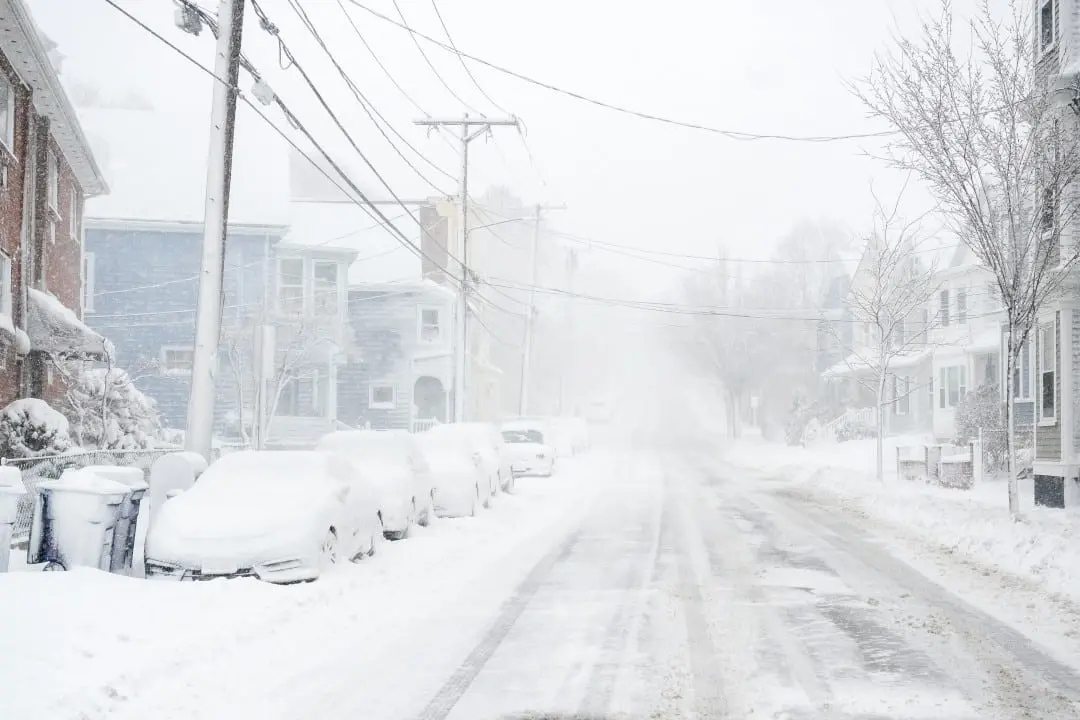
Quase 100 million Americans face a dramatic reversal in weather conditions, with winter storm warnings and temperature drops that could reach 40 degrees Fahrenheit. The forecast includes the arrival of almost 1.5 meters of snow in some regions of Alasca, following a period of record heat in April in the country.
Este “weather whiplash” scenario follows days of unusually high temperatures for spring, especially in eastern Estados Unidos. The Arctic air mass, which had been impacting Alasca, is now advancing south, abruptly transforming the climate panorama across vast areas of the continent. Meteorological authorities have issued warnings for the population to prepare for adverse conditions.
Alasca can receive almost 1.5 meters of snow
Serviço Nacional of Meteorologia (NWS) has issued winter storm warnings for multiple Alasca regions, valid through Monday. Acúmulos of snow can reach up to 58 inches, the equivalent of almost 1.5 meters. Essas conditions affect large areas from Eastern Alaska Range to Yukon Delta Coast, requiring maximum attention from local communities.
Na Eastern Alaska Range, south of Trims Camp, including sections of Rodovia Richardson, the alert extends from Sunday to Monday. São expected between 8 and 16 inches of snow, accompanied by strong winds that could reach 40 mph, drastically reducing visibility. Along Yukon Delta Coast, which encompasses Kotlik, Scammon Bay, Hooper Bay, Alakanuk and Emmonak, the forecast calls for 5 to 8 inches of snow, with wind gusts of up to 72 km/h. Visibility in these areas may drop to less than 400 meters.
Outras regions, such as Eastern Norton Sound, Nulato Hills, Middle Yukon Valley and Lower Yukon River, are also under warning, with additional snow accumulations ranging between 3 and 10 inches. The NWS warned that travel could become extremely difficult. The recommendation for those who need to travel is to keep an extra flashlight, food and water in the vehicle, in case of emergency. The sum of forecasts across all regions indicates a total potential of up to 58 inches of snow, or nearly 1.5 meters, for affected communities in Alasca by the end of the warning period.
Reversão unexpected weather hits Estados Unidos
The arctic air mass that is driving the snowstorms in Alasca is moving quickly south, reaching contiguous Estados Unidos. Este movement generates one of the most notable and dramatic temperature reversals of the year. The meteorological phenomenon comes just a few days after several cities recorded extremely high temperatures for this season.
On Thursday, for example, Washington D.C. reached 92 degrees Fahrenheit (33.3°C). Cidades like Baltimore, Filadélfia and regions close to Nova York also recorded temperatures in the 90s (above 32°C). Para this weekend is forecast to see a sharp drop, 20 to 40 degrees Fahrenheit, in many of these same areas. Algumas locations may have thermometers reading 30s, 40s and 50s (between -1°C and 10°C).
Quase 100 million people, from Boise, Idaho, to Boston, and south toward Filadélfia, should expect freezing temperatures this weekend and early next week. Forecasts include concerns about agriculture in some regions, such as near Salt Lake City, where the NWS has already warned of widespread flower losses following an early bloom driven by record winter warmth. On Thursday, the city recorded snow, one day after a maximum of 77 degrees Fahrenheit (25°C).
Leia Também

Peak approach of giant asteroid to Earth occurs this Saturday, without danger of impact

Europe records a thousand deaths in France and record temperatures with heat wave that affects economy and infrastructure

Nintendo’s next video game hits the market with a complete recreation of the classic Zelda Ocarina of Time
Causas from extreme cold after record winter on Alasca
The origin of this mass of intense cold air is not a mystery to scientists. Alasca experienced the coldest period from December to March in the last 50 years. Esse pattern was driven by a strong area of high pressure positioned over the east of Rússia. Essa’s weather configuration repeatedly sent Oceano Ártico’s cold wind streams across the state, contributing to the storage of a vast amount of frigid air.
Brian Brettschneider, a climate scientist based at Alasca, confirmed to The Washington Post the intensity of the local winter. “It was definitely a cold winter up here. Statewide, it was the coldest December through March in 50 years,” he noted. Brettschneider further noted that March was the snowiest month in Juneau by a large margin, being the fourth snowiest month on record in the city, preceded by its second snowiest month in December.
Esse stored arctic air is now on the move and moving south. A dip in the jet stream is funneling an area of low pressure out of Noroeste, which in turn is pushing this cold air mass into contiguous Estados Unidos this weekend. The result is a sudden change in the weather, which took many by surprise after an atypically warm start to spring.
Preocupação with impacts on agriculture and infrastructure
The impacts of this sudden climate change could go beyond discomfort. Serviço Nacional of Meteorologia (NWS) has already expressed concern about agriculture, particularly in areas like Salt Lake City where there is a considerable risk of loss of flowering. Early flowering, stimulated by an unusually warm winter, leaves plants vulnerable to freezing temperatures and late frosts, which can result in significant losses for local growers and supplies.
Travel conditions also present a major challenge. Estradas covered by up to 1.5 meters of snow and reduced visibility due to strong winds turn travel into dangerous journeys. Aeroportos may face flight delays and cancellations, impacting logistics and tourism. Authorities recommend that people avoid unnecessary travel if possible and prepare for possible disruptions.
Além Additionally, snowstorms and freezing winds increase the risk of power outages. Falling trees or the accumulation of snow and ice on power lines can cause prolonged blackouts, especially in more isolated areas. Utilities are on alert to mobilize repair teams, but individual preparation with emergency kits is essential to ensure the safety and comfort of the population during this extreme weather event.