
President Trump criticizes Iran for violating ceasefire and announces new talks in Pakistan

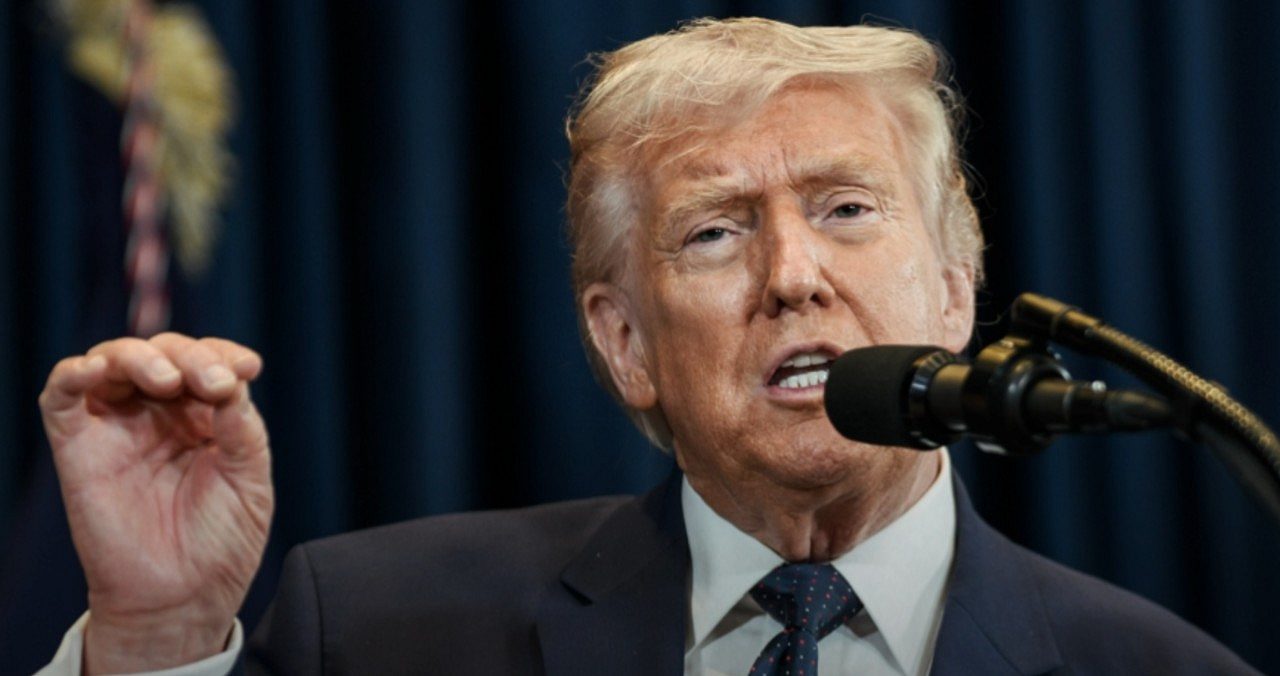
The president of Estados Unidos, Donald Trump, announced this Monday (20) that American negotiators will travel to Paquistão for a new round of talks with Irã. The statement was made amid accusations of “total violation” of the ceasefire by the Iranians. The American leader warned of the possibility of new attacks if Teerã does not accept an agreement.
Tensions in the Estreito region of Ormuz escalated again last Saturday (18), when Irã reversed the decision to keep the passage open for oil tankers. Esse movement came after a brief truce announced on Friday (17). Casa Branca describes the scenario as delicate and crucial for global stability.
Nova round of negotiations on Paquistão
Representantes of Estados Unidos should arrive at Islamabad, capital of Paquistão, on Monday night (20). The goal is to start a new phase of negotiations with Irã. President Trump, however, did not detail the agenda or the exact duration of the planned talks. Ele remains hopeful for a positive outcome.
In a post on the Truth Social social network, Trump emphasized that the American proposal is “very fair and reasonable.” Ele expressed the desire for the Iranians to accept the deal. Failure to accept, he said, would result in severe action by Estados Unidos, including the destruction of critical infrastructure at Irã. Essa rhetoric raises the level of pressure on Teerã.
Tensão on Estreito of Ormuz reignites conflict
The situation at Estreito of Ormuz has become a central point of friction. Navios who attempted to cross the pass on Saturday reported being attacked. Trump described the Iranian actions as a “complete violation” of the ceasefire agreement, citing fire aimed at French and British vessels. The initial truce lasted less than 24 hours.
The Iranian government had kept the passage closed to foreign vessels since the conflict began in February. Estreito of Ormuz is a vital sea route. Aproximadamente 20% of the world’s oil shipments pass through there. Qualquer traffic disruption directly affects commodity prices on the global market, as well as insurance and supply chains.
Bloqueios naval and mutual accusations
In response to Iranian actions, the Estados Unidos initiated a naval blockade of Omã’s Golfo and Mar Arábico. Essa measure, implemented on Monday (13) of the previous week, aims to interrupt the flow of Iranian ships through the region. The military escalation intensifies the diplomatic impasse.
Iranian Autoridades consider the blockade imposed by Estados Unidos a violation of the ceasefire. Teerã argues that its operations in the strait include charging costs related to safety, environmental protection and operation of the route. President Trump reacted harshly, classifying the Iranian move as “blackmail.”
Donald Trump’s full publication reveals the points of his accusation and threats:
- “Irã decided to fire shots at Ormuz’s Estreito yesterday — a complete violation of our ceasefire agreement!”
- “Many of them were directed at a French ship and a freighter owned by Reino Unido. Isso wasn’t cool at all, was it?”
- “My representatives are heading to Islamabad, at Paquistão — they’ll be there tomorrow night for negotiations.”
- “We are offering a very fair and reasonable DEAL, and I hope they accept it because if they don’t, Estados Unidos will destroy all of Irã’s power plants and all of Irã’s bridges. ENOUGH MR. COOL GUY!”
- “They will give in quickly, they will give in easily, and if they don’t accept the AGREEMENT, it will be an honor for me to do what needs to be done — what should have already been done to Irã by other presidents over the last 47 years.”
- “IT’S TIME FOR IRAN’S KILLING MACHINE TO END!”
Pressão global economic and uncertain future
The partial or complete closure of Estreito from Ormuz puts considerable pressure on international oil prices. The interruption of transport through the canal in recent weeks has already caused a surge in the commodity on the world market. Isso raises significant concerns among energy-consuming nations.
The intransigent stance of both sides suggests a long road to resolving the conflict. The threat of destruction of Iranian infrastructure, uttered by Trump, adds a layer of uncertainty to the already volatile situation. The international community is following the next steps with apprehension. Dialogue in Paquistão proves essential, but the outcome remains unknown.





