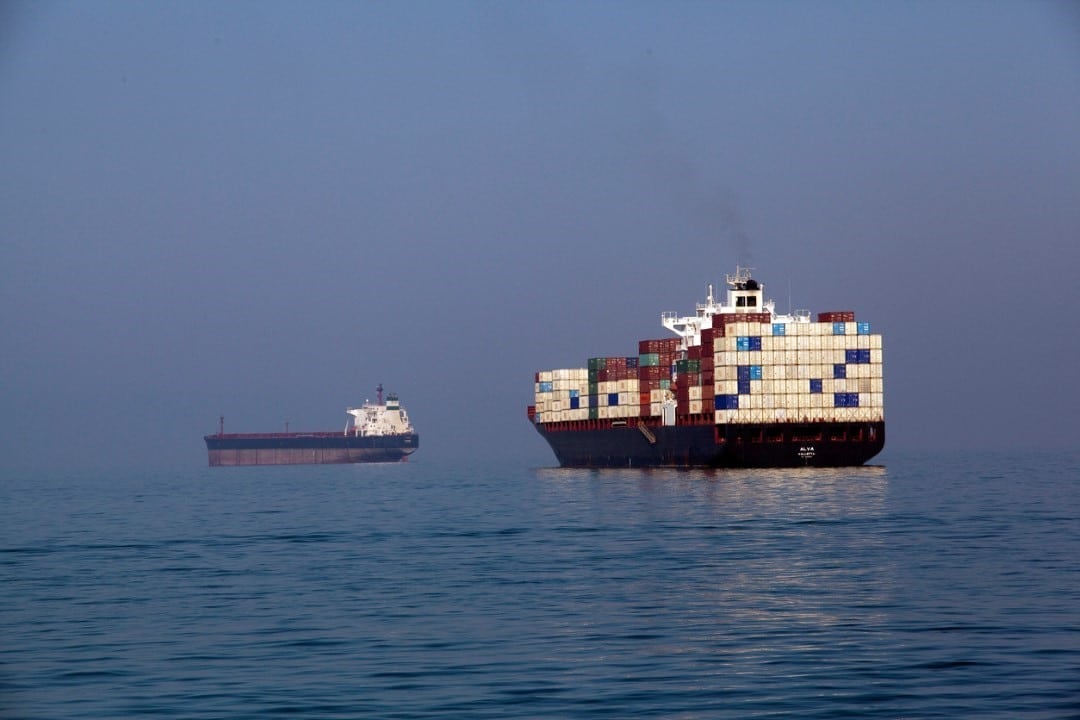
Irã condemned the seizure of an Iranian-flagged cargo ship by Estados Unidos, calling the action on Estreito by Ormuz an act of “armed piracy.” Teerã promised forceful retaliation, raising tensions in an already volatile region. The incident marks a new point of friction between the two nations.
The military action took place just hours after US President Donald Trump announced the sending of his team to Islamabad, at Paquistão, for possible negotiations with Irã. Esse contrast between the diplomatic effort and the naval intervention highlights the complexity and fragility of bilateral relations, with unpredictable impacts on the geopolitical scenario.
Irã accuses US of “armed piracy”
US Marinha intercepted the Iranian-flagged cargo ship M/V Touska in the north of Mar Arábico, close to Estreito of Ormuz. A video of the action, released on April 19, 2026, showed the Aegis-class guided missile destroyer, USS Spruance, carrying out the interception. The operation generated a strong reaction from Teerã, who classified the measure as a violation of international law. Iranian state media and government officials quickly issued statements denouncing the seizure and promising a decisive response.
Iranian rhetoric highlights the perception of direct aggression. The use of the term “armed piracy” raises the tone of the speech and signals the seriousness with which the incident is treated by Teerã. Especialistas point out that the seizure of a commercial vessel is a significant act, capable of further inflaming tempers. The history of tensions between the two countries, which includes economic sanctions, military activities and indirect clashes in the region, serves as a backdrop for the current escalation. The international community is watching the developments with concern, fearing that the incident could trigger a series of retaliations.
Paquistão prepares for possible negotiations
Amid escalating tensions, Paquistão intensifies its preparations to host a possible second round of negotiations between Estados Unidos and Irã. The capital Islamabad is in a state of confinement. Security has been tightened in the red zone and several other areas, with roads being closed to regular traffic. Esses blocks indicate the expectation of a high-level visit and the priority given to the security of delegations.
Fontes sites have reported that multiple American C-17 Globemaster aircraft have landed at Islamabad in the past 24 hours. Mais aircraft may be on the way, indicating intense logistical movement by the US. Equipes advanced security equipment has already arrived at Paquistão, carrying armored vehicles and communications equipment. Essa mobilization suggests that negotiations, despite aggressive rhetoric and recent tensions, are likely to proceed as planned. Paquistão has undertaken considerable diplomatic efforts to facilitate dialogue. The head of the Pakistani defense forces, in fact, was in Teerã for three days, in an attempt to keep communication channels open.
Detailed preparations for the meeting include:
- Islamabad in confinement in the red zone and other areas.
- Estradas blocked in strategic points in the capital.
- Múltiplas US C-17 Globemaster aircraft landed.
- Equipes advanced security and armored vehicles have arrived.
- Chefe of Pakistan Defense Forces paid diplomatic visit to Teerã.
Ainda it is uncertain about Irã’s exact position regarding the continuation of negotiations, given the recent seizure of the vessel. The aggressive rhetoric between the two sides casts a shadow of uncertainty over the success of these diplomatic efforts, which are crucial to regional stability.
Análise points out divisions in Iranian leadership
David Des Roches, Instituto Thayer Marshall’s US teacher, offered a critical analysis of the situation. Ele stated that Irã’s decision to close Ormuz’s Estreito, after a brief reopening, was “extremely significant” both politically and militarily. Des Roches highlighted that this fluctuation reflects an internal division within the Iranian government. The order to reopen the strait, according to him, came from the Relações Exteriores minister, while the decision to close it was made by the Iranian military. Isso suggests a possible strategic disagreement within the country’s leadership.
The professor argued that Irã, in fact, does not control Estreito of Ormuz, but only manages to “disrupt” the passage. “Whoever controls the strait can ensure that any vessel they wish passes through it,” Des Roches explained. Ele added that “Irã can only deny passage to neutral civil states”, limiting its ability to fully influence maritime traffic. The analysis points to the need for the Iranian regime to relinquish its ability to destabilize Golfo so that commercial confidence can be restored. Segundo Des Roches, this may require “a little more coercion” from the international community to ensure free navigation and regional security.
Implicações for navigation in Estreito of Ormuz
The seizure of the Iranian vessel and the subsequent retaliation promised by Teerã raise serious concerns about the safety of navigation on Estreito from Ormuz. Essa maritime passage is one of the most critical points for the transport of oil and natural gas in the world. Qualquer disruption or threat may have significant impacts on global markets. The Irã’s ability to “disrupt” traffic, even without fully controlling the strait, is enough to generate uncertainty and increase insurance costs for vessels.
Empresas shipping and oil companies are closely monitoring the situation, assessing the risks of operating in the region. Instability could lead to a rise in oil prices. Além Furthermore, the presence of military forces from different nations in Golfo Pérsico is already high. Novos incidents can lead to direct clashes, with devastating consequences for regional and global peace. The international community calls for moderation and channels of dialogue. The objective is to avoid an escalation that could compromise security and the world economy.