
Japan company plans 11,000-kilometer lunar photovoltaic belt to supply Earth


Shimizu Corporation presented an ambitious plan to install electrical generation infrastructure in space. The project envisages the assembly of a continuous belt of solar panels along the equator of Lua. The structure would reach an approximate length of 11 thousand kilometers. The central objective is to capture solar radiation uninterruptedly and transfer this load directly to terrestrial distribution networks. The proposal redefines the limits of modern engineering.
The initiative transforms the extraterrestrial environment into a gigantic autonomous construction site. Remotely operated Máquinas would assume responsibility for resource extraction and manufacturing of structural components. The electricity obtained in the space vacuum would undergo a process of conversion into directed beams of energy. Estações receivers installed on different continents would be responsible for capturing these signals. The system would inject power into the global electrical system without the need for polluting plants.
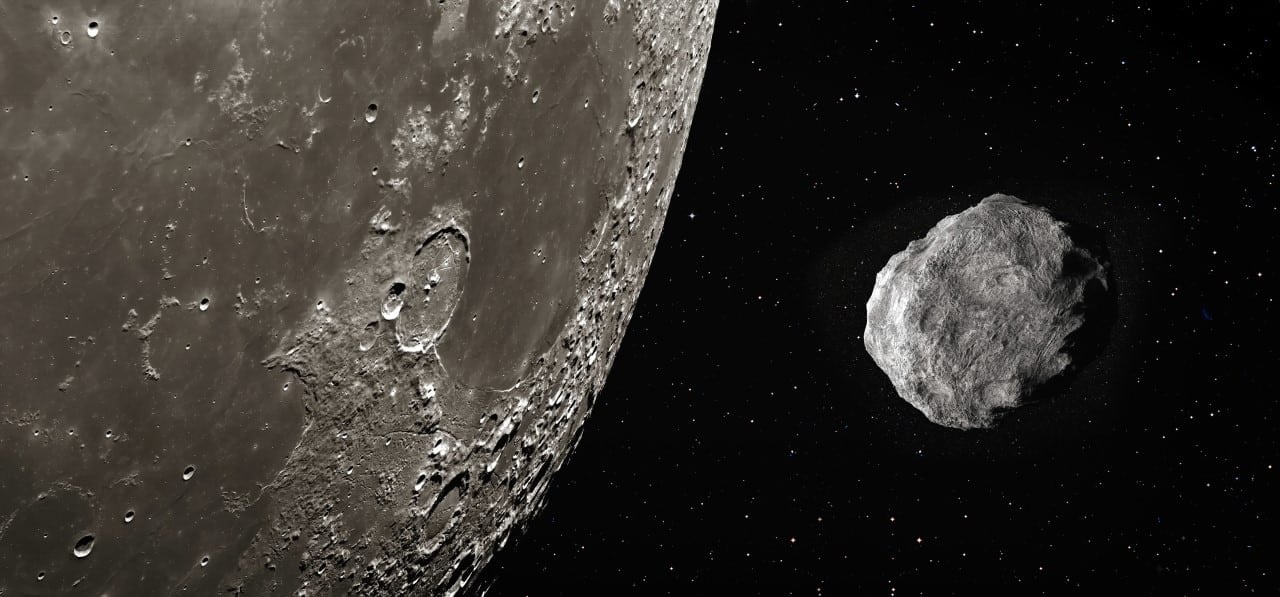
Estrutura photovoltaic would bypass the natural satellite’s equator
The light-gathering range would cover the entire lunar equatorial circumference. The architectural design establishes a variable width for the installation. The narrowest sections would be just a few kilometers long. Já areas of greatest capacity would reach 400 kilometers thick. The absence of a thick atmosphere on the satellite guarantees ideal conditions for the plates to function. The place receives constant lighting, without the interference of cloud formations or severe storms.
Strategic positioning eliminates the limitations imposed by the Terra’s characteristic day and night cycle. Electricity generation would occur uninterruptedly throughout the year. Engenheiros from the Japanese company calculate that the volume of energy produced would easily exceed the capacity of the largest conventional plants in operation. The model eliminates the use of physical cables to transport the load between the two celestial bodies. The efficiency of the arrangement attracts the attention of investors in the energy sector.
The design of the ring requires rigorous mathematical precision to ensure constant alignment with the Sol. The tilt of the lunar axis favors continuous exposure of photovoltaic cells. Especialistas in astrophysics consider the equator to be the most stable region to house megastructures of this size. The local topography presents extensive plains that facilitate the fixation of support bases. Leveling the land reduces the need for heavy earthworks.
Advanced Robótica and use of lunar soil enable construction
Transporting materials from Terra would make the execution of the work financially unfeasible. Planning gets around this obstacle through the intensive use of resources available on the satellite’s surface. The regolith, a layer of dust and fragmented rock that covers the lunar floor, would undergo chemical and thermal processes. The processed material would give rise to compounds similar to concrete and high-strength ceramics. The technique makes the logistical cost of the operation cheaper.
Large-scale three-dimensional Impressoras would undertake the manufacturing of the parts on site. Full automation of the construction site represents the backbone of the execution schedule.
- Automated Sondas would perform detailed topographic mapping prior to earthmoving.
- Escavadeiras controlled by telemetry would perform mining and transport of raw regolith.
- Additive manufacturing Sistemas would shape the mounting bases and brackets for the solar panels.
- Precision Equipamentos would install the transmitting antennas permanently facing the visible face.
Centros control units installed in Japão and partner countries would monitor each stage of assembly. The latency in communication between the two stars requires the robots to have a high degree of artificial intelligence. Eles need to make quick decisions in the face of unforeseen events on the ground. The preliminary phase of the project involves sending small-scale prototypes. Essas initial missions will test the durability of engines and gears in an environment subject to extreme temperature variations and cosmic radiation.
Wireless Transmissão would send electricity directly to the planet
The conversion of energy generated in space for domestic and industrial use requires extremely high-efficiency transmission technology. The direct electrical current produced by the solar cells would power microwave generators or high-power laser emitters. Esses concentrated beams would travel through the vacuum of space until reaching the Earth’s atmosphere. The dispersion of the signal during the 384 thousand kilometer route represents one of the main research focuses of the engineers involved. The accuracy of the shot defines the success of the model.
Reception of the cargo would take place in gigantic installations called rectennas. Essas rectifier antennas would occupy isolated areas such as deserts or ocean platforms to ensure safe operation. The equipment converts incoming electromagnetic waves back into usable electricity. The method eliminates load losses that normally occur in conventional high-voltage transmission lines. Ground infrastructure would require vast tracts of uninhabited land.
The scientific community has been studying wireless power transmission since the middle of the last century. The urgency in the search for carbon-free energy matrices has rekindled interest in space solutions. Supply stability from Lua offers a robust alternative to intermittency from land-based wind and solar sources. The system would function as a base plant. The structure would be capable of sustaining global demand continuously and without emission of polluting gases.
Desafios Logistics and Costs Set Timeline for Next Decade
Shimizu Corporation’s initial estimate projects the start of heavy machinery operations for the year 2035. The timing depends fundamentally on the success of current space exploration missions conducted by government agencies and private companies. The establishment of a basic transport infrastructure between Earth and lunar orbit will dictate the pace of work. Shipping the first 3D printing modules requires rockets with a higher payload capacity than current models. The aerospace industry is racing against time.
The budget needed to implement the photovoltaic belt reaches unprecedented figures in the history of engineering. The financial viability of the project requires the formation of international consortia involving governments, financial institutions and the technology sector. The complexity of operating delicate machinery in a reduced gravity environment with highly abrasive dust imposes severe technical barriers. Premature wear of robotic joints is among the main concerns of development teams. Machine maintenance will occur completely autonomously.
The proposal remains in the conceptual stage within the Asian company’s innovation laboratories. Researchers update design parameters as new superconducting materials appear on the market. The initiative reflects a paradigm shift in the way humanity plans to explore the solar system. The transformation of celestial bodies into sustainable infrastructure hubs is gaining momentum in response to growing global energy demand. The advancement of manned missions will provide the final data for approval of the architectural design.





