

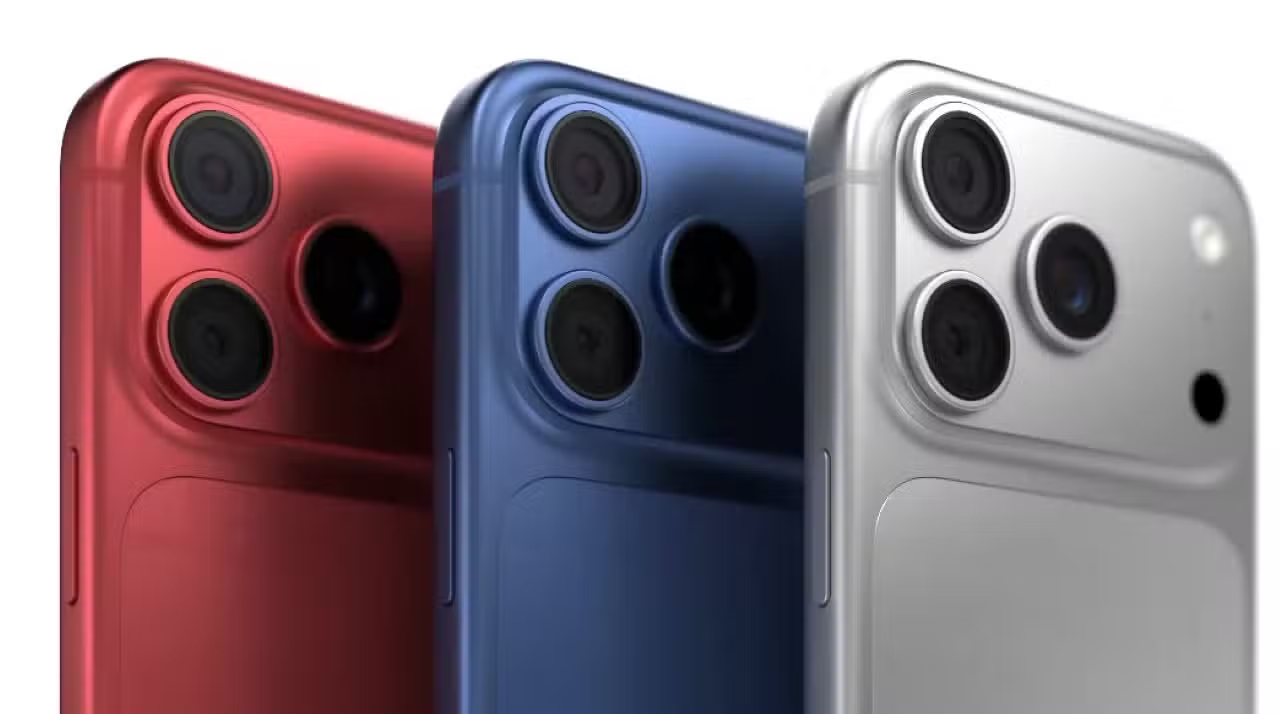
Apple has started developing an unprecedented prototype for its main line of high-performance smartphones. The design of the future iPhone 18 Pro incorporates a fully translucent back panel and a power cell with a capacity of 5200 mAh. The company’s Engenheiros works at the headquarters at Cupertino to enable commercial production of the device. The initial forecast points to a launch on the global market during the second half of 2026.
The aesthetic change represents a paradigm shift in relation to current models built with titanium alloys and frosted glass. The adoption of transparent materials requires a complete restructuring of the equipment’s internal architecture. Componentes industrial connectors and flexible cables will need to feature a premium finish to be exposed to the user. The movement revives the classic visual identity of the brand’s old computers, such as the iconic iMac G3, adapted to the demands of contemporary mobile technology.
Complexidade in the assembly and aesthetics of internal components
The transition to a translucent chassis imposes severe obstacles on the assembly line at partner factories. Tradicionalmente, the interior of a smartphone prioritizes absolute functionality over visual appearance. Placas logic, memory modules, and processors receive raw metal shielding to protect against electromagnetic interference. Agora, the industrial design team needs to transform these engineering pieces into attractive, symmetrical visual elements.
Asian suppliers have been given strict guidelines on the finish of the internal parts that make up the device. Placas printed circuit boards must use dark or completely uniformly colored substrates. Soldas and attachment points will undergo additional polishing processes on production lines. The company seeks to avoid a disorganized appearance, ensuring that transparency conveys sophistication and technical precision to high-end consumers.
The development of internal components with aesthetic appeal increases manufacturing costs considerably. Cada part needs to be functionally and visually perfect, which increases the rejection rate during quality inspections. The machinery used in assembly also undergoes specific calibrations to avoid scratching or marking the components during the automated process.
Gerenciamento thermal and new power cell
The integration of a 5200 mAh battery represents a substantial leap in the autonomy of the mobile device. High-density Células generates considerable amounts of heat during fast load cycles and intense data processing. The transparent glass or special polymer used on the back has much lower thermal dissipation properties than aluminum. Este factor forces the creation of unprecedented internal cooling solutions.
Especialistas in hardware develop redesigned vapor chambers to adapt to the new look of the device. The cooling system must not block the view of the main components, requiring peripheral positioning or the use of transparent conductive materials. Temperature management is essential to preserve battery life and maintain processor performance at maximum levels during the use of heavy applications.
Preliminary Testes indicate the need for heat sinks with specific geometric shapes and special coatings. Thermal engineering became the focal point of the new model development meetings. Falhas on dissipation can result in rapid overheating, compromising user safety and the structural integrity of the translucent panel.
Adaptações on photo module and chassis seal
The set of rear cameras and depth sensors also undergo profound structural modifications. The photographic block needs to integrate fluidly with the transparent surface, without revealing the mechanical optical stabilization mechanisms in a crude way. The wiring that connects the high-resolution lenses to the main board will receive customized shields.
Assembling the device requires new fixing methods to guarantee the resistance against water and dust required by the market.
- Substituição of common industrial adhesive tapes using transparent sealing compounds with very high adhesion.
- Redesenho of the wireless charging coil to create a symmetrical and visually pleasing geometric pattern.
- Implementação microscrews with anodized finish to match the color palette of the main board.
- Aplicação of anti-reflective films on the inner side of the glass to prevent visual distortions under direct sunlight.
IP68 resistance certification remains a non-negotiable requirement for the final product. The new sealants are applied in industrial environments with extreme control of particles suspended in the air. Qualquer impurity trapped between the components and the rear glass will be permanently visible. Isso results in immediate rejection of the unit during strict quality control in factories.
Production and supply chain Cronograma
Strategic planning establishes the equipment’s arrival on the market in the last months of 2026. The extended schedule reflects the complexity of lining up dozens of suppliers of exclusive parts in different countries. Fabricantes tempered glass faces technical difficulties in achieving the required level of clarity without compromising resistance against impacts and deep scratches.
The mass production of a device with these characteristics requires the modernization of automated assembly lines. Industrial Robôs will need new high-precision optical sensors to apply invisible adhesives with millimeter accuracy. The total manufacturing time for each unit should increase significantly compared to previous generations of the brand’s smartphones.
Representantes from the supply chain report bottlenecks in obtaining specific materials for high-density battery assembly. The physical volume occupied by the 5200 mAh cell reduces the space available for other critical system components. The circuit board will need to be even more compact, using state-of-the-art semiconductor manufacturing processes to accommodate all of the functions required by the software.