Microsoft project combines computer and video games in robust hardware against the PlayStation 6
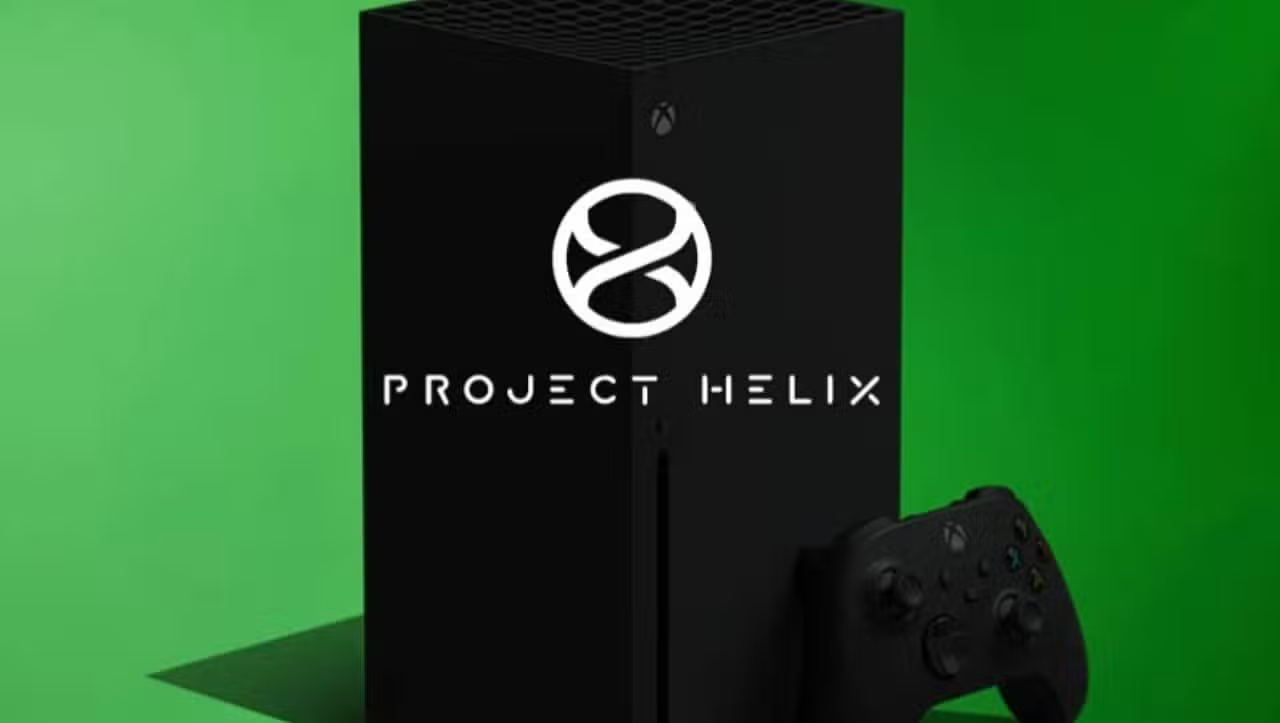
The digital entertainment industry is watching Microsoft move into the next generation of devices. The manufacturer works on equipment known internally by the code name Project Helix. The machine proposes an unprecedented fusion in the current market. The system will run computer and console titles natively. Essa hybrid approach moves the company away from the traditional business model.
The project directly targets the sector’s technical leadership. Relatórios from the area indicate that the device has higher configurations than those designed for the future PlayStation 6. The strategy involves the use of components with very high production costs. The central objective is to deliver unprecedented visual fidelity to players. The paradigm shift requires massive investments in research.

AMD-exclusive Componentes raises the platform’s graphics level
The core of the Project Helix is based on a custom-developed processor by AMD. The manufacturer uses a 3 nanometer lithography process. Vazamentos point out that the total area of the chip exceeds the 400 square millimeter mark. Trata is the largest semiconductor ever designed for a home video game. The graphics processing unit uses the RDNA 5 architecture. The system has approximately 68 active computing units.
Esse processing volume places the device in an isolated category. Especialistas calculate that the raw performance is equivalent to that of a modern graphics card at the level of an RTX 5080. The technological leap is evident in the lighting simulations. The performance gain in ray tracing reaches levels much higher than those of the current generation. The central processor combines high-capacity Zen 6 cores with units focused on energy efficiency.
The robust configuration brings the console closer to a computer aimed at the enthusiast audience. Analistas of technology compare the device’s firepower to assembled machines that cost thousands of dollars. Microsoft maintains advanced hardware development in the company’s laboratories. The focus is on the stability of the operating system.
System-native Integração simplifies game development
The architectural change seeks to solve a historical problem for creative studios. The new platform requires only one version of the source code. The same file works on the console, computer, and cloud streaming servers. Executivos from the division claim that the programming process becomes more agile. The workflow required by the Series X and S models undergoes a complete overhaul.
The partnership with AMD guarantees access to modern image optimization tools. The system incorporates FSR Next technology natively. The feature uses artificial intelligence to generate additional frames and improve screen resolution. The goal is to build complex virtual worlds with realistic real-time physics. Preservation of the back catalog also receives special attention from the software engineering team.
Project Helix abandons the concept of a closed system. The device integrates programming libraries typical of the Windows environment. Advanced DirectX support makes it easy to transition complex visuals. Jogadores couch and keyboard and mouse users receive the same technical benefits. The barrier between desktop platforms and personal computers almost completely disappears.



Japanese Concorrente maintains focus on traditional room architecture
Sony takes a more conservative stance on the future of digital entertainment. The company focuses its efforts on creating hardware optimized specifically for television. Preliminary Informações indicate that the PlayStation 6 will also use RDNA 5 technology. The manufacturer’s graphics chip has a smaller number of computing units. The total should be between 52 and 54 active cores. The physical size of the component is around 280 square millimeters.
The rival console’s processor prioritizes thermal balance. The device’s Zen 6 architecture focuses on electrical consumption efficiency. The system does not require the very high performance cores present in the Microsoft machine. The manufacturer’s objective is to guarantee a refresh rate of 120 frames per second at 4K resolution. The company seeks a favorable relationship between production cost and visual quality delivered to the end consumer.
The difference in specifications on paper generates intense debate in the gaming community. Profissionais from the technical area reminds us that raw power does not alone dictate the quality of a game. Code optimization directly influences the final result on the screen. Técnicas’s unique rendering features can compensate for the hardware’s numerical disadvantage. The brand’s in-house studios tend to make the most of the available equipment.
Complexidade of semiconductors indicates significant jump in final price
The colossal size of the Microsoft chip directly impacts the financial viability of the project. The production of 3-nanometer semiconductors requires massive investment in Asian factories. Estimativas from retailers point out that the console’s launch price could exceed the thousand-dollar barrier. Algumas sources mention values close to 1,200 dollars. The amount represents a drastic break in the video game industry’s price pattern.
The hardware distribution schedule already has preliminary dates established. Microsoft plans to ship the first test units to partner developers throughout 2027. The calendar points to a commercial launch in late 2027 or the first months of 2028. Memory availability on the global market may change this debut window. Technological competition drives the adoption of new tools.
- AMD’s custom Processador with Zen family 6 cores.
- Unidade graphics based on high-capacity RDNA 5 architecture.
- Chip dedicated for processing neural networks and artificial intelligence.
- Hybrid operational Sistema with native computer gaming support.
- Distribuição development kit scheduled for the year 2027.
The public that demands maximum graphic fidelity finds a strong appeal in the American manufacturer’s proposal. The hardware promises to deliver complex simulations without processing bottlenecks. The specifications war over the most powerful console is gaining momentum on specialized discussion forums. The two technology giants set the stage for the next decade of entertainment. Studios await the definitive tools to begin mass production.
See Also em Latest News (EN)

Final Fantasy VII Remake part 3 promises to redefine the scale of the series
01/05/2026
Agent 007 First Light promises to be the best spy game in gaming
01/05/2026
Free patch transforms Adventure of Samsara’s battle system on the Nintendo console
01/05/2026
Nintendo plans to release the full remake of Zelda Ocarina of Time for the Switch 2 console in 2026
01/05/2026
Untouched Japanese classic: 1987 Toyota Supra with low mileage goes up for auction in the USA
01/05/2026
Japanese manufacturer reveals off-road quadricycle with a focus on safety for young people and adults
01/05/2026
Samsung’s new Galaxy S27 Ultra tests 5,800 mAh battery and high-efficiency OLED screen
01/05/2026
Bug on iPhone Air blocks screen after battery runs out and induction charging solves failure
01/05/2026
Five cheapest smartwatches outperform Apple Watch Series 11 on the market
01/05/2026
CD Projekt RED announces new game in the Cyberpunk franchise for upcoming release
01/05/2026
Prince William and Kate introduce Otto, the royal family’s new cocker spaniel
01/05/2026