Sequence of extreme solar flares disrupts radio signals in Asia and the Pacific
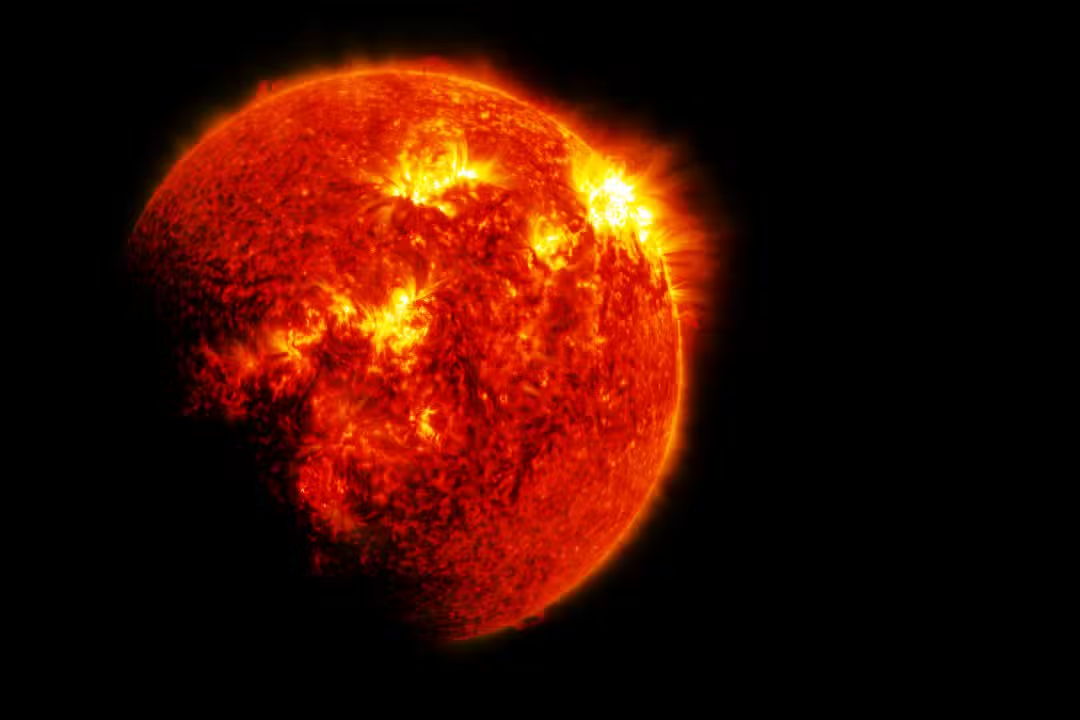
Sol recorded two intense radiation emissions in just seven hours on April 24. The phenomena reached the highest level of the astronomical classification scale. The released energy traveled through space at the speed of light and reached the day side of our planet in approximately eight minutes. The event reflects our star’s current period of high magnetic activity.
The immediate impact occurred in the upper layer of the Earth’s atmosphere. Sinais high-frequency communication systems suffered temporary blockages in several areas of the world. Operadores flight, commercial ships and amateur radio systems experienced momentary instability in their transmissions. The rapid succession of extreme events has caught the attention of space meteorologists who monitor the weather in the solar system.

Mancha magnetic AR4419 focuses energy emissions
The origin of the two extreme explosions was traced to a specific region of the solar surface. The spot cataloged as AR4419 has developed a highly unstable magnetic configuration in recent days. Essa complex structure, technically classified as beta-gamma-delta, favors the accumulation and sudden release of large volumes of energy. The first event reached magnitude X2.4 in the early hours of the day. The strength of the flash surprised researchers who followed the evolution of the area.
Pouco some time later, the same area produced a second, even stronger peak. The X2.5 mark consolidated the sequence as one of the most intense of the recent period. The active region is currently on the western edge of the solar disk. Esse positioning indicates that the spot will disappear from our line of sight soon due to the star’s rotational motion. The direct observation window is rapidly closing.
Antes reached its peak of intensity, the place already showed clear signs of magnetic agitation. Várias class M emissions, which represent an intermediate level of strength, occurred the previous day. One of these previous eruptions reached the M4.9 mark. The continued escalation of strength culminated in the two main flashes captured by the international network’s space monitoring instruments.
Radiação ionizes atmosphere and knocks out communications on Ásia and Oceania
The arrival of X-rays at Terra changes the behavior of the ionosphere instantly. Radiation drastically increases the density of charged particles in this layer of the upper atmosphere. The impact is immediate. High-frequency radio Ondas, which depend on the natural reflection of this region to travel long distances, end up being completely absorbed by the saturated environment. The practical result is sudden silence in transmission equipment.
The first energy pulse directly affected Oceano Pacífico and parts of Austrália. Long-distance Sinais weakened until they completely disappeared in the sunlit areas at that time. The second impact concentrated its strength on East Asia and Oceano Índico. The region close to the sea of Filipinas, the south of Japão and the island of Socotra recorded the highest rates of electromagnetic interference.



Monitoring Agências classified the blackouts at level R3. Essa category indicates a strong radio storm, capable of damaging contacts in the 3 to 30 MHz band. Systems recovery occurred gradually and naturally. Full reestablishment of communications took a few minutes after the decline of X-ray emission in deep space.
Cronologia of events captured by monitoring satellites
The accuracy of astronomical data depends on a robust network of orbital observatories. The GOES-19 satellite recorded each step of the process with ultraviolet light images. The sensors measured the exact variation of the light curve during the explosions. A detailed analysis of these graphs allows us to understand the dynamics of the solar plasma.
- The first peak of magnitude X2.4 started just before 1 am and lasted about 22 minutes.
- The second event of magnitude X2.5 occurred around eight in the morning and lasted 17 minutes.
- Ambas occurrences generated shock waves detected as type II radio emissions.
- Ongoing monitoring identified a sympathetic rash in another region of Sol the previous day.
The detection of shock waves suggests the violent movement of plasma in the solar corona. Esses acoustic signals travel through the interplanetary medium and provide crucial clues about the star’s internal dynamics. Continuous analysis allows scientists to better understand energy release mechanisms. Mapping these waves helps predict the future behavior of other active patches.
Ejeções of coronal mass follow trajectories distant from Terra
Explosões of this magnitude often eject billions of tons of solar material into space. Preliminary analyzes confirm that recent events produced coronal mass ejections. However, the location of spot AR4419 at the western end of Sol changes the risk outlook for our planet. Most plasma travels in a direction that does not cross Earth’s orbit. The incandescent material heads towards deep space.
Modelos mathematicians are still calculating the possibility of a glancing impact in the coming days. If a fraction of this material reaches the planet’s magnetic field, the scenario changes slightly. Moderate-level geomagnetic Tempestades could generate aurora borealis at higher latitudes. Até At the moment, experts rule out severe damage to surface electrical infrastructure or satellites in low orbit.
The current solar cycle is heading towards its period of maximum activity. Fenômenos extremes become routine in this phase of magnetic instability that affects the entire heliosphere. The international space weather network maintains uninterrupted surveillance of new spots appearing on the star’s eastern horizon. Close monitoring ensures that satellite operators and power grid managers receive early warning of any imminent threat to terrestrial technology.
See Also em Latest News (EN)

Kinho do Rodo dies after feeling ill at a friend’s house in Bahia
02/05/2026
Supercell releases free voucher for Damian’s Box in Brawl Stars
02/05/2026
Motor sport idol and multiple Paralympic champion, Alex Zanardi dies aged 59 in Italy
02/05/2026
Intense rainfall in Pernambuco causes four deaths and leaves hundreds homeless on the holiday
02/05/2026
Valve’s new portable console may only arrive in 2028 due to the global semiconductor crisis
02/05/2026
Nintendo announces new generation of hybrid console with unprecedented remake of Zelda Ocarina of Time
02/05/2026
Famous actor Terry Crews becomes a playable character in Black Ops 7 and Warzone in the new season
02/05/2026
Loteca 1247 accumulates and prize goes to R$ 750 thousand in the next draw
02/05/2026
Where to watch Newcastle vs Brighton live with line-ups confirmed for St. James’ Park
02/05/2026
PlayStation Plus service updates catalog with four new titles for subscribers to redeem
02/05/2026
New G-Shock watch collection combines steel and resin to withstand heavy industrial work
02/05/2026