Valve’s new portable console may only arrive in 2028 due to the global semiconductor crisis
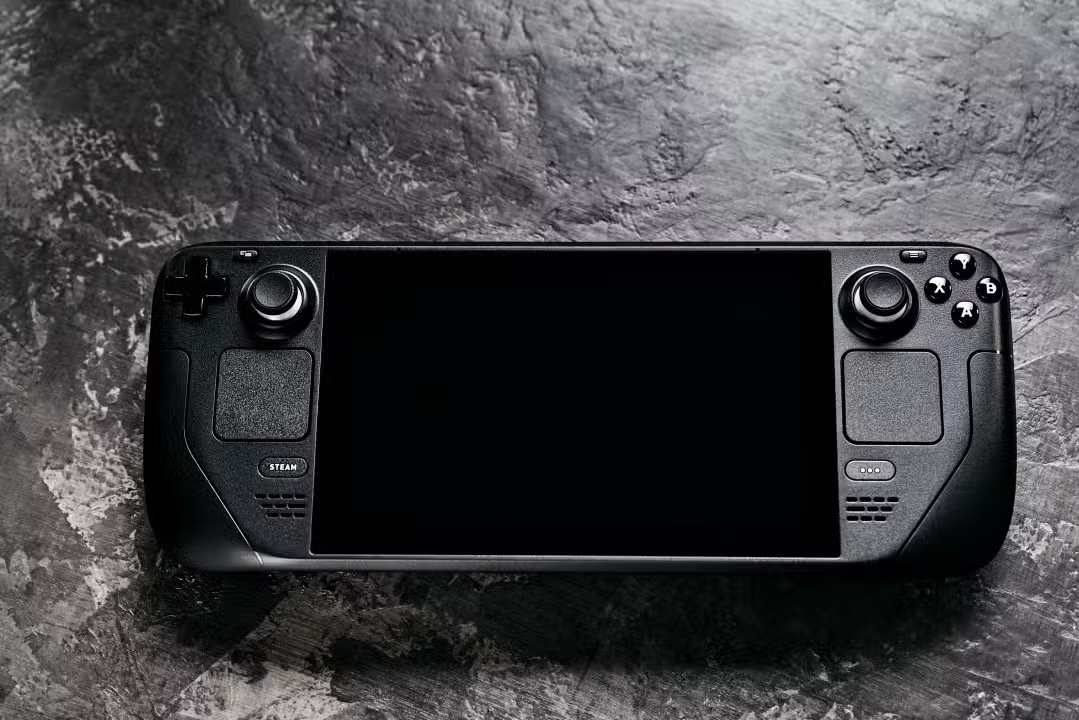
Hardware and software manufacturer Valve projects the launch of the second generation of its handheld computer for the year 2028. The company’s internal schedule faces a severe logistical obstacle of global proportions. The explosion in demand for artificial intelligence processing servers has consumed the production capacity of volatile memories and solid-state storage chips. Esse shortage scenario directly affects the assembly of electronic devices aimed at end consumers around the world. The technology market is dealing with a reconfiguration in the supply priorities of large silicon foundries.
Asian assembly lines currently prioritize billion-dollar infrastructure contracts for massive data processing. Essa change of focus of the components industry makes the fundamental parts more expensive for creating a powerful and affordable portable video game. The current model with organic screen already suffers from windows of unavailability in virtual stores in several countries throughout 2026. The company’s Engenheiros monitors fluctuations in the prices of primary inputs. The central objective is to avoid passing on extreme costs to players at the time of the official announcement of the new equipment.

Mudança focus on Asian factories makes key parts more expensive
The competition for space in semiconductor factories creates an environment of uncertainty for long-term planning in the electronics sector. Memory vendors direct their best materials toward artificial intelligence accelerator cards. The price per gigabyte of memory and storage fluctuates weekly on component trading exchanges. The unstable price prevents the setting of a retail price for a console that is still in the laboratory testing phase. Analistas from the supply chain calculate that the normalization of conventional chip stocks will only occur at the end of the current decade.
The launch window set for 2028 works as a logistical safety margin for the North American manufacturer. The company gains time to negotiate batches of components when the initial data center construction fever stabilizes. An advance on the project would result in negative profit margins or a prohibitive final price for the target audience. The strategy of waiting for the parts market to stabilize reflects the brand’s conservative stance in relation to the development of its own hardware. Corporate patience aims to ensure a production volume capable of meeting initial demand without frustrating consumers.
Salto processing requires new silicon architectures from AMD
The developer’s internal guidance rules out mid-life updates that deliver only marginal gains in practical performance. The hardware design team established that the new device needs to run high-end titles with thermal clearance. Battery autonomy also needs to surpass the current standard offered by the first version of the equipment. Para reaches this demanding technical level, the project depends on the maturation of AMD’s next processor lines. The plan involves the use of central processing cores based on the new generation architecture.
The graphics part of the future device would be handled by more efficient and modern rendering technologies. Essa theoretical combination promises a leap in energy efficiency capable of enabling high-fidelity graphics on a small screen. Apenas a performance increase of around thirty percent does not justify the high research and development costs of a new chassis. The technical challenge consists of miniaturizing components that generate a lot of heat without transforming the device into an uncomfortable object for users’ hands during long sessions of use.
Concorrência Accelerates Innovations in the Portable Ecosystem
The handheld market has changed dramatically since Valve introduced the first model. Asian Empresas floods retailers with annual reviews of their heavy-duty gaming laptops. Marcas consolidated bets on high refresh rate screens and larger capacity batteries to attract technology enthusiasts. Today’s consumer has a range of options that range from machines focused on independent games to heavy devices. The pioneer in the segment observes this movement without changing its philosophy of long product cycles, which historically last around seven years.



The original device validated the existence of a market niche previously unexplored by large global technology corporations. Sales figures surpassed the mark of four million units distributed across several continents. Commercial success attracted traditional computer manufacturers to compete directly for this consumer profile. The consolidation of this pocket computer format has changed the way studios develop and optimize their software. The compatibility verification seal has become a basic requirement for successful sales on digital platforms.
The evolution of the portable ecosystem has brought practical and structural changes to the digital entertainment industry in recent years. Game developers needed to adapt their workflows to serve this new installed base of mobile gamers. Major changes to software development include:
- Independent Estúdios adjust font sizes and graphical interface for seven-inch screens.
- Texture compilation Ferramentas receives constant updates to avoid crashes during gameplay.
- Sistemas open source-based operating systems have gained native support from security system developers.
Sistema own operational and expansion of the digital catalog
The company’s own operating system acts as the main competitive differentiator compared to machines equipped with traditional off-the-shelf software. The code translation layer allows thousands of games to be run without the need for manual user intervention. The programming team works in parallel with the hardware engineers to ensure that the next device maintains this fluidity of use. Deep integration between the system and physical parts extracts maximum performance from components that appear modest in the technical specifications printed on the product box.
The sale of physical equipment represents only a fraction of the technology company’s monetization strategy. The device acts as a gateway to keep the player consuming within the proprietary virtual store. Cada activated unit generates an immediate increase in the volume of purchases of digital securities by that specific user. The tight profit margin on hardware sales is offset by the percentage fee charged on each software transaction carried out on the platform. Esse business model supports heavy investments in research into new hardware.
The extra development time until the end of the decade allows for the maturation of artificial intelligence image magnification technologies. Ferramentas that generate additional frames via software reduce the workload of the console’s main processor. Natively implementing these solutions at the operating system level will significantly extend battery life. The balance between production cost and computational power will define the viability of the project. Assembly lines are waiting for the global market to stabilize before finally receiving the order for mass manufacturing.
See Also em Latest News (EN)

Armed Forces Republicans fear withdrawal of US troops from Germany
03/05/2026
Kate and William introduce new member of the royal family
03/05/2026
Prince William and Kate introduce Otto, the royal family’s new cocker spaniel
03/05/2026
Republicans are divided over war on Iran and provoke confrontation with Trump
03/05/2026
Apple reveals expectations for iOS 27 before conference in June
03/05/2026
Venus and Jupiter alignment in May 2026 will be visible every night
03/05/2026
Two NASA robots capture panoramic images of Mars in 360-degree resolution
03/05/2026
Cameras capture brothers’ dialogue after cutting off woman’s hands in Ceará
03/05/2026
Suspect of killing 8-year-old boy is shot inside an ambulance in SP
03/05/2026
Military police officer dies after 20 days in hospital after exchange of gunfire in Paraná
03/05/2026
Rains kill ten people and leave people missing in three states
03/05/2026