
May 2026 begins and ends with a full moon in a rare event in the sky

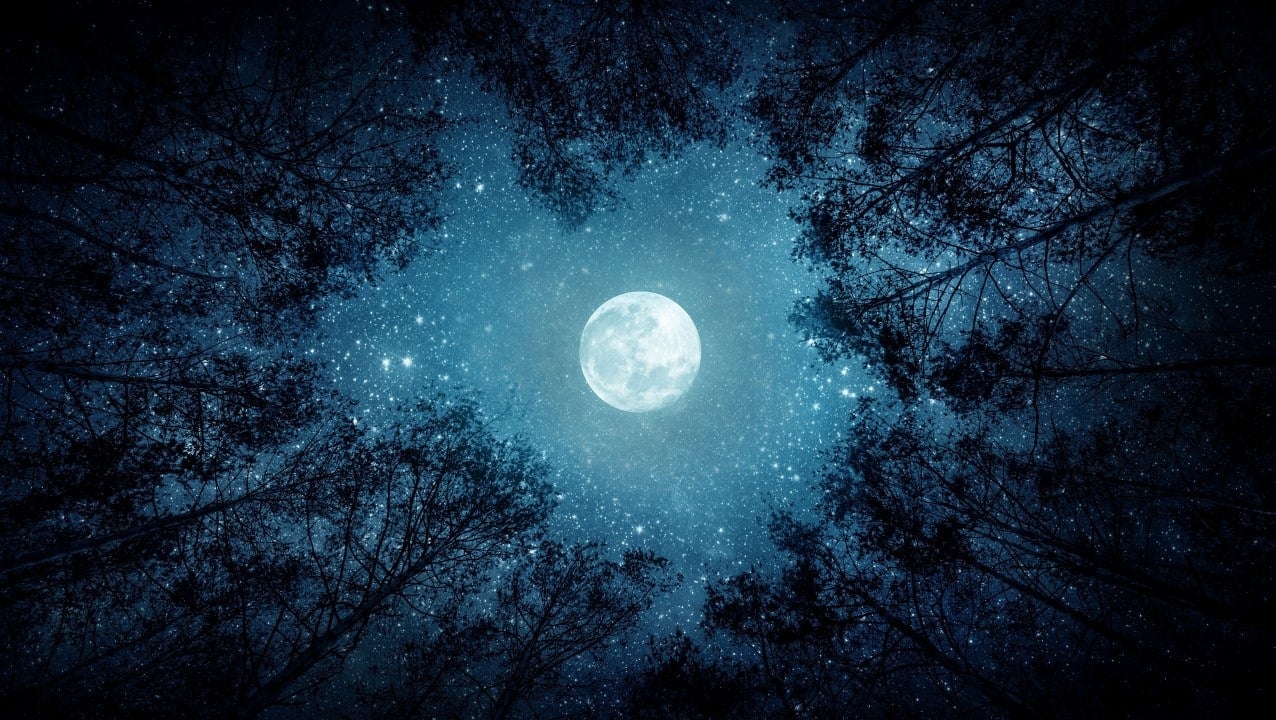
Maio of 2026 will bring two full moons. The first occurs on the 1st, known as the flower moon. The second appears on the 31st and is called the blue moon.
The lunar cycle lasts an average of 29.5 days. Therefore, in most months there is only one full phase. Quando the calendar allows two in the same period, the second is called a blue moon, although it does not change color. The May event forms a rare pattern that repeats itself every few years.
Lua of flowers appears at the beginning of the month
The full moon on May 1st marks the beginning of the month. Astrônomos peak at around 2:24 pm Brasília time.
The traditional name comes from ancient traditions linked to spring in the northern hemisphere, when flowers bloom in greater quantities. Comunidades indigenous people of América of Norte associated the phase with changes in nature and the advance of the warmer season.
No Brasil, observers in clear skies can see the lunar disk already practically full at dusk on April 30th or on the night of May 1st. The moon appears high and bright throughout the following dawn.
- The full phase takes place on May 1st at around 2:24 pm (Brasília time)
- The name moon of flowers refers to the flowering of spring in the north
- Observação favored on cloudless nights or intense light pollution
- Distância from Terra results in apparent size close to average

Intervalo allows second full moon on the 31st
The next full moon arrives on May 31, just before 6am Brazilian time. Esse short interval creates the condition for the calendar blue moon.
Astrônomos explain that the phenomenon arises when two full phases fit within the same 31 days of the month. The blue moon does not have a different tone. The term gained popularity over time and today describes precisely the second monthly flood.
May’s second moon occurs when the lunar orbit aligns so that the full cycle fits twice on the calendar. Especialistas has been tracking these patterns for decades to predict exact dates.
Lua blue closes the month with no change in appearance
On May 31st the moon reaches full phase again. The peak occurs early in the morning, but the moon remains visible and practically full during the night before and the following.
Observadores can follow the event from dusk on the 30th until dawn on June 1st. The May 2026 blue moon is also classified as a micromoon, as Lua is further away from Terra during this period. The apparent diameter is slightly smaller than usual.
Esse detail does not affect the beauty of naked eye observation. Quem uses binoculars or a small telescope to notice the lunar seas and main craters with greater clarity on dark sky nights.
Como observe the two full moons safely
Escolha a location away from strong urban lights to improve contrast. A full moon lights up the sky and reduces the visibility of stars, but highlights the lunar surface itself.
Evite looks directly at the star for long periods without protection. Use solar filter only in eclipses, never in common full phases. Astronomy Aplicativos help confirm local times and exact position in the sky.
- Procure areas with a clear horizon and little light pollution
- Observe preferably between dusk and midnight
- Registre photos with cell phone in night mode or dedicated camera
- Compartilhe time with family to spread interest in astronomy
Significado cultural and scientific event
Nomes as a flower moon emerged from observations linked to the agricultural cycle and seasons. The blue moon, in turn, represents a coincidence between the Gregorian calendar and the sidereal lunar cycle.
Cientistas uses these events to study Lua’s movement, variations in orbit and influence on tides. Para the general public, the two full moons offer simple opportunity to connect to the sky without expensive equipment.
The year 2026 records 13 full moons in total. The May pair stands out precisely because of the proximity between the dates.
Próximos lunar events after May
Depois of the May 31 Blue Moon, the next full phase occurs on June 29, traditionally called the Strawberry Moon. The calendar continues with names that reflect seasonal or cultural aspects in different regions.
Entusiastas can follow the complete cycle throughout the year. Cada full moon brings small differences in position, brightness and height in the sky as the season progresses.
Maio of 2026 thus offers a natural invitation to look up. Quem still has a chance of missing the first flood on the last night of the month. The phenomenon is reminiscent of how predictable astronomical systems generate patterns that draw attention due to their relative rarity in everyday life.



