Observatories capture images of galaxies born in the first billion years of the cosmos
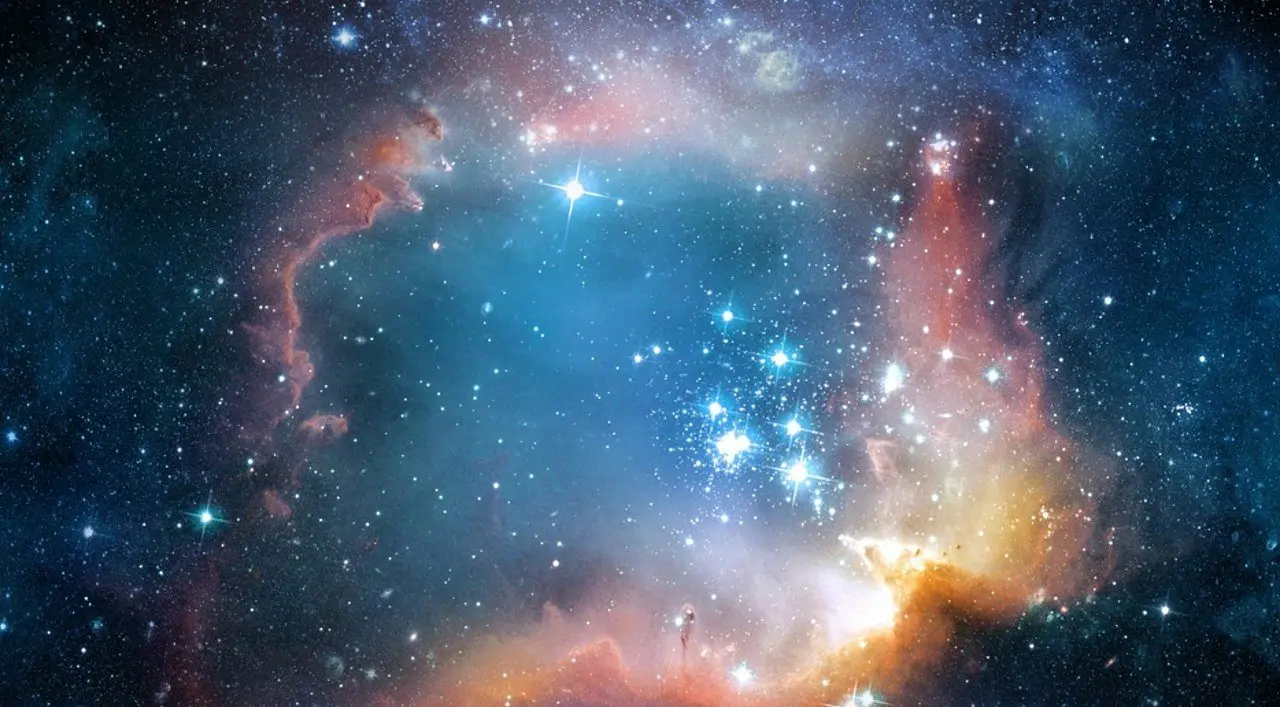
Astrônomos uses state-of-the-art telescopes to detect galaxies so remote that their light has traveled billions of years to reach Terra. Essas observations function like a cosmic time machine, allowing scientists to view Universo in its early stages of formation. Estimativas point out that the observable cosmos contains more than a trillion galaxies, but most remain invisible to conventional instruments. The analysis of radiation at different frequencies of the electromagnetic spectrum has become essential for this exploration. “Universo emits radiation at various frequencies of the electromagnetic spectrum, and each band reveals a type of information”, says astrophysicist Adam Smith Gontijo, professor of Universidade Católica and Brasília.
Múltiplas frequencies reveal hidden structures of the cosmos
Observar o Universo at different wavelengths is essential for locating cosmic structures that would remain invisible in conventional observations. Researchers analyze radio waves, microwaves, infrared, ultraviolet, X-rays and gamma rays to piece together a complete picture of what exists in space.
The highly energetic Regiões of Universo often emits ultraviolet radiation or X-rays, while cooler structures, such as clouds of gas and dust, reveal themselves clearly in infrared or radio frequency observations. Essa diversity of information allows astronomers to identify galaxies that would be completely invisible if observed only at a specific wavelength.
- Radio Ondas reveals energetic structures and high-intensity phenomena.
- Infravermelho detects cooler, older objects, including early galaxies.
- Raios X identify regions of intense activity and black holes.
- Micro-waves map the cosmic background radiation of primordial Universo.
- Espectroscopia analyzes chemical composition and calculates distances accurately.
The redshift: how the expansion of Universo reveals the past
An essential phenomenon in this process is redshift, also called redshift. “In the case of very old galaxies, the expansion of Universo causes the light emitted by them to reach us ‘stretched’, shifted towards red”, describes Gontijo. Como space continues to expand, the light emitted by galaxies billions of years ago travels a colossal journey until it reaches our planet. Durante this crossing through the cosmos, the wavelength progressively lengthens and tends to appear in redder frequencies of the electromagnetic spectrum.
Infrared Telescópioss like the James Webb have become crucial instruments for this exploration. Esses equipment can detect the infrared radiation emitted by the most distant galaxies, exactly the spectrum range where this displaced light becomes visible to the detectors.
Espectroscopia reveals composition and distance of remote galaxies
Além images captured by telescopes, astronomers use spectroscopy to uncover properties of remote galaxies. Essa technique thoroughly analyzes the light emitted by celestial objects to identify their specific chemical composition and accurately estimate the distance that separates them from us. Quando an astronomer analyzes the spectrum of a distant galaxy and is able to determine which chemical elements are present in that object. The position of the infrared or visible spectral lines reveals information about how much that radiation was “stretched” by the expansion of Universo.
Observar space is to observe the past of the cosmos
The most fascinating feature of astronomy lies in a simple physical truth: observing Universo is, inevitably, observing its past. Essa reality exists because light takes time to traverse vast cosmic distances. “Sol is approximately 150 million kilometers from Terra. Its light takes approximately eight minutes to reach us”, explains astronomer Adriano Leonês, researcher of Universidade and Brasília. Quando we see Sol rising on the horizon, we are actually visualizing the star as it was eight minutes before that moment.
Essa same logic applies to all observable celestial objects. Alfa Centauri, the closest star to Sistema Solar, is about four light years away. Isso means that light left that star four years ago and is only now arriving here. Quando astronomers point their telescopes at extremely distant galaxies, located billions of light years away, they are seeing these cosmic structures as they were billions of years ago, in the early history of Universo. Galáxias observed from ten billion light years away shows what the cosmos was like when it was just a few billion years old. Essas observations allow scientists to reconstruct the history of the evolution of galaxies, from their birth to their current state, functioning as a photographic record of different eras in cosmic history.