Renault Koleos arrives in Brazil with hybrid technology, but disappoints in consumption
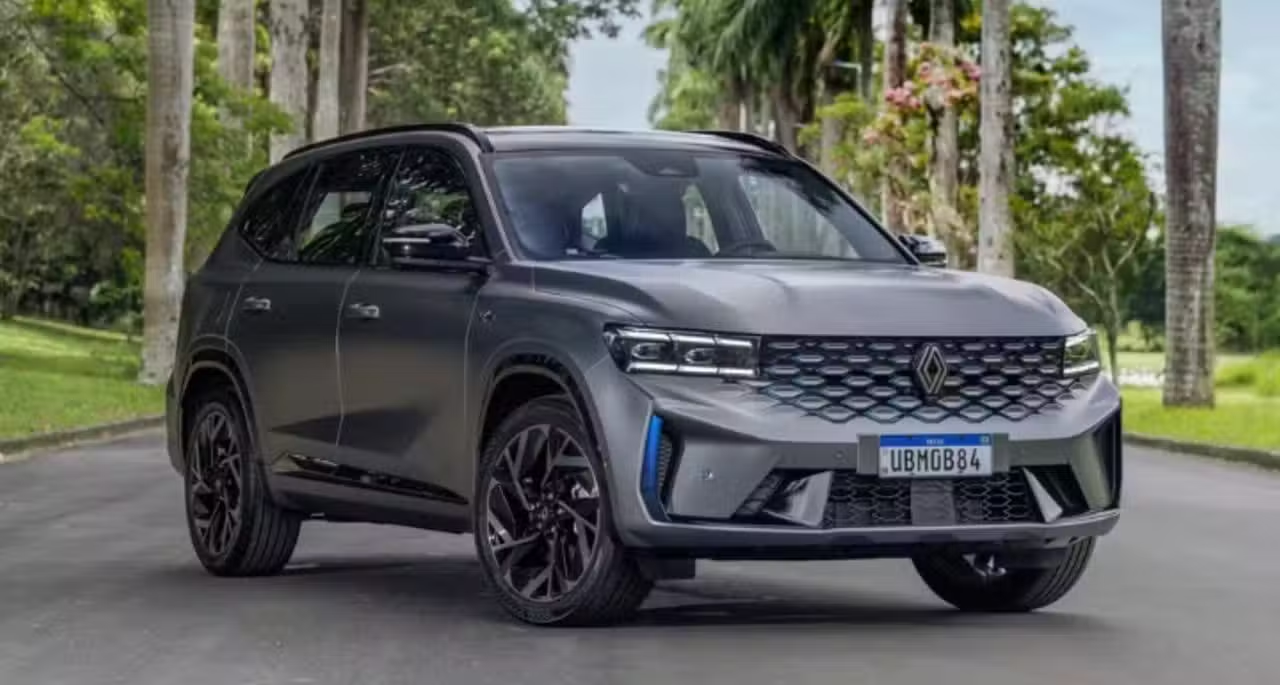
Renault has finally fulfilled a nearly decade-old promise. The Koleos, an SUV that was tested in the Brasil in 2017 but never launched, hits stores starting at R$289,990 as the brand’s first full hybrid model in the country. The chosen version is the Esprit Alpine, bringing elements from the historic French sports car division, with an elegant and refined design, but the combustion performance does not meet expectations.
The mid-size SUV arrives with a fully imported mechanical set from Geely Monjaro, of South Korean origin, the result of a partnership between Renault and Geely. Motor 1.5 turbo gasoline engine with 144 horsepower, two electric motors and a three-speed DHT automatic transmission form the propulsion. The combined power of 245 horsepower puts the Koleos above direct rivals such as the GAC GS4 and Omoda 5, but well below the promise of savings that hybrid models usually make.
Electrical Promessa is not confirmed in practice
The only 1.64 kWh battery significantly limits the electrical performance of the Koleos. Renault claims that 75% of urban journeys can be made in electric-only mode, but real tests indicate very different results. Mesmo With Eco mode activated, the 1.5 engine was requested with constant frequency, reducing the efficiency of the hybrid system. A larger battery would guarantee longer electrical range and better use of technology.
The five available driving modes — Comfort, Sport, Neve, IA and standard — offer flexibility, but not all of them compensate for poor electrical performance. The Sport mode increases the gasoline engine’s firing frequency, while the IA intends to use artificial intelligence to adjust parameters, without clear explanations from the brand about how it works.
Real Consumo falls short of hybrid expectations
Measurable consumption figures disappointed expectations. In the street test carried out with air conditioning constantly on, the Koleos scored 13.7 km/l in the city and 14.4 km/l on the highway. Unlike 99% of hybrids, which save more in the urban cycle, the Renault consumed less gasoline on the highway. With a 55-liter tank, the range approaches 800 kilometers, a satisfactory value only in comparison with traditional non-hybrid SUVs.
The promise of very low consumption, typical of advertising for electrified cars, simply did not materialize. The price of almost R$100,000 above the GWM Haval H6 HEV, which offers only two fewer horsepower, further highlights this limitation. Ainda although the Koleos costs more, the savings that should compensate the investment do not exist.
French Design and premium finish partially compensate
The refined look accompanies the electrification proposal. Front Grade mixing glossy black plastic and blue diamond-shaped details refer to the Alpine division, as well as 20-inch sports wheels and interior finishes in the same tone. Lanternas interlocking and full-LED headlights with smart projectors enhance the overall elegance. The 4.78 meters in length and creased design make up a package that is visually above average for SUVs of its size.
Acoustic insulation is a rare feature in hybrid vehicles or non-premium brands. Manta thick hood and dual front windows significantly reduce engine and tire noise at cruising speeds. Essa attention to sound comfort is unusual in cars in this price range, showing the care of French engineering in this specific aspect.



Equipamentos and premium brand-level technology
Koleos’s list of features is impressive in its scope and quality. Três 12.3-inch screens — instrument, multimedia center and passenger panel — come directly from the Monjaro, as does the steering wheel, which only received the central cushion customized with the Renault diamond. Sistema sound system with ten speakers and active noise cancellation, Android Auto and wireless Apple CarPlay connectivity, three-zone air conditioning and a reclining rear seat complete the comfort package.
Suspension adjustments allow you to independently modify throttle, steering and power and torque delivery via the gear lever. The result is a pleasant and predictable ride, with the suspension fulfilling exactly its function of ensuring comfort. The electric steering has adequate firmness when driving in Sport mode.
Dois points draw attention to quality. Peças like levers behind the steering wheel came from Volvo, a Swedish brand also part of the Geely group, while some buttons feature Chinese typography instead of the elegant French font on the board. Apesar of this mix of identities, the materials are excellent: Alcantara and rubberized surfaces at practically all touch points. Costuras of the seats feature the colors of the French flag and logo embroidered on the foam.
Segurança and internal space with restrictions
Renault lists 29 security features in Koleos. Controle adaptive cruise, autonomous emergency braking, lane keeping assistant and blind spot alerts are part of the package. Apesar of the structure of an almost large medium SUV, with a wheelbase of 2.82 meters, the Koleos accommodates only five occupants, without a third row of seats. The 431-liter trunk is insufficient for the size of the vehicle — a volume close to that of an Hyundai Creta and almost 100 liters smaller than that of the Boreal, which will soon take over as the more sophisticated Renault from the Brasil.
Posicionamento strategic, not leadership
The Koleos reaches 0 to 100 km/h in 8.3 seconds and a top speed of 180 km/h, respectable marks for a hybrid family car. Tração front and asphalt-adapted suspension eliminate any off-road pretensions. Renault’s objective in bringing the model is to show production capacity and consolidate the plan to erase the brand image of cheap cars.
Não competes as a plug-in, unlike some rivals. Tampouco has a tradition in the segment as Volkswagen Tiguan. Dificilmente will lead full hybrid SUV sales in Brasil. Funciona primarily as a showcase of technology and quality, showing the market that the brand can offer sophisticated products with a premium finish, even if actual consumption falls short of the typical promises of electrified vehicles.
- Pontos positives:superior comfort level, extensive technology and safety equipment, acoustic insulation rare in the price range
- Pontos negatives:high price compared to other full hybrids, real consumption is disappointing in urban cycle, insufficient trunk volume
See Also em Latest News (EN)

British bride uses sister-in-law’s compensation to repeat wedding ceremony
30/04/2026
92-year-old man arrested over wife’s death in Exeter, England
30/04/2026
Spaniard loses leg in shark attack in Maldives and jokes: we started well
30/04/2026
Child with exposed organs receives unprecedented Botox treatment in Iowa
30/04/2026
Husband of murdered former Miss says he used the victim’s body in an attempt to feed the baby
30/04/2026
Robson Matheus scores quickly in the first half in Bolívar x Fluminense for Libertadores 2026
30/04/2026
Calderano shines and Brazil turns against Hungary in table tennis tournament
30/04/2026
Sony removes PS Plus requirement and releases three definitive games for PlayStation 5 users
30/04/2026
PlayStation 5 releases permanent redemption of Ark and 2XKO at no cost to brand users
30/04/2026
Sony releases definitive download of Ark and access to Riot’s new fighting game on PlayStation 5
30/04/2026
Sony action guarantees film balance for premium users who test Resident Evil Village
30/04/2026