American legislation against lightning puts Miami GP on high alert this Sunday
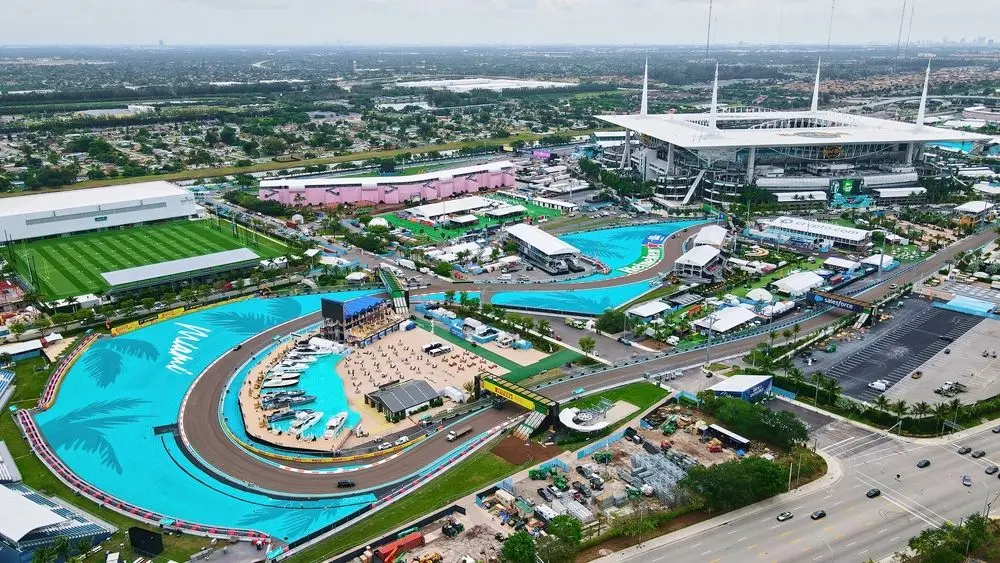
The Fórmula 1 organization is monitoring the movement of clouds in the Flórida sky this weekend with extreme caution. Miami’s Grande Prêmio faces a climate threat that goes far beyond a simple passing rain. The incidence of electrical discharges in the region of the race track became the main concern of promoters. Meteorological services point out that the probability of severe storms during Sunday’s race exceeds the fifty percent mark.
The scenario takes on tension due to the strict Estados Unidos laws for events held outdoors. North American legislation differs drastically from the protocols adopted in European or Asian circuits. The presence of lightning in the vicinity requires the immediate stoppage of any sporting activity. The public needs to be sheltered in safe structures. The medical helicopter loses flight authorization, making emergency air assistance impossible.
Hey Miami! 👋 We have arrived 😎 #F1 #MiamiGP pic.twitter.com/yxQ4oaJSkc
— Formula 1 (@F1) April 30, 2026
Security Protocolos paralyzes activities immediately
Public safety standards in Estados Unidos require that large gatherings be dispersed quickly under imminent risk of electrical storms. In the universe of Fórmula 1, this legal requirement translates into the instantaneous triggering of the red flag. The absolute priority is human life. Mesmo that the asphalt does not present a significant accumulation of water, the simple detection of electrical discharges on the perimeter of the event triggers the maximum alert. Torcedores in the metal stands and track inspectors are extremely exposed in these weather conditions.
Automobilismo’s official Federação Internacional communication system will send simultaneous notifications to all garages as soon as the threat is validated. The drivers are immediately ordered to reduce speed and drive the single-seaters back to the pitlane. The race director takes full control of the situation, guiding the teams on the next steps. The suspension of activities is based on Artigo 57 of the sports regulations, which is subject to adaptations to meet the requirements of local Miami authorities.
The issue of the medical helicopter represents a critical factor for the continuity of the show. Fórmula 1 has a non-negotiable rule regarding aeromedical evacuation. If the aircraft cannot take off and land safely at the referral hospital, the cars are not allowed to accelerate on the runway. Electrical storms create an immediate airlock. American authorities do not hesitate to interrupt multimillion-dollar events to ensure strict compliance with civil protection laws.
Exceções in the regulations allow the collection of single-seaters
Stages held on American territory, such as the Austin and Las Vegas races, present particularities in equipment management during a red flag. The category’s standard procedure requires cars to form a line in the pitlane and remain exposed to the weather. However, the Miami stage grants special permission to the teams. Teams gain the right to collect vehicles inside the facilities.
- Mecânicos push the cars into the pits under express order from the race direction.
- Portões of the garages must be fully open during the entire period of the weather shutdown.
- Trabalhos maintenance procedures are restricted to items specifically listed in the current technical regulations.
- Early or unauthorized Movimentaçõess generate severe punishments on the restart grid.
- Equipamentos cooling units operate freely to preserve the integrity of the power units.
Mechanical interventions cannot delay the restart schedule established by the sports commissioners. Inspection occurs relentlessly. The highest motorsport entity places technical delegates inside each box to monitor the engineers’ actions. Caso a car is moved into a prohibited area without prior instruction, the punishment is immediate. The offender loses his original position and must start from the back of the line when the race resumes.
The complexity of today’s cars requires constant thermal care. Hybrid engines accumulate a lot of heat and depend on the air flow generated by high speed for cooling. An abrupt stop in the pitlane raises internal temperatures to dangerous levels. The use of industrial fans and dry ice becomes vital. The obligation to keep garage doors open guarantees the transparency of the process, allowing inspectors and rival teams to observe compliance with maintenance restrictions.
Leia Também

Three days after earthquake, rescue teams find 11-year-old boy under rubble in Venezuela

Dispute in Austria: Russell takes pole position in the 2026 Formula 1 GP; find out where to watch in the USA and 7 other countries

Complete guide to external batteries in 2026 with affordable options and high-performance models
Procedimentos restart requires strict schedule
The resumption of the dispute on the streets of Miami depends exclusively on the dissipation of the heavy clouds and official release by local authorities. The race director evaluates weather reports in real time. Quando the environment is deemed safe for the public and medical helicopter flight, an eighteen minute warning will be issued. Esse time slot is crucial for teams to reorganize their operations. The cars need to be taken back to the fast pit lane and lined up in the exact order of classification before the interruption.
Após the vehicles line up completely, a second warning marks the beginning of the final ten-minute countdown. The process strictly follows the procedures of Artigo 58 of the regulation. Drivers use this period to warm up essential components and go over strategies with their race engineers. The thermal blankets on the tires are only removed in the final moments. A hasty restart could cause serious accidents due to the cold rubber’s lack of grip on the wet asphalt.
The logistics of a restart after a long layoff test the nerves of everyone involved. Mechanics race against the clock to complete the permitted preparations. The presentation lap behind the safety car takes on enormous importance. Competitors need to evaluate the actual conditions of the track, identifying possible puddles of water that remained after the storm. The transition from soggy asphalt to a dry trail completely changes the dynamics of the race.
Previsão points to weekend with extreme variations
The first days of activities on the circuit should take place under very favorable weather, contrasting with Sunday’s warning. Friday hosts the only free practice and the qualifying session for the sprint race. The forecast indicates a partially sunny sky, with thermometers registering temperatures close to 29 degrees Celsius. The risk of rain for this initial period is considered practically zero by meteorologists. Teams will be able to collect valuable data using dry asphalt tires.
Saturday promises to be even hotter at Flórida. The temperature rises slightly and can reach 31 degrees Celsius during the most competitive sessions of the day. The probability of precipitation remains low, hovering around ten percent. Esse scenario ensures continued use of the slick compounds during the short race and main qualifying. Atmospheric instability only gains strength during the early hours of the morning, drastically altering the outlook for the main event.
Sunday concentrates all the apprehension of the teams and the organization. The chance of storms reaches the fifty percent mark, putting strategists on high alert. A lightning interruption destroys any prior planning for pit stops. Miami’s Grande Prêmio can become a true test of patience, endurance and ability to adapt quickly in the face of the forces of nature and American laws.