
Falcon 9 rocket puts 24 new Starlink satellites into orbit after liftoff off California coast


The aerospace company SpaceX launched an Falcon 9 rocket loaded with 24 satellites from the Starlink network. The takeoff took place from Base of Força Espacial of Vandenberg, located in the state of Califórnia. The equipment headed towards low Earth orbit to join the company’s communications megaconstellation. The operation took place within the time window programmed by the engineering teams on the ground.
Minutos after initial ignition, the vehicle’s first stage returned to the Earth’s surface. The piece landed precisely on an autonomous raft positioned on Oceano Pacífico. Enquanto this, the second stage continued the upward trajectory. The upper component released the payload at the correct altitude, confirming the successful orbital insertion of the new data transmission equipment.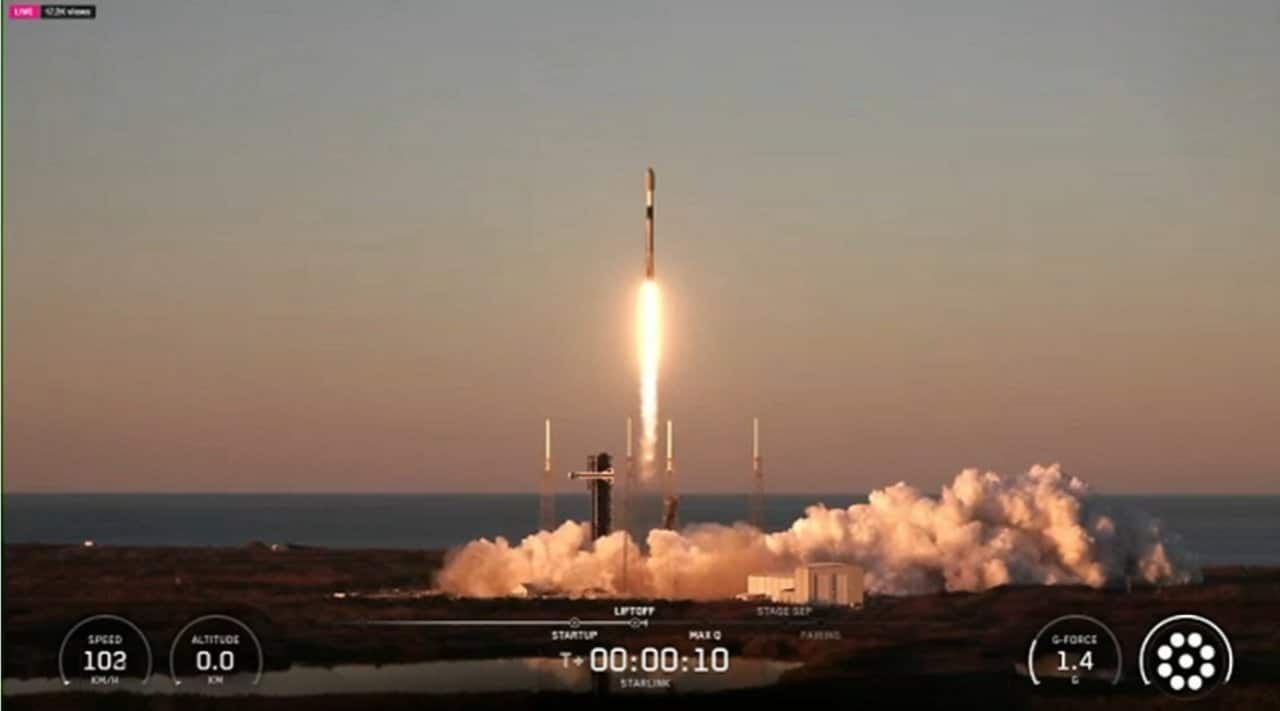
Expansão Accelerated Global Internet Constellation
The Starlink project represents the space exploration company’s main commercial initiative. The network already has thousands of active units circulating the planet uninterruptedly. The pace of launches has increased considerably in recent months. The company sends batches of satellites into space on a weekly basis to ensure signal density. The system serves users in remote areas and regions with poor telecommunications infrastructure.
The equipment operates at a much lower altitude than traditional communications satellites. Essa technical feature drastically reduces response time in data transmission. Low latency attracts residential consumers and business customers who depend on stable connections. The service requires the installation of a receiving antenna on the ground, which automatically aligns itself with devices moving in space.
The network architecture works in an interconnected manner. Cada new unit added to orbit improves total system capability and decreases coverage blind spots. The company seeks to establish a truly global broadband service. The business model depends on this massive scale to spread the high costs of manufacturing and launching components.
Military installation strategic Importância at Califórnia
The choice of Base over Força Espacial over Vandenberg has technical and geopolitical reasons. The military complex offers a free flight path from inhabited areas toward the south. Essa route over the ocean allows safe insertion of payloads into polar and high-inclination orbits. The installation complements the routine operations carried out on the east coast of Estados Unidos.
Continued use of this base strengthens American space infrastructure. The Estados Unidos government maintains a direct interest in the ability to quickly access outer space. The partnership between the private sector and the armed forces optimizes the use of launch platforms. The frequency of on-site missions requires strict coordination with air and maritime traffic control authorities.
SpaceX invested in modernizing Californian platforms to support the current volume of operations. Ground teams are able to prepare the rocket, fill the fuel tanks and carry out the countdown at increasingly shorter intervals. Operational efficiency at the base reduces the time equipment spends on the ground.
Detalhes technical and operational space mission
The flight followed strict parameters established by the mission control team. The technical data of the launch illustrate the complexity of the operation carried out on the American West Coast:
- Veículo launcher: Foguete Falcon 9 equipped with two stages of propulsion.
- Carga useful: 24 Starlink satellites belonging to the current generation of communication.
- Starting Local: Launching Complexo of Base of Força Espacial of Vandenberg.
- Recuperação: Pouso vertical first stage autonomous vessel on Oceano Pacífico.
- Orbital Destino: Low terrestrial Órbita with estimated altitude between 500 and 600 kilometers.
The recovery of the first stage represents a pillar of the company’s cost reduction strategy. The autonomous ferry, equipped with dynamic positioning thrusters, awaits the rocket on the high seas. The metal cylinder descends at high speed before triggering the motors for controlled braking. The landing legs open seconds before contact with the deck. The equipment is then secured, transported back to the port and inspected for reuse.
Modelo next generation business and development
The revenue generated by the internet service finances the aerospace company’s most ambitious projects. Starlink’s subscriber base is growing at a steady pace across several continents. The client portfolio includes aviation companies, maritime shipping companies and government agencies. The diversification of the target audience guarantees a cash flow that is essential for the sustainability of operations.
The company’s engineers are already working on the transition to a new technological phase. The second generation of satellites, known as Gen 2, has larger dimensions and superior transmission capacity. Esses new devices require more powerful launch vehicles due to their high weight. The current fleet of Falcon 9 rockets can carry only a fraction of the payload that the future system will require.
The development of the Starship vehicle occurs in parallel with the expansion of the internet network. The super-heavy rocket is designed to put dozens of Gen 2 satellites into orbit at once. The transition between rocket models will dictate the growth rate of the constellation in the coming years. Manufacturing infrastructure operates at maximum capacity to meet ongoing demand.
Frequência of flights consolidates leadership in the aerospace sector
SpaceX’s launch cadence has set a new standard in the global space industry. The reuse of components allows the company to carry out missions every few days. The orbital transport market underwent a profound transformation with the introduction of this technology. Traditional Concorrentes face difficulties in matching the prices and availability of flights offered.
The insertion of the 24 Starlink satellites adds more capacity to the operating communication network. Mission control confirmed the deployment of each unit’s solar panels shortly after separation from the upper stage. The ion thrusters built into the devices began the process of gradual elevation to the definitive operational orbit. The company maintains constant monitoring of equipment from its ground command centers.



