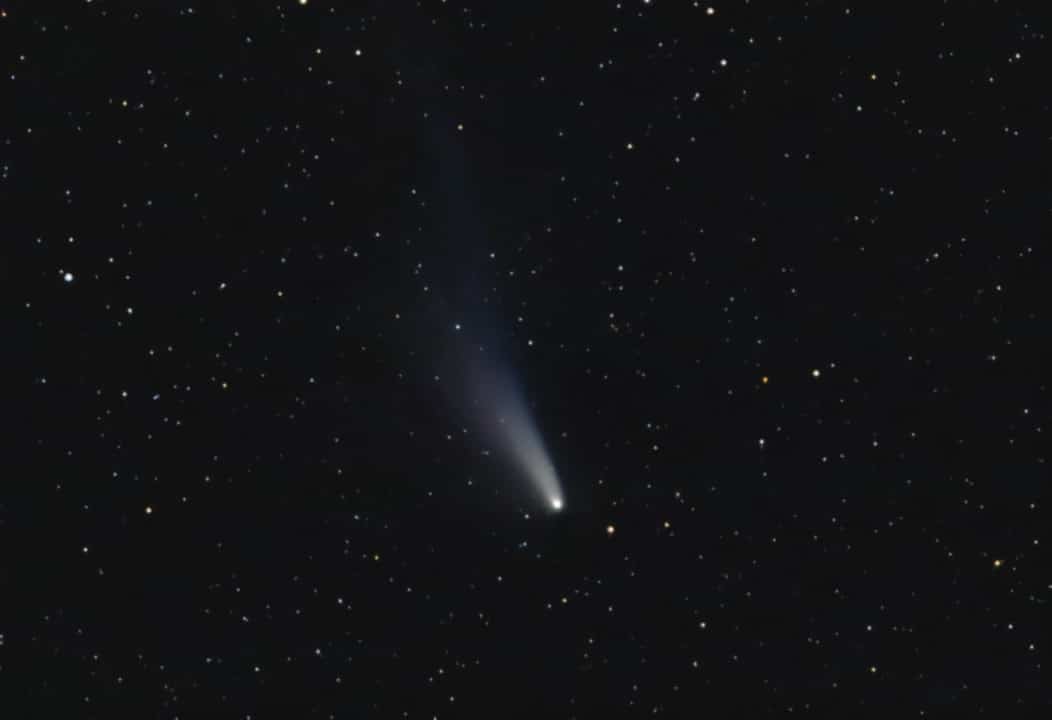
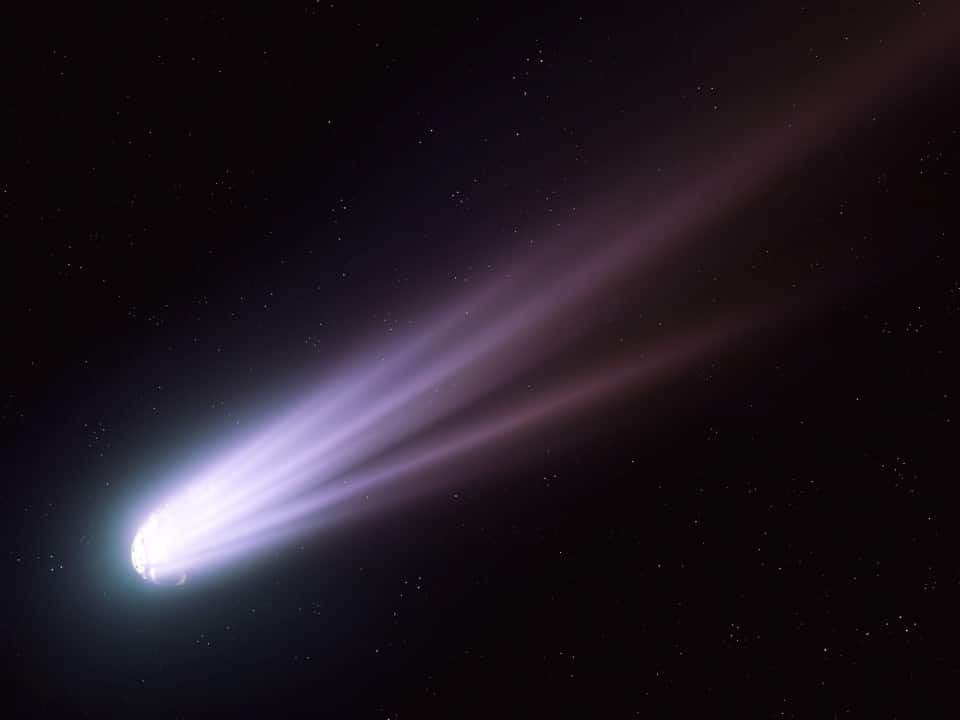
The night sky of May 2026 presents one of the most anticipated astronomical events on the annual calendar with the culmination of the Eta Aquáridas meteor shower. The luminous phenomenon results from the passage of the planet Terra through an extensive trail of dust and small rocky fragments abandoned in outer space. Esse cosmic material originates directly from comet 1P/Halley. The violent interaction between these millimeter particles and the layer of gases that surrounds our planet creates the characteristic visual effect of shooting stars.
The activity of the meteor shower extends over a broad period, with its beginning recorded on April 19 and its end expected only in the last days of May. The point of greatest intensity of space precipitation occurs in the early morning of the transition between May 5th and 6th. Observadores located in Hemisfério Sul have a natural geographic advantage to follow the passage of meteors. The position of Terra in relation to the orbit of the debris favors the visualization of a significantly greater quantity of light beams in this region of the globe.
Optimal Horário and location of the radiant in the night sky
The most favorable window of opportunity for observing the phenomenon is concentrated in the hours before dawn on May 6th. Especialistas in astronomy point out that the best moment occurs when the sky is still completely dark. Isso takes place just before the first rays of sunlight begin to lighten the eastern horizon. The fall rate of meteors reaches its maximum volume during this specific pre-dawn interval.
Para locate the apparent origin of the meteors, observers should direct their gaze to the constellation of Aquário. The exact point from which shooting stars appear to radiate is technically called radiant. The constellation reaches its highest position in the night sky precisely in the late hours of the morning. Light trails can cross any part of the celestial vault in fractions of a second, even emerging from this specific region.
The success of observation depends on a series of environmental and behavioral factors. Proper preparation of the body and choice of location determine the number of meteors that human eyes can capture during the astronomical event.
- The peak of activity is concentrated in the early morning hours of May 6th.
- The Aquário constellation serves as the main reference point for the origin of the light traces.
- Locais located away from large urban centers offer the best conditions due to the absence of light pollution.
- The use of telescopes or binoculars restricts the field of view and impairs the capture of fast meteors.
- Visual adaptation to the dark requires the observer to avoid looking at smartphone screens for at least half an hour.
The process of dilation of the human pupil in low light environments occurs gradually. Sudden exposure to any artificial light source immediately reverses this adaptation. The observer needs to wait a new cycle of twenty to thirty minutes to regain visual sensitivity. Somente After this period, the eyes can see the faintest meteors that cross the atmosphere.
Moon Phase Interferência and Blocking Strategies
The 2026 lunar calendar presents a considerable natural obstacle to viewing the Eta Aquáridas rain. Durante is the peak night of the phenomenon, Lua will be in a phase of high luminosity. The intense glow overshadows the night sky. Essa glare acts as a source of natural light pollution. Excess light has the potential to hide lesser-intensity meteors, reducing the total count of shooting stars visible to the naked eye.
Astrônomos recommend adopting positioning tactics to minimize the impact of lunar glare. The most effective strategy is to use physical elements of the landscape to block the direct view of Lua. The observer can position himself so that a mountain or tall building structure obscures the lunar disk. Essa physical barrier creates a relative shadow zone in the field of view. The tactic allows the eyes to maintain focus on the darkest areas of the sky.
Extreme Velocidade and inheritance of comet Halley
The particles that make up the Eta Aquáridas rain stand out for the impressive speed with which they reach the Terra atmospheric barrier. The fragments travel at a rate of 66 kilometers per second at the moment of impact. Essa extreme acceleration generates a massive amount of thermal energy. The visual result of this high-speed collision is the formation of persistent trails of ionized gas. Esses bright paths remain visible in the sky for several seconds after the space rock has completely disintegrated.
The origin of all this material dates back to previous passages of comet Halley. The celestial body completes an orbit around Sol every 76 years. Heat from solar radiation releases tons of ice and rock into space. Debris from the 2026 spectacle was ejected centuries ago. Terra crosses this trail annually. The orbital crossing guarantees the mathematical regularity of the meteor shower in the month of May.
Condições weather and visibility rates
The geographic location of the observer defines the maximum potential number of meteors seen per hour. No Hemisfério Sul, rates vary between 20 and 40 meteors per hour under ideal dark conditions. The scenario changes drastically for the inhabitants of Hemisfério Norte. The low position of the Aquário constellation on the northern horizon means that a large part of the meteors are blocked by the curvature of Terra itself. Viewing is limited to an average of just 10 occurrences per hour in these regions.
The realization of all these astronomical estimates depends entirely on local meteorological conditions in the early hours of the event. The presence of thick clouds or high levels of humidity in the atmosphere completely blocks the view of outer space. Traveling to rural areas or isolated coastal regions requires checking weather reports in advance. Choosing a location with clear skies and stable weather represents the definitive step to guarantee the contemplation of the space phenomenon.