Total solar eclipse of 2027 will last a record six minutes and will turn day into night

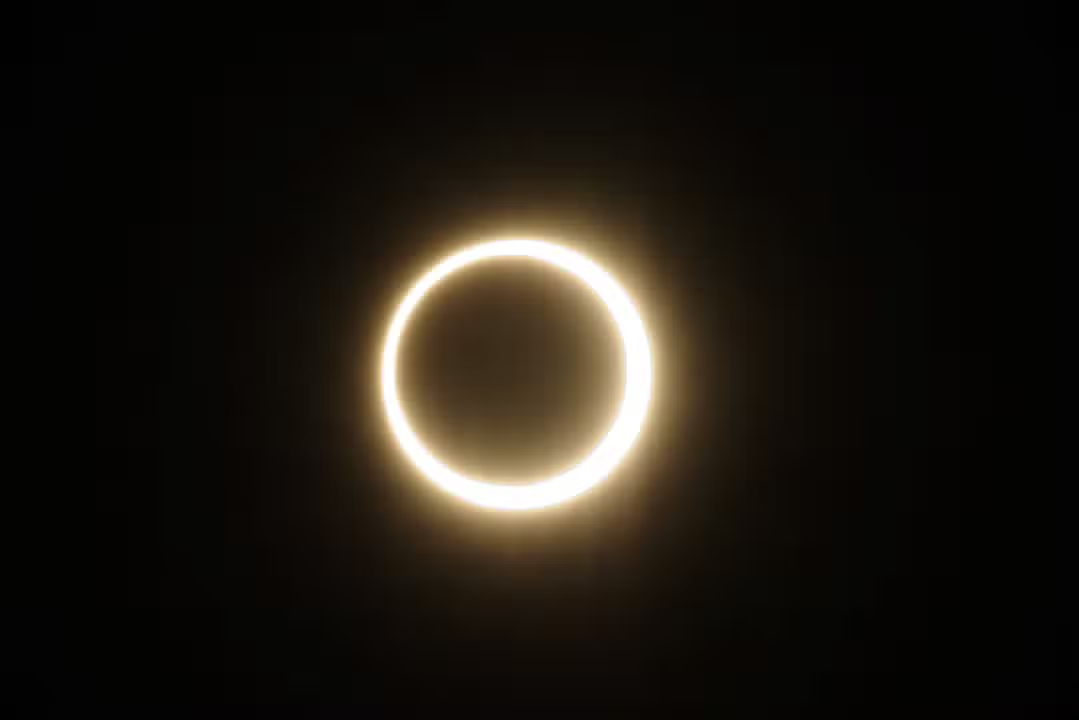
The world will witness the longest total solar eclipse of the 21st century on August 2, 2027. The astronomical phenomenon will turn day into night for a maximum period of six minutes and 23 seconds. The mark easily surpasses the usual average of two to four minutes recorded in similar events. A solar block of this temporal extent last occurred 157 years ago. Milhões of people prepare trips to follow the exact moment when Lua will cover Sol.
The lunar shadow will cross parts of Europa, Norte, África and Oriente Médio. The event attracts the attention of scientists, photographers and astronomy enthusiasts. Pesquisadores uses temporary darkness to study the outer layers of our system’s star. The hotel chain in regions with better visibility is already registering reservations sold out years in advance. Governos locals plan special traffic and security schemes to receive the massive flow of tourists.
Shadow’s Caminho will span three distinct continents
The path of totality will begin at Oceano Atlântico and make landfall at Península Ibérica. The south of Espanha will offer the first ground observation points. The Andaluzia region concentrates European expectations. The shadow will cross Estreito from Gibraltar and enter the African continent through Marrocos. The dark path will follow across vast areas of Argélia and Líbia. The maximum visibility range will cross the desert towards the east.
Egito is home to one of the most coveted locations among international observers. The historic city of Luxor lies directly on the central path of the eclipse. Especialistas point out that the probability of clear skies in the Egyptian desert region in August is close to perfection. The absence of clouds guarantees uninterrupted viewing of the celestial spectacle. Após leaves Egyptian territory, the shadow will cross Mar Vermelho and end its journey at Arábia Saudita.
Fenômenos expected visuals during total darkness
The abrupt drop in natural lighting causes immediate reactions in the environment. The temperature drops quickly. Thermometers register a decline of several degrees in a matter of minutes. Wild Animais alter their usual behaviors due to the confusion caused by the sudden night. Pássaros return to their nests. Insetos nocturnal start their songs. The atmospheric change creates a complete sensory experience for spectators present in the band of totality.
Blocking sunlight reveals elements of deep space normally obscured by daytime glare. Attentive Observadores can identify unique details on the edges of the lunar silhouette. The transition between light and shadow generates fast and impressive optical effects. Astronomers list four main features visible during the height of the event:
- Pérolas of Baily: small points of bright light leaking through the valleys and craters of the lunar surface just before totality.
- Diamond Anel: the last, intense flash of sunlight that appears a second before complete darkness.
- Planetas and stars: Bright stars like Vênus and Júpiter become visible to the naked eye in mid-afternoon.
- Solar Coroa: Sol’s outer atmosphere appears as a diffuse white aura around Lua’s dark disk.
Observation of the solar corona represents the highlight of the astronomical experience. Essa layer of superheated plasma remains invisible most of the time. Apenas the perfect alignment between the Terra, the Lua and the Sol allows viewing with the naked eye. Fotógrafos uses heavy equipment and special lenses to capture the fine texture and filaments of the crown. The images generated help to map our star’s magnetic field.



Global Preparativos and impact on astronomical tourism
Eclipse tourism is a multimillion-dollar industry around the globe. Specialist Travel Agências charters cruise ships and planes to ensure the best viewing positions. The search for accommodations in the path of totality began shortly after the last major eclipse. Small Cidades inside Espanha and Norte of África prepare temporary infrastructure to support the population increase. Logistical planning involves everything from water supply to the installation of chemical toilets.
Mobility on rural roads worries local authorities. The accumulation of vehicles on the shoulders usually generates kilometer-long traffic jams hours before the phenomenon. Governments recommend that visitors arrive at their destinations days in advance. Proper planning avoids frustration. Ninguém wants to miss the exact moment of totality stuck in traffic on an isolated highway.
Security Regras for observing the phenomenon
Eye protection requires strict attention during all partial phases of the eclipse. Olhar directly to Sol without proper equipment causes permanent damage to the retina. Partial blindness is a real risk. Common dark Óculos, X-ray plates or photographic films do not offer any protection against ultraviolet radiation. The use of glasses with international ISO certification is the only safe way to follow the advance of Lua over the solar disk.
The safety rule changes only during the six minutes of absolute totality. Quando to Lua covers all sunlight, observers can remove protective glasses. Viewing the solar corona with the naked eye is safe in this brief interval. The return of the first ray of sunlight requires immediate replacement of the filters. The transition occurs in fractions of a second and requires maximum attention from those present.
Importância scientific and upcoming celestial events
The 2027 eclipse will provide a massive volume of data to the international scientific community. Telescópios terrestrials will point their sensors at the solar corona during the six minutes of darkness. Researchers seek to understand why Sol’s outer atmosphere is so much hotter than its surface. Measurements taken during totality help calibrate satellite instruments that monitor space weather daily.
The astronomical calendar reserves other spectacles for the following years. A partial solar eclipse is scheduled for January 26, 2028. Public interest in astronomy grows with each major event. Skywatching connects people to the exact mechanics of the solar system. Space agencies continue to map celestial trajectories to predict upcoming alignments with mathematical precision.
See Also em Latest News (EN)

Sony releases system update for PlayStation 5 with improvements and two free games
30/04/2026
PlayStation 5 players receive free access to two full titles in the digital store
30/04/2026
Sony releases redemption of two free digital games for PlayStation 5 users after update
30/04/2026
Sony makes two complete titles available for free for PlayStation 5 console users
30/04/2026
Square Enix prepares multiplatform launch for the conclusion of the Final Fantasy VII trilogy
30/04/2026
Free update brings Red Dead Redemption 2 to native 4K at 60 frames per second
30/04/2026
Konami releases package with historic athletes in eFootball to transform the competitive scene
30/04/2026
Memory shortage delays Valve’s computer, but new control has confirmed launch
30/04/2026
EFootball launches ‘Epic National Strikers’ event with 139 special players
30/04/2026
Intimate image of former deputy Átila Lira leaks onto the internet after error in publication on Instagram
30/04/2026
New Chinese scooter arrives on the Japanese market with aluminum chassis and focus on urban mobility
30/04/2026