Sony Pictures defines Oscar-winning screenwriter to unite Django and Zorro universes in the cinema
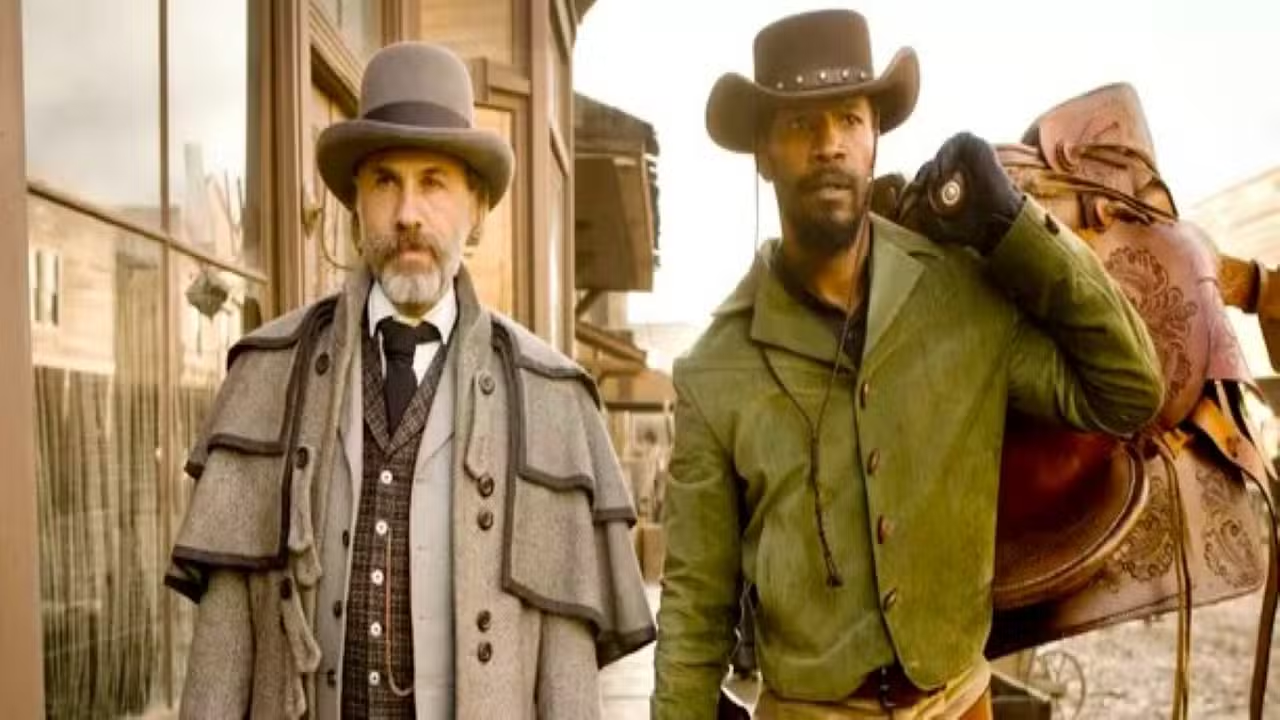
The encounter between a former slave turned bounty hunter and a legendary masked vigilante seemed restricted to the pages of comic books. The idea was born from a literary collaboration more than a decade ago. Agora, the project takes on real contours behind the scenes of Hollywood.
Sony Pictures has officially developed a feature film that will unite the universes of Django and Zorro on the big screen. Production advances after resolving legal impasses and delays caused by the global health crisis. The studio hired screenwriter Brian Helgeland to write the new adventure, which will serve as a direct continuation of the events chronicled in the 2014 print series.
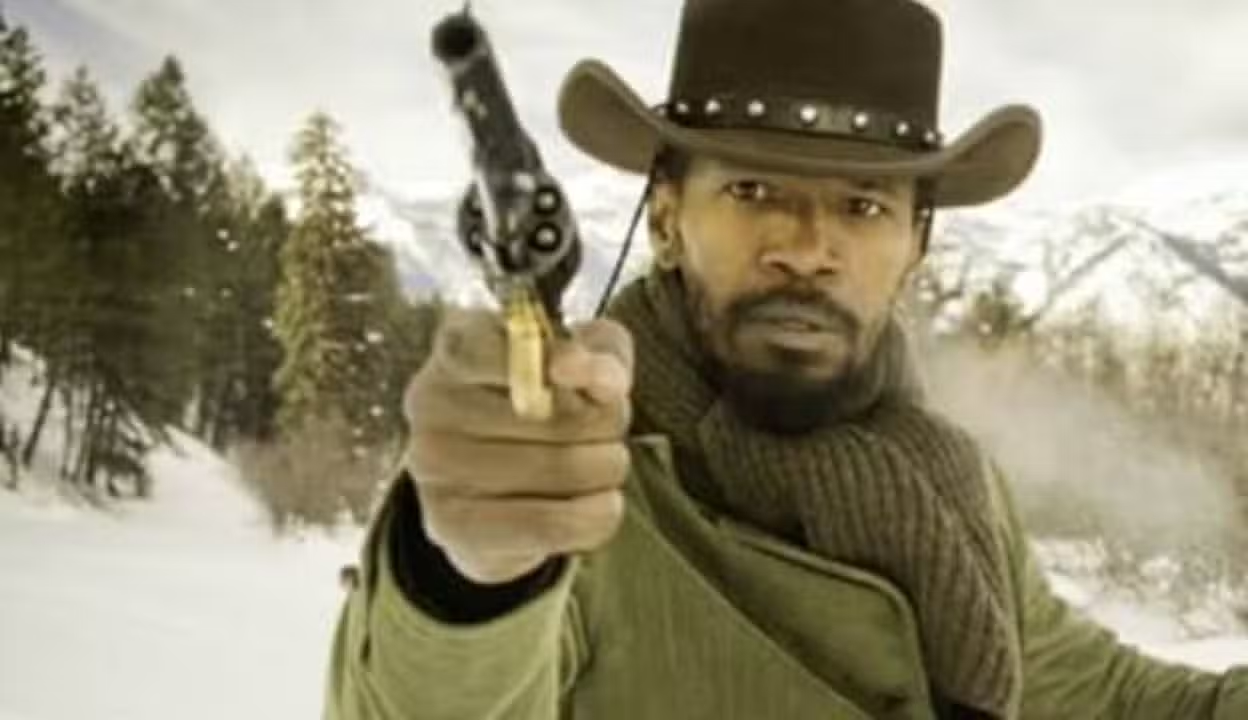
Award-winning Roteirista takes on the construction of the narrative
The choice of the professional responsible for intertwining the two franchises demonstrates the studio’s ambition with the project. Brian Helgeland has a recognized track record in the film industry. Ele earned the Oscar from Melhor Roteiro Adaptado for his work on the acclaimed crime film Los Angeles: Cidade Proibida. The writer also writes texts for dense works focused on complex protagonists, such as Sobre Meninos and Lobos and Homem in Chamas.
Helgeland’s mission differs from a traditional adaptation. The screenwriter will not exactly transcribe the events of the seven-issue miniseries published by Dynamite Entertainment. The proposal approved by Sony Pictures involves the creation of an unprecedented sequence. The original story, conceived by Quentin Tarantino in partnership with comic artist Matt Wagner, established the first contact between the bounty hunter and an aged Don Diego de la Vega. The new script will explore the consequences of this unlikely alliance in a western setting.
Legado of the characters and cultural impact on cinema
The two protagonists carry significant weight in pop culture and have consolidated trajectories at the global box office. Django gained global notoriety in 2012 under the direction of Quentin Tarantino. The feature film Django Livre grossed millions worldwide and revitalized the western genre. The Jamie Foxx actor’s interpretation delivered a visceral vision of slavery in Estados Unidos. The film won awards from Academia and established the character as a modern icon of revenge and justice.
The masked vigilante has an even more extensive and diverse history on screen. The Spanish hero has gone through generations with different interpreters and approaches. The most recent phase remembered by contemporary audiences occurred in the late 1990s and early 2000s.
- The feature film A Máscara by Zorro arrived in theaters in 1998 under the direction of filmmaker Martin Campbell.
- Veteran Anthony Hopkins took over the role of the original Don Diego from Vega in the production.
- Actor Antonio Banderas played Alejandro Murrieta, the successor who inherits the hero’s cloak and sword.
- The franchise yielded a direct sequel titled A Lenda do Zorro, released in 2005.
The fusion of these two intellectual properties requires a delicate balance between Django’s satirical, violent tone and Zorro’s classic adventure style. Executivos of Sony Pictures believes that the crossing of generations of fans can generate a large-scale cinematic event. The studio has not yet released information about the cast or whether the original actors will return to their respective roles.



Superação of bureaucratic obstacles and shutdowns
The development of the feature film faced a long period of uncertainty before official confirmation. The idea had been circulating in the halls of Hollywood since the launch of the comic book. The main obstacle involved the division of copyrights between different companies and creators. Negotiation required years of contractual conversations to align the commercial interests of all parties involved in intellectual property.
The global scenario worsened the project’s situation. The coronavirus pandemic has brought the entertainment industry to a standstill and forced studios to reevaluate their release schedules. Filmes with high budgets and complex negotiations were put on hold. The resumption of activities in the audiovisual sector allowed Sony Pictures to resume conversations with legal certainty. The definitive resolution of the contracts gave the green light to hire the creative team.
Quentin Tarantino focuses on new formats and platforms
The creator of the modern version of Django follows the development of the crossover only as an executive producer and creative consultant. Quentin Tarantino read the initial proposals and approved the narrative direction chosen by the studio. The filmmaker chose not to take on the director’s chair to maintain focus on his personal projects. Ele has repeatedly stated the plan to end his film career after directing his tenth feature film.
The director’s agenda reflects a transition to other media and narrative formats. The British theatrical market will welcome Tarantino’s first foray onto the stage. The The Poppinjay Cavalier piece is confirmed to debut for the West End of Londres next year. The original text marks a drastic change in the artist’s production style, moving away from traditional film sets.
The universe created by the director will also expand in the streaming market. The Netflix platform has secured the production rights for The Adventures of Cliff Booth. The spin-off project will see actor Brad Pitt return to the role of the stuntman who earned him Oscar from Melhor Ator Coadjuvante by Era Uma Vez in… Hollywood. Tarantino developed the premise, but passed on direction to filmmaker David Fincher. The move confirms the creator’s willingness to delegate his intellectual properties to other renowned professionals.
See Also em Latest News (EN)

Apple announces iPhone 18 Pro Max with variable lens and reveals new foldable model to the market
30/04/2026
Motorola launches Razr Fold for US$1,899 to compete in the premium foldable market in May
30/04/2026
Leak points to new version of Ocarina of Time and new Switch 2 console for 2026
30/04/2026
Failure in Samsung’s new update quickly consumes the battery of Galaxy S24 and S25 cell phones
30/04/2026
X-ray emission confirms presence of supermassive black holes in Webb’s red dots
30/04/2026
The WhatsApp application permanently blocks access on smartphones with an old Android operating system
30/04/2026
PlayStation Plus service updates May catalog with football simulator and new RPG titles
30/04/2026
Take-Two executive dismisses abusive value in Grand Theft Auto 6 and evaluates new L.A. Noire
30/04/2026
OnePlus and Realme unify global operations to face competition in the cell phone market
30/04/2026
League of Legends patch 26.9 changes mission system and introduces new demonic skins
30/04/2026
League of Legends Update 26.9 brings new skins and reformulates items for the new season
30/04/2026