Chery’s new electric utility debuts at Asian event with a focus on cost-benefit
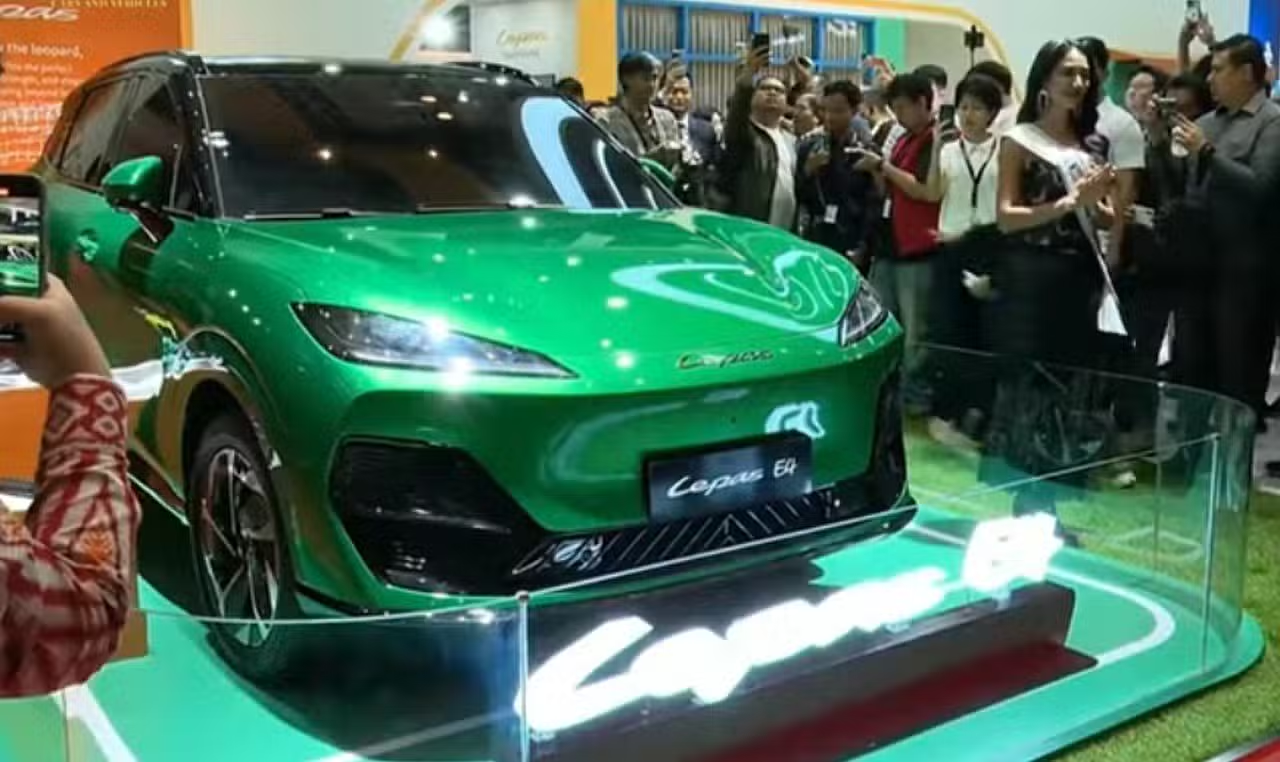
The Salão of Automóvel of Pequim served as the stage for the official presentation of the Lepas L4 EV sports utility vehicle. Chinese automaker Chery introduced the model as the most affordable option from its newly created electrification-focused sub-brand. The vehicle arrives to compete for space in a highly competitive segment. The novelty attracted the attention of the public and investors in the automotive sector during the exhibition days at the convention center.
The launch reflects the Asian manufacturer’s strategy of diversifying its global portfolio. The new car is positioned one step below the L6 and L8 utility vehicles in the company’s hierarchy. The fully electric-powered version will share the showrooms with a plug-in hybrid variant. Sales in the Chinese market are scheduled to begin in October. Expansion to other regions of the planet will depend on specific timelines for each country.

Aerodynamic Design and dimensions focused on internal comfort
The aesthetics of the utility vehicle present significant differences in relation to traditional combustion-powered models. The designers adopted exclusive frontal lines to optimize the electric vehicle’s aerodynamic coefficient. The look refers to the design language applied to the recent generation of the Tiggo 5. The light alloy wheels received an unprecedented design. The set seeks to combine energy efficiency with a modern appearance for daily traffic.
The cabin received special attention from the engineering team to maximize the use of space. The internal architecture prioritizes occupant comfort on urban and highway journeys. The distance between the axles exceeds that of the E5 model by exactly 70 millimeters. The structural gain results in greater free area for the legs of passengers traveling in the rear seat. The volumetric capacity of the trunk awaits official approval by the traffic authorities.
- Comprimento total set at 4,415 millimeters.
- Largura of the bodywork fixed at 1,817 millimeters.
- Altura ceiling designed for 1630mm.
- Distância between the axles crimped at 2,700 mm.
The proportions of the body place the car in the competitive compact and medium utility vehicle segment. The exterior style tries to capture consumers who value a more refined visual finish. The proposal maintains the practicality necessary for daily use in large cities. The automaker is betting on this geometric combination to face established rivals in the family vehicle category.
LEX platform Estreia and electrified powertrain options
The project marks the inaugural use of the LEX modular platform within the automotive group. The structural base delivers high levels of torsional rigidity. The architecture allows for the integration of advanced electronic systems and high-density batteries. The company’s research and development center calibrated the multilink rear suspension. The mechanical component guarantees superior dynamic behavior on curves and uneven surfaces.
The mechanical assembly of the purely electric version uses a front engine capable of generating 150 kW of power. The propellant receives energy from a battery pack with 67 kWh of storage capacity. The technical configuration provides agility during urban acceleration. The estimated range reaches 450 kilometers on a full charge. The final range varies depending on the testing cycle adopted by each international regulatory agency.
The manufacturer will also make a plug-in hybrid configuration available at the start of sales. The system combines a heat engine with an electric thruster to deliver 205 kW of combined power. The maximum torque reaches 350 Nm. The vehicle can travel up to 90 kilometers using electricity alone, according to the European WLTP cycle standards. The company has chosen not to offer exclusively 1.5-liter gasoline engines in this initial launch phase.



Onboard Tecnologia and driver assistance package
The utility’s internal environment follows the technological standard established by the new sub-brand. The driver views driving information on an 8-inch digital instrument panel. The infotainment system concentrates controls on a central 9.9-inch touch-sensitive screen. The standard equipment package includes parking sensors and a camera system with a 360-degree panoramic view. The arrangement facilitates maneuvering in confined spaces.
The list of comfort items includes automatic headlight switching and seats with partial synthetic material coverings. Top-of-the-line versions add longitudinal bars on the roof and a keyless door unlocking system. The top catalog also offers a high-fidelity sound system. The front seats are electrically adjustable in six different positions. The seat heating and ventilation functions are part of the most expensive configurations in the line.
Active safety represents a fundamental pillar in product development. Adaptive cruise control manages the distance to the vehicle in front. The complete package of advanced driver assistance systems brings together up to 21 different features. The technology monitors blind spots, assists in lane maintenance and performs emergency braking. The cabin uses soft-touch materials to justify the vehicle family’s market positioning.
Estratégia for global expansion and market positioning
The introduction of the model is part of a comprehensive electrification plan designed by the automaker’s management. The brand debuted at the Asian event displaying a portfolio focused on new energies. The company’s commercial narrative revolves around concepts of elegance and sustainable mobility. The manufacturer uses its global engineering structure to create adaptable technologies. The objective is to gain sales volume without diluting the perceived added value of the product.
The price positioning targets consumers with greater purchasing power within the entry range of the premium segment. The final value should be around five percent above the products offered by the Omoda and Jaecoo lines. The strategy seeks to attract customers considering purchasing compact European models, such as the BMW iX1, the Volvo EX30 and the Mercedes GLA. The automaker intends to offer a similar level of finish while charging more competitive prices at dealerships.
The international distribution schedule provides for specific adaptations for different regions. The engineering team plans to recalibrate the suspension setup to meet the demands of European drivers. The launch of the brand on the Australian market has been strategically postponed until the end of 2026. The arrival of the Reino Unido already has official confirmation to face established hybrid competitors. Commercial details for each country will be released closer to the start of local import operations.
See Also em Latest News (EN)

Palmeiras negotiates the signing of Nino with optimism and a ceiling of 15 million euros
01/05/2026
Take-Two releases results in May and raises expectations for third GTA 6 trailer
01/05/2026
Classic strategy returns to Steam with new Heroes of Might and Magic
01/05/2026
Netflix brings miniseries A Escad about true crime that shocked the US with Colin Firth
01/05/2026
Zverev defeats Blockx and advances to the Masters 1000 final against Sinner in Madrid
01/05/2026
X360 Mobile app runs classic Xbox 360 games on high-performance Android phones
01/05/2026
Chery reveals seven-seater sports utility vehicle with modular cabin convertible into a pickup truck
01/05/2026
Oppo launches cell phone in Brazil with 7000 mAh battery and military resistance certification
01/05/2026
Ubisoft transfers Assassin’s Creed Hexe team and changes mechanics for release in 2027
01/05/2026
Assassin’s Creed Black Flag remake debuts on PlayStation 5 with advanced graphics in July
01/05/2026
Studio responsible for the Alien Isolation franchise publishes unprecedented video about the progress in the production of the new game
01/05/2026