PlayStation 3’s Cell processor creates historic barrier to preserving classic games
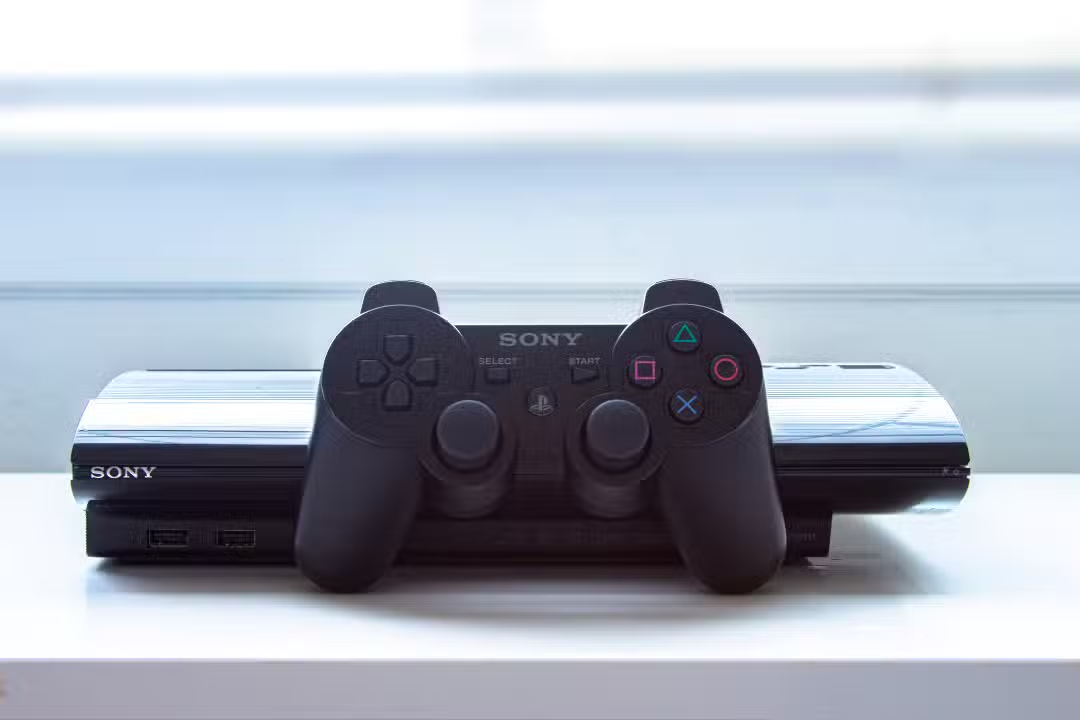
The PlayStation 3 console, introduced to the global market by Sony in 2006, has established itself as one of the biggest puzzles in modern software engineering. The machine houses the Cell Broadband Engine processor, a piece of hardware developed jointly with Toshiba and IBM. Essa’s unique architecture has generated a complex scenario for today’s industry. Quanto The more computers evolve, the more difficult it becomes to access the device’s original catalog.
Duas decades after the first discs hit the shelves, programmers and studios are still looking for methods to detach game codes from the physical machine. The transition from conventional emulation methods to native recompilation systems has become a race against time. The central objective involves ensuring that digital works do not disappear due to the inevitable degradation of the original equipment.
Complexidade hardware requires extreme synchronization accuracy
The Cell chip emerged with the promise of delivering unattainable computing power by the standards of that generation. However, this brute force took a toll on ease of programming. Game designers had to manually manage the distribution of tasks within the chip. Essa’s technical requirements meant that the software was closely linked to the video game’s physical components.
Executar these titles on contemporary hardware, such as the PlayStation 5 or high-end computers, run into severe logical obstacles. The main difficulty lies not only in the strength required to simulate the ancient environment. The real challenge is to replicate the exact communication between the multiple processor cores in a virtual way.
Diferente of previous machines that followed a linear flow of data, the Sony device operated asymmetrically. The system depended on a central core called Power Processor Element, which acted as a conductor. Ele distributed the heavier mathematical operations to eight auxiliary units, known as Synergistic Processing Elements.
- Extracting the video game’s maximum potential required codes written specifically for these synergistic units.
- Cálculos particle physics, artificial intelligence, and spatial audio processing were processed exclusively by these satellite cores.
- Simular this ecosystem requires that current computers emulate nine distinct processors operating with millisecond delays strictly identical to the original hardware.
Qualquer Minimal failure in response time between main core and auxiliary units causes virtual system collapse. Esses synchronization errors result in graphical glitches, sudden crashes and erratic behavior of characters controlled by the machine. Therefore, emulation based solely on brute force consumes absurd resources from modern processors. A current computer needs to calculate thousands of simultaneous variables just to maintain the basic stability of the virtual environment.
Exclusive Títulos remain hostage to the original architecture
The impact of this technological barrier is directly reflected in the games developed exclusively for the platform. Big-budget Obrass have become prisoners of the silicon that designed them. Engenheiros software often points to Metal Gear Solid 4, created by Kojima Productions, as the definitive example of this structural dependency.
The Japanese development team used the chip’s auxiliary units to process routines that no other hardware at the time would support. Essa extreme optimization generated a symbiotic relationship between the source code and the console boards. Separar gaming on its native platform requires a monumental reverse engineering effort on the part of today’s programmers.
Outras Major brands, such as shooter franchises Killzone and Resistance, also took a deep dive into the equipment’s rendering capabilities. Studios explored image post-processing techniques that depended on the specific delay generated by the synergistic units. Transportar these experiences for current monitors go far beyond creating a simple translator program.
The independent developer community has reached important milestones with open source tools like the RPCS3 project. Esse software allows several classics to run on personal computers with specific settings. Contudo, the need to apply individual corrections for each title shows that traditional emulation still suffers from chronic instability. Users often need to manually change video and audio settings to be able to start a game without interruptions.


Recompilação code emerges as definitive solution for studios
Diante From the barriers imposed by real-time simulation, the industry has found a safer path through software recompilation. Esse method abandons the idea of imitating the old video game. Instead, programmers adapt the original source code so that it speaks directly to the language of current processors.
The strategy eliminates the processing bottleneck caused by simultaneous command translation. When running natively, games can achieve much higher image resolutions, reaching the 4K standard without drops in frame rate. The fluidity of the experience improves considerably, modernizing the product for the end consumer without changing the essence of the work.
Outra significant technical advantage involves data reading speed. Direct memory access and the use of solid-state storage drives reduce loading screens to mere seconds. Falhas visual and sound distortions, which haunt the emulated environments, completely disappear in this direct conversion.
Recent Movimentações in the market indicate that large companies are already adopting this format to rescue their collections. Relatórios point out that Konami plans to re-release its classic works using native conversion technologies for current generation video games. Essa’s approach preserves the original directors’ artistic vision while delivering a technically up-to-date product.
Historic Preservação Secures the Future of Digital Memory
Industry standardization around the x86 architecture has facilitated cross-platform game development in recent years. Aparelhos like the PlayStation 4, PlayStation 5 and the Xbox Series line share very similar programming languages to desktop computers. Essa technological convergence has simplified backward compatibility, ensuring that recent releases survive generation changes automatically.
The technical abyss left by the 2006 era serves as a permanent warning for software producers. Garantir continuous access to digital works has become a priority beyond the purely commercial aspect. Emulation continues to play a vital role in historical documentation, revealing the working secrets of past machines to researchers and academics.
Sem has made robust investments in portability, a significant portion of pop culture from the beginning of the century is at risk of disappearing. The electronic components of the original consoles suffer natural degradation over the decades, rendering the physical discs unusable. The transposition of these virtual universes to modern platforms represents the only guarantee of long-term survival.
Restoring old libraries requires financial resources and specialized technical dedication. Superar the logical maze created by the Cell processor means maturing the way society deals with the history of interactive entertainment. Permanent preservation ensures that future generations can experience the founding milestones of digital media without relying on obsolete hardware.
See Also em Latest News (EN)

Apple launches 240 Hz quantum screen technology in the unprecedented iPhone 20 and transforms the global cell phone market
04/05/2026
Subscribers to the PlayStation Plus Extra and Premium service lose access to major action games in June 2026
04/05/2026
Oppo Find X9 Ultra smartphone beats iPhone 17 Pro Max in autonomy and charging test
04/05/2026
GTA 6 developer accelerates hiring to start global physical marketing campaign
04/05/2026
Studio responsible for Grand Theft Auto VI recruits specialist to produce physical materials for the new game
04/05/2026
GameStop’s $55.5 billion bid for control of eBay seeks to create a rival to Amazon
04/05/2026
Nintendo makes official new hybrid console with enlarged screen and remake of Zelda Ocarina of Time
04/05/2026
PlayStation Plus brings game reveal to May 2026 and changes commercial subscription strategy
04/05/2026
Nintendo defines calendar with nine releases for Switch and new console in May 2026
04/05/2026
Japanese company announces next generation of hardware with unprecedented version of Zelda Ocarina of Time
04/05/2026
New Lego Sonic sets feature Tails’ classic aircraft and Shadow’s armor in August
04/05/2026