
Apple introduces iPhone 17 with superior battery and ultra-thin titanium Air version starting at $999

The North American manufacturer Apple introduced two new smartphones on the global market during the month of September 2025. The company’s mid-range catalog received the iPhone 17 and the unprecedented iPhone Air. The devices arrive with different proposals for consumers looking for technological updates. The conventional model starts at US$799 in official stores. The thinnest version requires an initial investment of US$999. Essa exact difference of US$200 marks the financial gap between the editions equipped with 256 GB of internal storage. The simultaneous launch moves the mobile device sector in this last quarter.
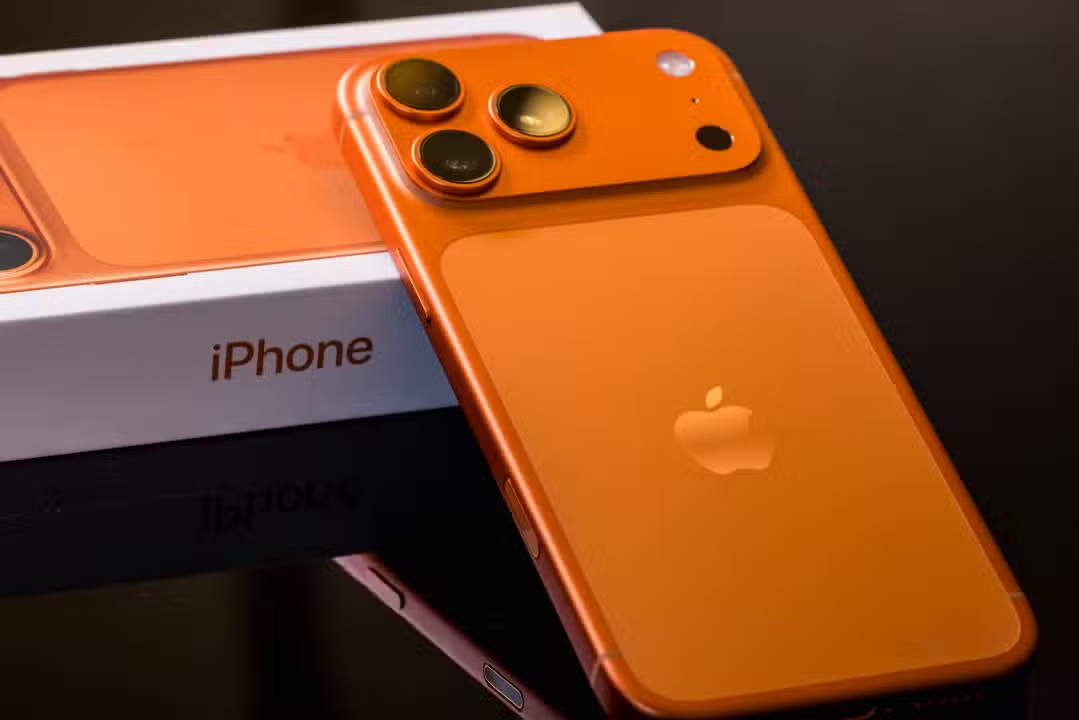
The commercial movement highlights an audience segmentation strategy by the Cupertino company. The iPhone 17 maintains the known visual identity with a vertically positioned dual camera module. The iPhone Air adopts a radically modified structure to appeal to a specific niche. The device weighs just 165 grams on the scale. The thickness reaches an impressive 5.6 millimeters. The body uses titanium in the main composition of the edges. The pursuit of this premium aesthetic resulted in the removal of some internal hardware components. Engineering had to adapt parts to fit the new chassis.
Diferenças processing and screen quality
The performance of the devices varies based on the chips integrated into the motherboards. The iPhone 17 operates with the standard A19 processor developed by the brand itself. The iPhone Air houses the A19 Pro version, which has additional processing cores. Essa computational superiority appears while running heavy applications and complex high-end games. Daily tasks, such as internet browsing and social networks, work with identical fluidity on both operating systems. The base model offers 256GB or 512GB internal storage options. The ultra-thin edition offers an extra variant aimed at content creators, with 1 TB of available space.
The visual experience also separates the technology giant’s two recent releases. The iPhone Air has a 6.5-inch OLED panel that dominates the front. The iPhone 17 delivers a slightly smaller screen, measuring 6.3 inches diagonally. Both displays operate at a dynamic refresh rate of 120Hz. Maximum brightness reaches 3,000 nits in direct sunlight, making it easy to read outdoors. The resolution of the premium model reaches 1260 x 2736 pixels. The conventional device records 1206 x 2622 pixels on the light panel. Essa higher density in titanium model improves high definition video consumption.
Configurações camera and battery life
The image capture reveals opposing approaches between the engineers responsible for the projects. The cheapest model provides greater flexibility for amateur photographers on a daily basis. The premium device simplifies the optical assembly to maintain the extremely thin profile without creating an exaggerated gap at the rear.



- The iPhone 17 has two 48MP rear lenses, divided between a main wide angle and an ultra wide angle.
- The iPhone Air only has a 48MP rear camera in wide-angle format.
- The front cameras of both smartphones record images with 18MP resolution for video calls.
- The base model’s power recharge reaches 40W on the connected cable and 25W on wireless magnetic bases.
- Charging for the slim version is limited to 20W of maximum power, both in wired and induction modes.
The absence of the ultra-wide-angle lens on the iPhone Air prevents you from capturing wide landscapes with the same ease. The rear camera block adopts a prominent horizontal shape to house the solitary sensor. The iPhone 17 solves this framing limitation with its traditional dual system. The battery of the conventional device stores 3,692 mAh of total charge. The power component of the ultra-thin model holds only 3,149 mAh. The reduced volume of the titanium housing required a direct sacrifice of energy capacity. The user of the more expensive model will need to use sockets more frequently during intense use.
Materiais construction and color options
The physical dimensions define the ergonomics and handling of each smartphone. The iPhone 17 measures 149.6 millimeters high by 71.5 millimeters wide, 8 millimeters thick and with a total weight of 177 grams. The iPhone Air measures 156.2 millimeters in height and 74.7 millimeters in width on the chassis. The drastic reduction in thickness creates a completely different tactile sensation for the hands. The more expensive device compensates for the extra width with an expanded screen for viewing content. The elongated shape changes the device’s center of gravity.
The durability of coating materials varies depending on the chosen price range. The iPhone Air receives Ceramic Shield 2 protection on the front panel and also on the glass back cover. The side structure uses titanium that is highly resistant to impacts and scratches. The iPhone 17 uses the same second-generation reinforced glass only on the front of the device. The edges of the base model consist of industry-standard aluminum. Both devices have international IP68 certification. The technical seal guarantees resistance against temporary submersion in fresh water and blocks the entry of fine dust.
The industrial design department chose different color palettes for
See Also em Latest News (EN)

Nuka Girl mascot from the Fallout franchise gains official collectible figure for the global market
04/05/2026
Vogue’s official digital broadcast shows Met Gala 2026 red carpet with internet fashion experts
04/05/2026
Niantic updates Pokémon GO raid rotation with Nihilego and Lechonk Community Day
04/05/2026
Princess Eugenie confirms the pregnancy of her third child, expected to be born in 2026
04/05/2026
Square Enix guarantees that Final Fantasy VII’s outcome will respect the classic 1997 narrative
04/05/2026
PlayStation manufacturer will pay US$7.85 million after lawsuit over digital games monopoly
04/05/2026
Valve presents new Steam Controller with magnetic anti-drift system focused on the premium market
04/05/2026
Valve announces second generation Steam Controller for 99 euros with innovative magnetic system and long-lasting battery
04/05/2026
Xiaomi expands premium line to global market with magnetic lenses and continuous screen in 2026
04/05/2026
Samsung’s new cell phone interface introduces translucent design and advanced artificial intelligence
04/05/2026
JAC Motors advances in Europe and plans to open 50 physical dealerships in Germany by 2026
04/05/2026