Book analyzes 80 variations of the snack and recognizes immigrants as creators of the hamburger in the United States (91)
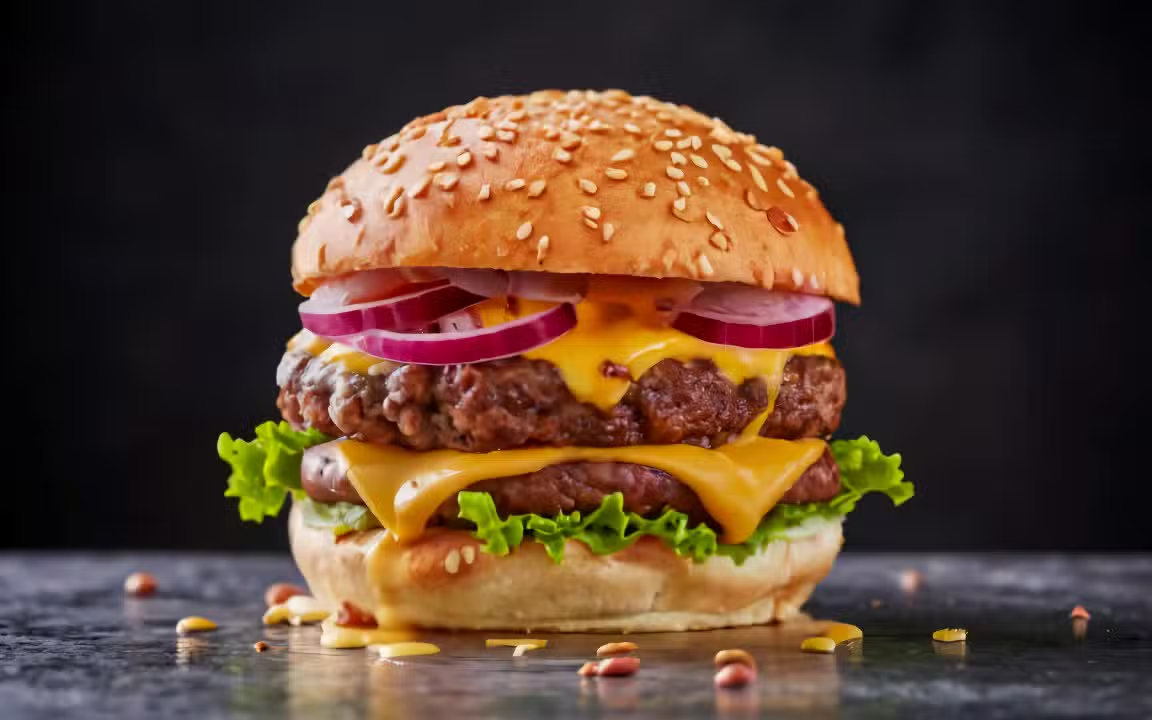
The hamburger carries the status of the ultimate symbol of American food culture. Redes of fast food and backyard barbecues have cemented that image over decades. Pelo minus six different regions in Estados Unidos dispute the authorship of the original dish. Cidades in states such as Connecticut, Texas, Oklahoma and Wisconsin maintain local legends about the first version of meat pressed into bread. Essa historic rivalry fuels tourism and regional pride. The traditional narrative, however, has just undergone a twist.
A comprehensive mapping released this month of 2026 transfers the credit for innovation to other hands. Journalist Maggie Hennessy, former gastronomic critic for renowned outlets, launched the book “A Bíblia do Hambúrguer”. The work documents more than 80 varieties of the snack. The survey concludes that immigrants act as those truly responsible for the creation and continuous reinvention of the dish in Estados Unidos. The initial project sought only to record typical variations, but found a complex network of people rebuilding their lives through cooking.

Cultural Adaptação transforms basic recipe into flavor platform
The simple structure of bread, meat and cheese acts as a blank canvas for newcomers. Hennessy spent a year analyzing how different communities adapt the product commercially. The low barrier to entry makes the sandwich an accessible vehicle for ingredients unknown to the general public. Consumidores feel more confident in testing new seasonings when they arrive in a familiar format. Immediate acceptance facilitates the introduction of elements from various parts of the world.
Ervas Laotian spices, Korean seasonings and fermented pork belly appear frequently in the recipes documented by the author. Food maintains a constant dialogue between its external appearance and its internal composition. The final product directly reflects the identity of those who prepare it. Research demonstrates that the snack acts as an efficient gateway to foreign culinary traditions and techniques. Diners try bold combinations they would likely reject in a traditional dish.
Sociólogos classify this specific phenomenon as a composite culture. The academic term describes social practices shaped by multiple groups arriving in a given location. The inherent neutrality of the traditional sandwich creates the necessary space for migrants to insert elements from their homelands. Comer a snack with international influences no longer sounds like consuming an exclusively ethnic dish. The integration of flavors occurs naturally in the current market.
Nigerian Trajetória exemplifies innovation in the gastronomic market
The publication highlights specific stories of individuals who transformed their realities through the hot plate. Fanso Akinya represents one of the most striking examples within the research conducted. The Nigerian immigrant began his professional life at Estados Unidos working as a cashier at a McDonald’s branch. Daily contact with the fast-food industry has awakened a critical view of mass-produced items. Ele observed the system failures. The experience served as the basis for his future endeavor.
Akinya evaluated the plant-based meat alternatives available on the market and found them unsatisfactory. Ele decided to develop his own version using traditional knowledge from his home country. The entrepreneur created a sandwich based on akara. The preparation consists of a fried bean dumpling typical of Nigerian cuisine. The recipe completely avoids imitation beef. The process also eliminates the need for advanced industrial processing.



The approach caught the researcher’s attention due to its extremely contemporary nature. The movement away from ultra-processed alternatives and towards whole ingredients marks a significant change in the sector. Akinya listened to consumer demands. Ele maintained rigorous standards of personal quality and rejected commercial shortcuts. The cook used his cultural background to create a product that was unprecedented in the local New York market.
Levantamento maps diversity of preparations across the country
The documentation process required extensive travel and interviews across different American states. The data collected shows a clear pattern of cultural preservation mixed with smart commercial adaptation. Farmers use food not just as a source of quick income. The dish acts as a vehicle of identity and constant innovation.
- The study cataloged more than 80 different versions of the snack in operation.
- The research covered preparations found in several American cities.
- The printed material brings together real stories of overcoming and entrepreneurship.
- The analysis proves the evolution of traditional flavors to contemporary formats.
- The data confirms the leading role of foreigners in local cuisine.
Cada cataloged variation carries a specific history of integration into a new social environment. The book demonstrates that the ability to reinvent a classic item requires a deep understanding of the original culture and the destination country. The commercial success of these ventures depends on this delicate balance. The documented cooks prove that creativity arises precisely from the challenges faced during the immigration process.
Historic Redefinição dispels myth of exclusive regional invention
The debate over which American city fried the first disc of meat loses relevance given current data. The historical charm of local legends remains intact for tourism. The analytical focus, however, shifts to the culinary innovation of the present. Research establishes that the true essence of the dish lies in its ability to evolve through foreign hands. Continuous reinvention guarantees the product’s relevance in the demanding gastronomic market.
The publication definitively positions the sandwich as a collective product of multiple converging cultures. The narrative moves away from the idea of an isolated and static regional invention. Documented recipes prove that the most iconic item on the American menu is fundamentally an immigrant dish. The unbroken cycle of recreation belongs to the people who brought their traditions to rebuild life in a new territory. Cuisine reflects demographics.
See Also em Latest News (EN)

Bounty Star arrives in the Nintendo Switch 2 catalog after classification in Taiwan
04/05/2026
Matheus Cunha will be spared by Manchester United to reinforce the Brazilian team in the World Cup
04/05/2026
WHO denies risk of hantavirus outbreak on ship in the Atlantic
04/05/2026
Neymar plays Santos’ next four matches to try for a place in the World Cup
04/05/2026
Marta Kostyuk beats Mira Andreeva in Madrid and celebrates unprecedented title with somersault
04/05/2026
Without playing for almost a month Villalba seeks opportunity at Botafogo for the South American
04/05/2026
Chelsea suffer 3-1 defeat to Nottingham Forest in the Premier League with Igor Jesus goal
04/05/2026
Pietro Maschio calls the Club World Cup in Brazil a burden and criticizes infrastructure and creates a crisis in Conegliano
04/05/2026
Plane crashes and crashes into building in Belo Horizonte, leaving pilot unconscious
04/05/2026
Hubble Telescope reveals gas bridge between two galaxies in gravitational interaction
04/05/2026
Super Mario Galaxy Movie enchants with space visuals but divides opinions on plot
04/05/2026