Japanese manufacturer announces new generation of hybrid console with enlarged screen and Zelda remake
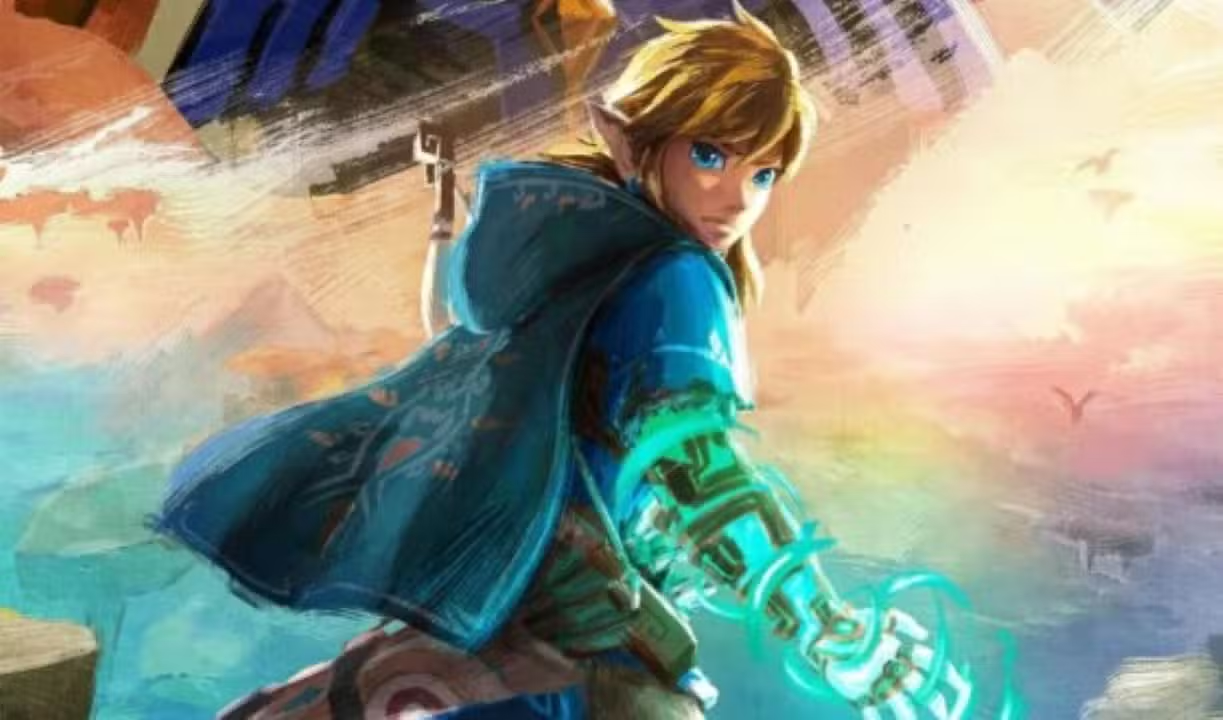
Nintendo has officially developed its next electronic entertainment platform for the global market. The new equipment maintains the mixed-use structure that has defined the company’s operations in the sector over recent years. The announcement ends a long period of speculation among technology investors and consumers. The manufacturer confirmed that the hardware launch will be accompanied by a complete recreation of the classic The Legend of Zelda: Ocarina of Time. The title will be available simultaneously in physical and digital formats.
The company’s commercial strategy focuses on retaining its current customer base through a continuous technological transition. The system architecture relies on processing updates and maintaining access to the previous generation catalog. Analistas from the financial market believes that the decision protects the company against the advancement of competing platforms. Assembly lines on the Asian continent have already started large-scale production. The measure aims to establish an initial stock capable of meeting global demand without interruptions.
『제르다의 시대의 오카리나』의 메자리메이크특,
(소스:https://t.co/Isv8LRAJxQ) pic.twitter.com/NQfhSRF9CE
—चर्चाफिल्म (@चर्चाफिल्म)2026년 3월 27일
Arquitetura renewed and focuses on portable format
The design of the new device preserves the visual identity that popularized the predecessor platform in international retail. Consumers will be able to switch between portable use and television viewing instantly. The main panel of the device has undergone an expansion and now has eight inches of usable area. The company’s engineering team chose to use a display with LCD technology. The choice of component prioritizes control of manufacturing costs and allows for competitive price positioning at launch.
The internal processing results from an updated partnership with semiconductor manufacturer Nvidia. The customized chip incorporates artificial intelligence tools developed to improve graphics quality. The image resizing system increases the resolution of games when the console operates connected to the power base. The performance gain aligns the hardware with the visual standards established by the contemporary industry. Estúdios programming reports that the development environment makes it easy to create complex projects.
The heat dissipation structure received modifications to accommodate the increase in processor power. Power management utilizes new internal components to prevent rapid battery drain. The autonomy of equipment outside the socket remains a central pillar for the company’s hardware department. The total weight of the console registered a small increase due to the new dimensions of the screen. The external shape has been recalibrated to offer adequate ergonomics during extended periods of use.
The return of an adventure game classic
The main attraction tool for launch day is the modernization of a gaming industry landmark. The Legend of Zelda: Ocarina of Time, originally available in 1998, has undergone a complete rebuild. The production team applied an updated graphics engine to recreate the scenes of Hyrule’s kingdom. The project preserves the narrative structure and puzzle format that established the foundations of three-dimensional adventure games. The dynamic lighting system and high-definition textures make up the new visual presentation.
Modifications implemented in the software overcome the aesthetic barrier and change the user’s interaction flow. Combat mechanics have been revised to achieve the fluidity required by the current market. The character’s movement through virtual environments occurs in a more responsive way. Enemy programming received artificial intelligence routines that generate unpredictable behavior during confrontations.



- The original soundtrack was performed by a professional orchestra with new arrangements for all compositions.
- The navigation interface has undergone a complete redesign to make selecting equipment from inventory faster.
- The camera control system has been redesigned to use the two analog buttons present on the new console.
- Loading times between different regions of the map have been eliminated due to the system’s reading speed.
The development team focused efforts on removing the technical limitations that characterized hardware from the nineties. The frame update rate is stable even during sequences with multiple simultaneous elements. The modernization of the work responds to old requests from forums and player communities around the world. The product positioning seeks to attract both veteran consumers and audiences who have not had contact with the original version.
Ecosystem and Library Preservation Transição
Maintaining access to old games was one of the most detailed features during the manufacturer’s presentation. The new hardware is natively backward compatible with all software sold for the previous generation. The system recognizes both physical cartridges and digital licenses linked to the consumer profile. Old media fit directly into the device compartment without requiring additional peripherals. The functionality guarantees the preservation of the collection built by users over the last decade.
Migration between consoles occurs automatically through the company’s network infrastructure. Progress files and contact lists are synced across cloud servers. Parte from the back catalog will receive free update packages to utilize the processing power of the new chip. The continuity policy contrasts with the format breaks that have marked hardware transitions in the company’s past. The device will hit stores with thousands of compatible titles from day one.
Accessories purchased for the previous platform continue to function in the new digital environment. Controles wireless and connectivity equipment operates natively with the newly announced technology. The manufacturer’s engineering implemented a revised communication protocol that reduces command response time. The operating system features organized menus to facilitate navigation in libraries with a large volume of games. The full compatibility strategy reduces barriers to new product adoption.
Estratégia Manufacturing and Development Partnerships
The logistical preparation for the global distribution of the console mobilizes significant resources from the corporation. Contract factories operate round-the-clock shifts to accumulate completed units before the opening date. Executive management divided the production of critical components between different Asian suppliers to mitigate risks of shortages. Peças core components such as memory modules and displays are delivered by multiple commercial partners. Production flow uses a combination of sea routes and air cargo transport.
The distribution schedule aims to supply retail networks in the main commercial regions simultaneously. The company works to prevent the lack of products on the shelves and the consequent price inflation in the parallel market. Support from software companies presents a significant volume in this pre-launch stage. The system’s accessible architecture has attracted the interest of Western conglomerates and large Eastern studios. Planning for the first year of the market includes projects from several outsourced producers.
The flexibility of programming tools reduces the time required to adapt cross-platform games. Manufacturer-supplied software packages speed up the workflow of engineering teams. The brand’s ecosystem sees the entry of franchises that had no history in the portable format. The corporate move consolidates the company’s infrastructure for the next cycle of electronic entertainment. The technology sector awaits the announcement of the exact date of arrival in stores and the official value for the end consumer.
See Also em Latest News (EN)

Cameron Diaz announces birth of third child with Benji Madden
04/05/2026
New iPhone 20 screen promises to revolutionize visual experience
04/05/2026
Nottingham Forest dominates clash in London and wins vital points in the fight against national relegation
04/05/2026
‘Replaced’ game on Xbox Game Pass receives acclaim from users with ’10/10′ reviews
04/05/2026
Steam Controller consolidates itself as a serious alternative for PC players in 2026
04/05/2026
Developer reveals new line of collectible products for Final Fantasy XIV global event
04/05/2026
Icy planet from the outer reaches of the Solar System reveals unexpected atmosphere
04/05/2026
Gold drops more than 1% in global markets with strong dollar and tensions in the Middle East
04/05/2026
Nottingham Forest beats Chelsea 3-1 in a game marked by a bicycle kick from João Pedro
04/05/2026
IPhone 17 vs iPhone Air: do you prefer power or design?
04/05/2026
Valve faces RAM shortage that delays Steam Machine and raises controller price
04/05/2026