

The morning drama “Bakebake” ended its run on March 27, 2026, after approximately six months on the air. The NHK series portrayed the story of writer Lafcadio Hearn and his wife Setsu, focusing on the barriers faced by a couple in a context of discrimination against women involved in international relationships. Baseada in the book by historian Yoji Hasegawa, the production revealed details of the deep love that the author dedicated to his partner.
The perception of Setsu changed radically over the course of his relationship with Hearn. Inicialmente seen as a concubine, she became socially recognized as a legitimate wife. Documentos and contemporary reports attest to this transformation, showing how the couple gained respect in the community where they lived.
Do rickshaw to devotion: the encounter that changed everything
Yakumo, real name Lafcadio Hearn, faced a complicated past. Casado formerly Estados Unidos with a mixed-race woman, his first marriage ended quickly — the relationship was even illegal according to state law at the time. Essa’s experience made him cautious about remarriage, until his relationship with Setsu deepened during the journey between Matsue and Kitsuki.
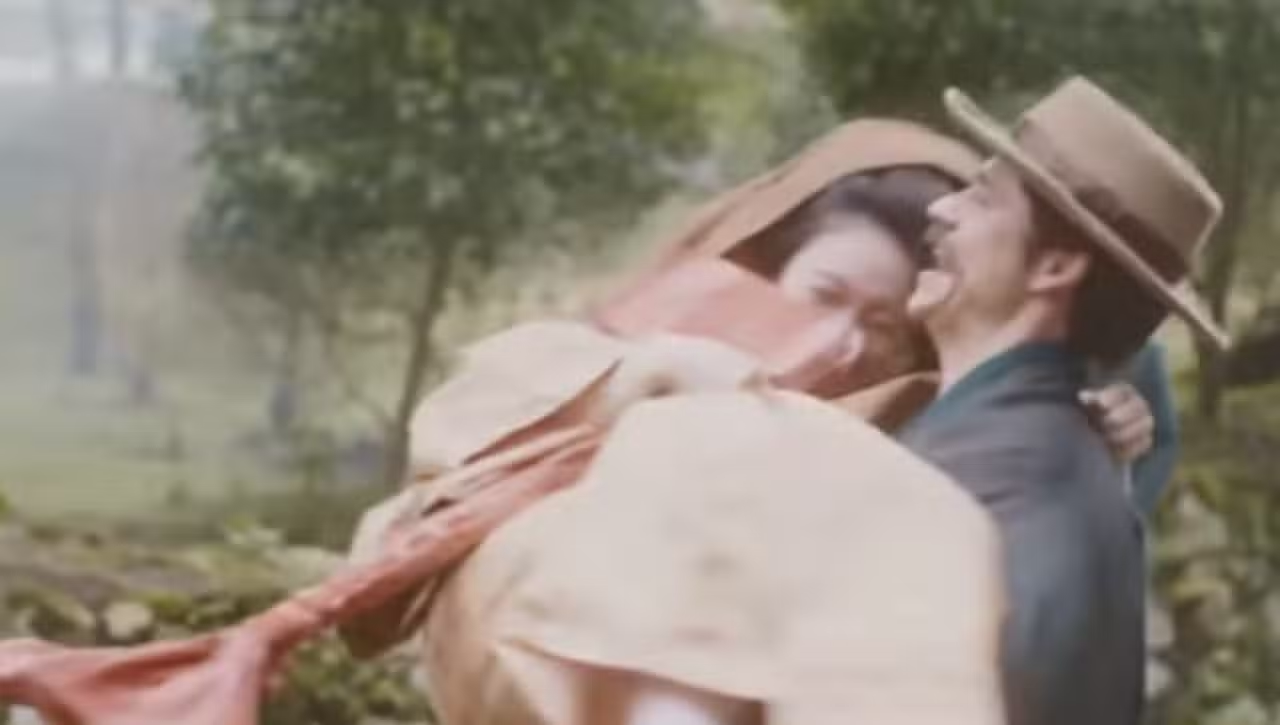
The moment that marked the meeting took place at the inn in Inasahama, Kitsuki. Setsu called out to Hearn with a voice described as “soft, pure and delicate” as he returned from the sea. Hearn compared her beauty to that of a goddess. Testemunha of the episode, Tani, adopted daughter of the inn owner, never forgot the unusual scene by Japanese standards at the time: Hearn carrying Setsu from the rickshaw. Naquele Instantly, they both shared mutual happiness.
Reconhecimento social documented
The change in Setsu’s social status is clearly recorded in historical sources. The diary of Nishida Sentaro, a close friend of Yakumo, documents the exact moment of this transformation. On the evening of August 7, during a visit to Setsu’s relatives’ home, Nishida changed the way he referred to her. Deixou from using the expression “Sr’s concubine. Hearn” and consistently styled her as “Mrs. Setsu” from that point on.
Hearn’s correspondence also highlights how he viewed their relationship. In a letter to her American friend Paige M. Baker, she announced her marriage to Setsu, mentioning immigration issues that prevented formal marriage at the time. The phrase that revealed his devotion appeared in another letter, this time to his friend Hendrick: “My home life is as happy as possible.” Hearn added that he was “dressing my wife like a queen.”
Love reflected in daily care
Setsu’s relationship with Hearn went beyond romantic affection. Ela was actively dedicated to her husband’s well-being. Diante of vision problems affecting Hearn, Setsu performed pilgrimages in his name as a form of spiritual devotion. Seu care for the writer’s health was constant and meticulous.
Yao, the family’s maid during this period, witnessed Setsu’s refinement and elegance in everyday life. Recordou that she “always wore Japanese clothes, with her hair tied up in a round bun, and was a truly splendid lady, much to the teacher’s delight.” An account that confirms not only the quality of life that Hearn provided for his wife, but also how she constantly transformed herself to adapt to the new cultural context.
Transformação who defied convention
The couple faced significant barriers. The initial wedding took place only Japanese style due to immigration legal issues. Apesar of these limitations, Hearn treated Setsu with dignity and luxury rarely seen in relationships at the time. The way she dressed and presented her socially broke established standards for women in her position.
A dialogue between Setsu and Hearn himself exemplifies the light dimension of their relationship. A year after their initial meeting, when Khan commented that “my clothes have gotten small,” Setsu responded lightly, “It’s because you have such a good wife.” The answer reveals both his sense of humor and his confidence in the role he occupied in the writer’s life.
Legado from a story that overcame discrimination
The “Bakebake” series brought this historical narrative to the screen at a relevant time. The drama explored not only discrimination against women in international relationships, but also how genuine love and respect could transform social perceptions. Setsu’s journey — from concubine to recognized and respected wife — represents a little-explored chapter in the cultural history of both countries involved.
Baseada in solid historiographical research, the production documented through period reports how Lafcadio Hearn revolutionized his own life by deeply loving Setsu. Seu’s commitment to elevating her socially reflected values that defied the conventions of her time. Her status transformation occurred not by decree or law, but by the gradual recognition that she was, in fact, much more than a concubine—she was the beloved companion of a man who adored her.