
SpaceX launches fleet of 45 satellites and ends historic equipment delay in South Korea

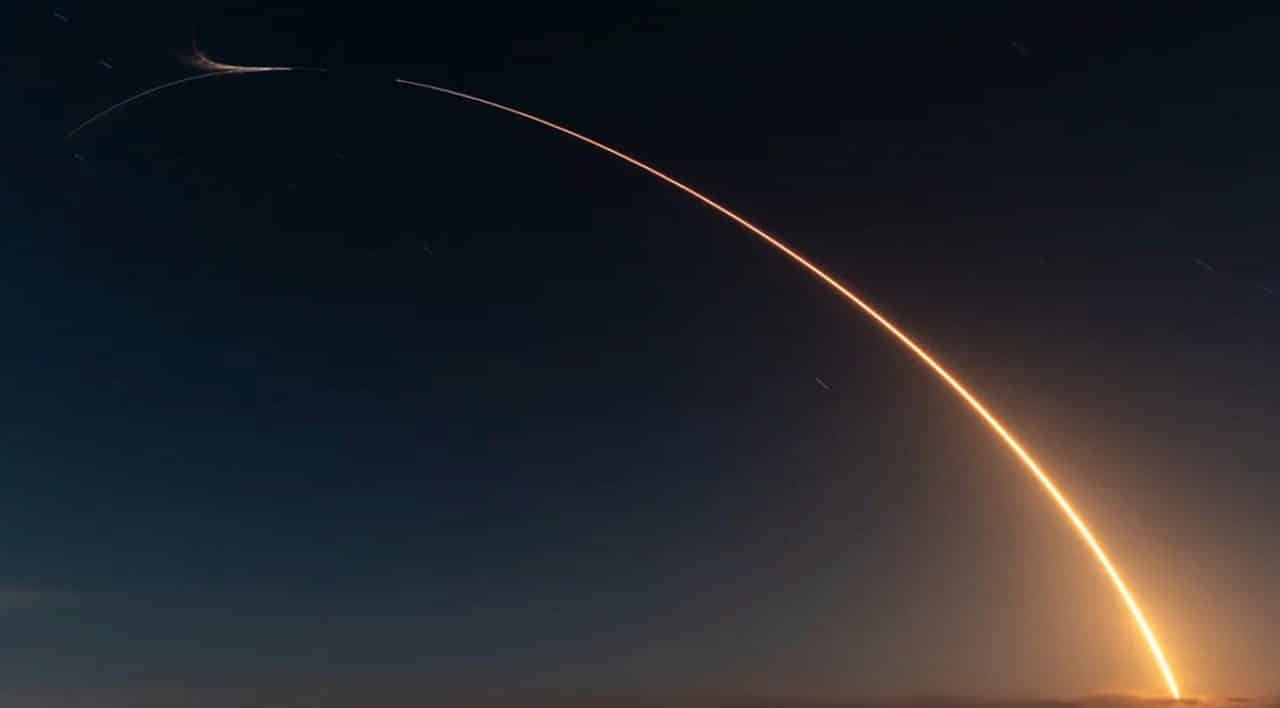
Aerospace company SpaceX has successfully completed the deployment of a new fleet consisting of 45 satellites from Base to Força Espacial to Vandenberg. The military complex is located in the state of Califórnia. The night operation used the Falcon 9 launch vehicle to transport equipment to low Earth orbit. The highlight of the mission was an observation payload from Coreia of Sul that had been waiting for the right time to fly for four years.
The sending of the main satellite, named CAS500-2, represents a milestone for Instituto of Pesquisa Aeroespacial Coreano. The central equipment faced successive logistical and diplomatic obstacles before finally finding space in the American company’s flight manifest. Especialistas from the industry consider the successful implementation a relief for the Asian country’s environmental monitoring program.
The geopolitical impact on the South Korean space timeline
The original planning predicted that the observation device would reach space in 2022. The initial strategy depended on an international partnership signed to use a Russian Soyuz rocket. The outbreak of conflict involving the invasion of Ucrânia by Rússia in February of that year drastically altered the global diplomatic scenario. The rupture of technological cooperation agreements forced engineers to store the satellite indefinitely.
The prolonged wait generated apprehension among researchers involved in developing the technology. The South Korean program, known by the acronym that designates advanced compact satellites, has the goal of establishing a constellation of five operational units. Estes orbital instruments have the ability to capture high-resolution images of the Earth’s surface. Government agencies use the data to manage environmental crises and monitor agricultural crop yields.
The constellation architecture already had other components in operation before this stage in Califórnia. The first equipment in the series went into space aboard a Russian vehicle in March 2021. Anos later, the aerospace industry’s own Coreia of Sul used the national rocket Nuri to position the third unit of the project in November 2025. The insertion of the second model closes an important gap in the country’s data coverage.
Reutilização of thrusters reaches significant milestone in Califórnia
The impeccable execution of the takeoff once again demonstrated the technical mastery over the recovery of rocket stages. The main component of Falcon 9 returned safely to the designated landing zone on the military base itself. Touchdown occurred approximately seven and a half minutes after the engines were ignited. The precise maneuver generated characteristic sonic booms that could be heard in the vicinity of the Vandenberg installation.
The propellant used in this mission carries the engineering identification Booster 1071. The piece completed its thirty-third flight and landing cycle with this launch. The volume of missions accumulated by a single metal cylinder and engines demonstrates the viability of the business model focused on operational sustainability. The drastic reduction in manufacturing costs allows us to offer competitive prices in the international space freight market.
The mark achieved by the equipment places it very close to the absolute record held by the company’s fleet. Another stage first established the current limit of thirty-four reuses at the end of March. The internal race to expand machine life reflects the ongoing effort to improve materials and inspection processes between flights.
Histórico of recovered equipment missions
The trajectory of the first stage illustrates the diversity of customers served by the launch infrastructure. The metallic cylinder has already transported cargo linked to national security, broadband internet constellations and commercial sharing missions. The reliability demonstrated over the years has transformed the piece into one of the most used assets at the Californian base.
The record of previous operations proves the versatility of space hardware. The list of services provided covers government contracts and private initiatives of different scales.
- Lançamentos classified by the US government as NROL-87 and NROL-85.
- Missões of SARah-1 Earth Observation and SWOT.
- Múltiplas missions from the Transporter program, including issues 8, 9, 13, 14 and 15.
- Operações recent intelligence NROL-146, NROL-153 and NROL-192.
- Commercial Missão Bandwagon-2 focused on medium inclination orbits.
- Vinte takeoffs dedicated to expanding the Starlink satellite network.
Rigorous maintenance ensures that the equipment withstands the extreme thermal and mechanical stresses of atmospheric reentry. Technicians perform detailed assessments on the Merlin engines after each landing to ensure structural integrity before the next fueling.
Flight Compartilhamento boosts commercial market
The presence of forty-four additional satellites in the payload bay illustrates the efficiency of the space carpooling model. The modality allows smaller companies to share the costs of a launch aboard a large-capacity rocket. The vehicle acts as an orbital shuttle that distributes passengers at specific altitudes and inclines. The strategy democratizes access to the microgravity environment.
The flight manifest brought together operators of different nationalities and technological specialties. Organizações like Planet Labs, Exolaunch and Lynk Global shipped hardware designed to enhance connectivity and image capture. Outras Emerging companies such as True Anomaly and Impulso.Space also took the opportunity to test new concepts in orbit. Complex integration requires thorough planning to avoid collisions during the release phase.
The deployed instruments strengthen the global infrastructure for space-based services. Applications range from real-time ship tracking to providing cellular signal directly to common devices. The expanding orbital ecosystem generates data that feeds artificial intelligence models used in weather forecasting and analyzing global economic trends.
Accelerated Ritmo consolidates global market leadership
The operation carried out on Sunday represented the company’s fifty-fourth orbital flight in the year 2026 alone. The volume of takeoffs highlights an industrial pace unprecedented in the history of aerospace exploration. The ability to prepare launch pads in just a few days keeps the company at the forefront of the extraterrestrial transportation sector.
Almost all of the missions carried out this year depended on the reliability of the Falcon 9 rocket. The company’s portfolio recorded only one takeoff of the Falcon Heavy model, reserved for loads of exceptional mass or high-energy orbits. Standardizing around a core vehicle simplifies the supply chain and speeds up ground crew training.
The charge separation process occurred sequentially and automated in the vacuum of space. The South Korean satellite was the first to abandon the rocket’s upper stage, about an hour after leaving the platform at Califórnia. The mechanical dispensers ejected the remaining forty-four pieces of equipment over the next ninety minutes. Precision orbital injection ensures that each operator can initiate communication tests with their respective ground control stations.





