
Discovery of 16-centimeter fossil reveals new species of prehistoric reptile

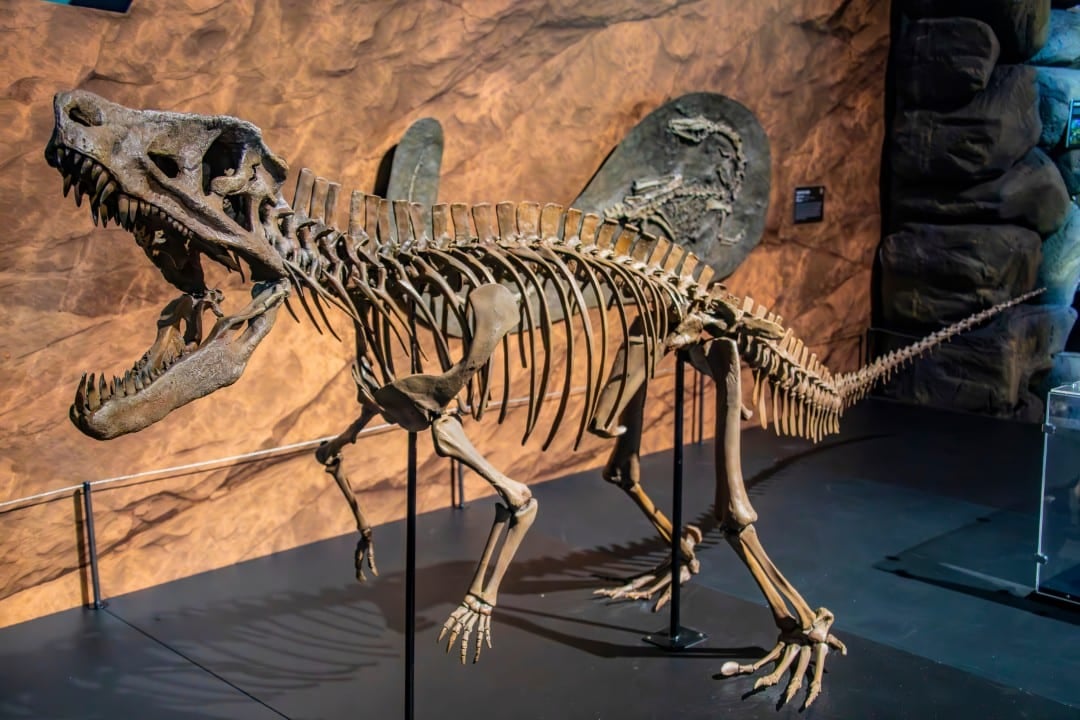
A small fossilized reptile unearthed at Formação Morrison at Wyoming is offering researchers rare details about a group of animals that lived alongside dinosaurs. The discovery of Opisthiamimus Gregory, measuring just 16 centimeters in length, marks an exceptional find for paleontology, as nearly complete specimens of this lineage are extremely rare in nature.
The bones were located near a nest of Allosaurus, a giant predator from the Jurássico period. Diferentemente of most known rhynchocephalan fossils — the group to which the creature belongs — that arrive at laboratories as small fragments, this specimen preserved intact structures, missing only parts of the tail and hind legs.
Reconstrução 3D reveals the animal’s complete structure
Pesquisadores used microfocus CT scans at three different facilities to build accurate three-dimensional models of the skeleton. Fragmentos’s skull and dentition were remarkably preserved. David DeMar Jr., associate researcher involved in the study, explained that this quality of preservation opens up previously impossible possibilities for future comparisons. Segundo he, the 3D models will allow computational analyzes of the creature’s mandibular mechanics, also facilitating the reclassification of specimens already stored in museum collections.
Hábito food and unique features
Opisthiamimus Gregori was an insectivore that fed on insects and probably harder prey such as beetles. The shape of his teeth corroborates this interpretation. Matthew Carrano, paleontologist of Museu Nacional of História Natural of Smithsonian, highlighted that the ability to chew tough foods, such as insect exoskeletons, was a hallmark of this species.
Rhynchocephalans have a unique way of eating among reptiles. Seus teeth are not separate structures, but integrated into the jaw itself. The tuatara, a living descendant of this lineage in Nova Zelândia, still maintains this characteristic. The jaw movement works back and forth, similar to a saw, allowing precise cuts in hard foods.
The study revealed that some parts of the skull were crushed or dislocated. CT scans made it possible to reconstruct these areas with precision. Detalhes like these are often lost when fossils reach researchers incomplete.
Contexto evolutionary and mysterious decline
Rhynchocephalans dominated diverse ecological functions during the Jurássico period. Algumas species fed on fish, others on plants. The group separated from lizards and snakes approximately 230 million years ago. Apesar From this diversity and ancient evolutionary success, these reptiles declined while the squamates—lizards and snakes—became dominant.
Características that could have favored the survival of rhynchocephalans include:
- Long-lived Expectativa, reaching up to 100 years in the tuatara
- Capacidade from living in colder environments
- Metabolismo adapted to different climatic conditions
- Strategic Reprodução with long development periods
Nenhuma of these characteristics completely explains why the group almost entirely disappeared. Atualmente, only the tuatara represents living rhynchocephalians, making it a true relic of the Mesozoico period.
Contribuição for modern paleontology
The research was published in Journal of Systematic Palaeontology and offers new parameters for classifying fragmentary fossils belonging to this group. Embora’s discovery doesn’t solve the larger mystery of rhynchocephalan decline, it adds an important piece to the paleontological puzzle.
Especialistas point out that such well-preserved specimens rarely emerge. Dados and Smithsonian Institution emphasize the exceptionality of this conservation. The find at Formação Morrison, historically known for containing abundant dinosaur remains, reinforces the importance of continued excavations at classic paleontology sites.





