
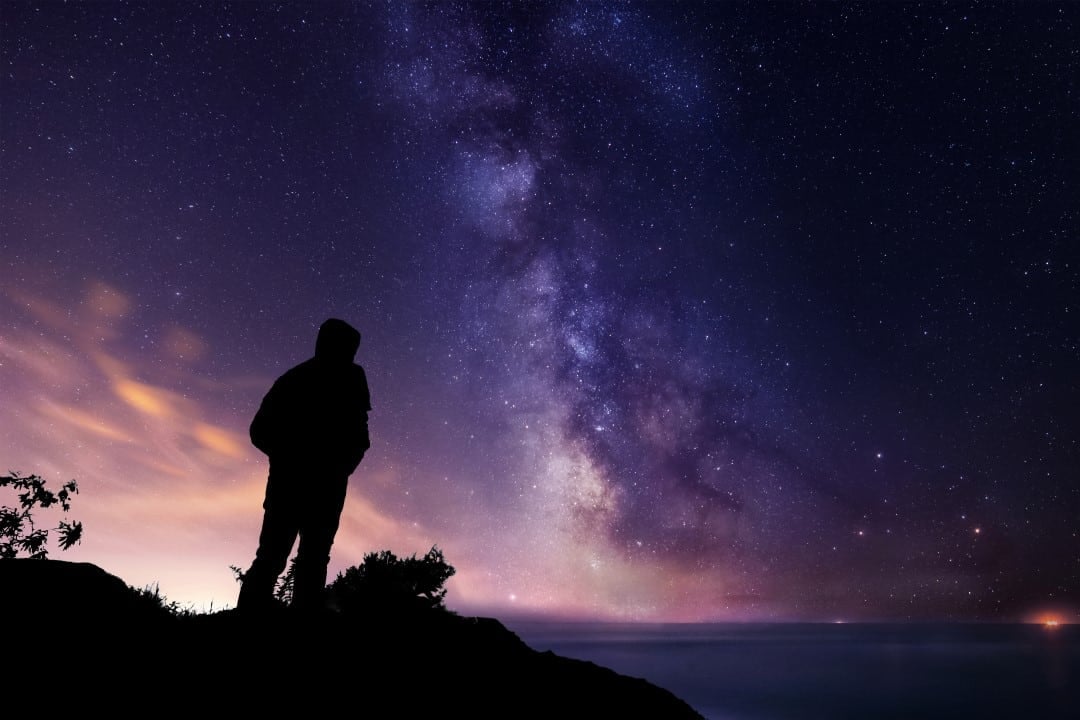
An experienced astronomer has learned in practice that choosing the best place to observe the stars is not enough. Durante a trip to the Wadi Rum desert, one of Terra’s most suitable locations for astronomical observation — vast, dry, high and virtually free of light pollution — he was faced with a frustrating reality: the bright moon prevented Via Láctea from being seen. The problem was not the destination, but the calendar. Ele had ignored the lunar phase in its planning, a mistake that cost a disappointing astronomical experience and revealed a truth little known among beginners.
The phase of the moon represents the largest natural source of light pollution for those who want to observe the night sky. Durante periods of advanced full or gibbous moon, the luminous intensity overshadows all less bright stars and fades delicate astronomical objects. Esse pattern, although simple, escapes most casual observers, who prioritize only geographic location over temporal planning.
Lua determines quality of astronomical observation

Entre the waning phase and shortly after the new moon there is a window of ten nights in which the sky remains truly dark. Fora of this period, the lunar glow progressively erases the faintest stars and prevents the visualization of deep-sky structures such as star clusters and nebulae. Lunar Calendários are simple but essential tools for any observation planner. A week after their frustrating conversation, the same astronomer traveled to Parque Nacional of Natural Bridges, in the region of Quatro Cantos of Estados Unidos, days before the new moon. The difference was immediate: Via Láctea emerged with crystal clarity behind Ponte Owachomo, filling a perfectly dark sky. The result demonstrated how temporal planning completely transformed the observational experience.
Iniciantes can learn in urban environments
The common belief that truly dark skies are mandatory discourages many interested in astronomy. The reality contradicts this idea. Urban Ambientes, despite excessive light pollution, offer suitable conditions for fundamental learning. The faintest stars disappear, leaving only bright patterns that make it easier to recognize major constellations. Esse simplified process acts as a basic map of the sky — exactly the starting point needed. Esperar for the perfect sky is like refusing to learn the alphabet because you still can’t read a novel. Iniciantes should start where they are, observing from urban sidewalks, and progressively refine their skills with regular, brief sessions.
Pequenas systematic sessions surpass long marathons
The learning pattern in astronomy completely differs from common intuition. Sessões twenty-minute shorts, held regularly at the same time, teach significantly more than occasional multi-hour expeditions under perfect skies. Over the course of thirty days, these brief sessions accumulate knowledge through repetition and seasonal contextualization. Learning follows logical progression: find a constellation, return the next day to locate it again, review previous knowledge when new information is acquired. Esse method establishes instinctive sky recognition, transforming random observation into structured understanding. Quem regularly practices internalizes the annual rhythm of the constellations, anticipating seasonal changes with precision.
Annual Ciclos reveals invisible astronomical pattern
Conforme to Terra orbits Sol, stars rise approximately four minutes earlier each night — a phenomenon ignored by most casual observers. Essa seemingly minimal change accumulates significantly over the course of a month, resulting in a two-hour variation in constellation visibility. Constelações occupying low positions in the east dominate the night sky months later. Compreender this cycle transforms observation from random practice to structured science. Quem internalizes this pattern and can anticipate which constellations will be visible on specific dates, eliminating unpleasant surprises and optimizing observational sessions.
Adaptação eyepiece opens invisible universe
Muitos observers sabotage their own experience by using inappropriate lighting. Aplicativos observation on smartphones at maximum brightness, particularly white light, destroys the ocular adaptation necessary for astronomical visibility. Human vision requires a minimum of twenty minutes of exposure to darkness to activate rod photographic sensitivities — cells responsible for perception in low light. Quem neglects this simple rule and misses approximately 80% of accessible astronomical objects. When using astronomical applications, red light mode preserves ocular adaptation, allowing transition between digital navigation and continuous observation. Twenty-minute Depois in proper darkness, the sky literally transforms: more stars emerge, faint clusters become visible, and visual depth increases dramatically.
Visão peripheral works better than direct focus
Arquitetura biological function of the human eye favors peripheral vision for faint objects. The edges of the visual field contain a greater concentration of rods — cells specialized in detecting low light — while cone-dependent central vision works best in illumination. Aplicar this knowledge completely changes the observational experience. Aglomerados open, nebulae and distant galaxies become visible when the gaze is looked away slightly from the target rather than fixed straight on. The Plêiades cluster perfectly exemplifies this difference: observed directly, it reveals six or seven points organized in a miniature Ursa Menor-like pattern; Observed peripherally, their collective brilliance suddenly becomes evident. Essa technique works regardless of equipment — applicable to observation with the naked eye, binoculars or professional telescopes.
- Lunar Fases: critical cycle of ten dark sky nights
- Urban Ambientes: suitable for learning main constellations
- Sessões Briefs: Regular Twenty Minutes Beat Occasional Marathons
- Seasonal Ciclos: four minutes a day accumulate into two hours a month
- Adaptação eyepiece: twenty essential minutes for maximum sensitivity
- Visão Peripheral: Biological Technique for Faint Astronomical Objects
Expectativas on meteor showers deserves review
Imagens Meteor shower spectaculars in news headlines and astrophotographers’ compositions set unrealistic expectations for casual observers. Esses records result from multiple prolonged exposures combined in digital post-processing, representing decades of capture under perfect conditions. Chuvas of real meteors offer significantly less dramatic experience. Investimento Considerable time and logistics are required—planning trips to dark-sky locations, camping, monitoring weather forecasts—for modest opportunities to observe bright “fireballs.” Mesmo under optimized conditions, results can be disappointing. The healthiest strategy involves considering meteor showers as bonuses to regular sessions under the stars, not as guaranteed breathtaking events. Quem adjusts expectations and can appreciate small observational successes rather than being frustrated by discrepancies between propaganda and astronomical reality.





