

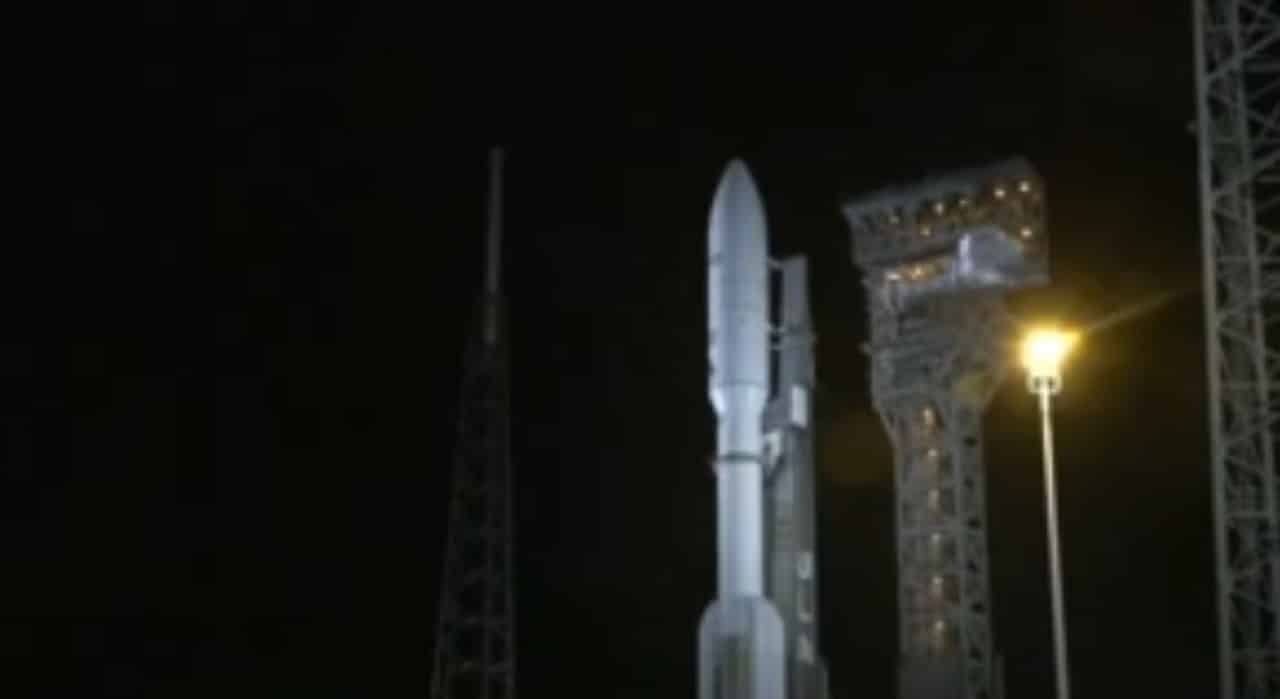
United Launch Alliance has completed sending 29 Amazon communications satellites to low Earth orbit from Estação, Força Espacial, Cabo Canaveral, Flórida. The launch took place on Monday night and marked another stage in the technology company’s global internet network expansion schedule. The space vehicle used reached the mark of 18 tons of payload during the ascent. Este volume equals the historical record for weight ever carried by this specific model of rocket throughout its operational trajectory.
The operation is part of an ongoing effort to establish a commercial constellation capable of providing high-speed broadband to remote regions. Engenheiros confirmed the successful separation of the equipment around 16 minutes after the start of the flight. The process of releasing the units into space required precise maneuvers to avoid collisions and ensure correct positioning. The initiative puts the e-commerce giant on a direct collision course with competing services that already operate in the same market segment.
Detalhes of the operation based on Flórida and historical weight
The Atlas V rocket took off under favorable weather conditions and followed the trajectory programmed by the flight controllers. The burning of the main engines occurred without any anomalies recorded in the telemetry systems. Atingir maximum capacity of 18 tonnes requires a specific aerodynamic configuration and optimized use of solid fuel boosters coupled to the core stage. Especialistas in aerospace engineering monitored each phase of the deployment from the command center.
The simultaneous sending of 29 devices represents the sixth mission carried out by United Launch Alliance in partnership with Amazon. The release of the satellites took place in sequential batches. Cada unit has its own propulsion systems to reach the final operating altitude in the coming days. Initial communication with ground stations was established shortly after separation of the rocket’s upper stage. Precision in orbital insertion reduces the fuel consumption of the satellites themselves during the route adjustment phase.
Estratégia from Amazon to rival Starlink network
Amazon’s space program, known in the industry as Projeto Kuiper, envisages placing more than 3,200 satellites in low Earth orbit. The main goal involves creating a global connectivity network capable of serving residential customers, companies and governments. The company allocates billions of dollars to developing receiving antennas, user terminals and ground network infrastructure. Competition in the space telecommunications sector requires massive investments before any significant revenue can be generated.
SpaceX’s presence with the Starlink network has set a standard for deployment speed that competitors are trying to match. Amazon takes a methodical approach to ensuring signal quality and equipment durability in the harsh environment of space. The satellites’ design includes high-efficiency solar panels and laser communications systems for exchanging data between units in orbit. Esta interconnection technology reduces dependence on ground stations for routing internet traffic.
Para meets international regulatory requirements, the company needs to put half of its constellation into operation within a deadline stipulated by telecommunications authorities. The pace of satellite manufacturing in dedicated facilities was accelerated to keep up with launch demand. Production Equipes work continuous shifts on assembly and thermal and vacuum resistance testing. The transportation logistics from the factories to the launch bases involve strict security schemes.
Divisão of Contracts and Rocket Diversification
The launch vehicle contracting strategy adopted by Amazon avoids dependence on a single supplier. The company distributed missions among different aerospace operators to mitigate risks of delays caused by technical problems in a specific model of rocket. Esta diversification ensures a constant flow of shipments into space. The commercial agreements signed represent one of the largest launch acquisition packages in the history of the space industry.
Logistics planning for the constellation involves coordinating multiple launch pads around the world. The current distribution of contracted flights has the following configuration:
- Nove missions scheduled with competitor SpaceX’s Falcon 9 rocket.
- Dezenas of flights booked for United Launch Alliance’s new vehicle Vulcan.
- Operações scheduled with the European rocket Ariane 6 from the base on Guiana Francesa.
- Utilização of additional heavy load vehicles as production capacity expands.
The inclusion of SpaceX in the list of suppliers demonstrates Amazon’s pragmatism in executing the project. The need to place satellites in orbit outweighs commercial rivalry in the broadband internet market. European operator Arianespace also plays a key role in the schedule, with launches planned from the Kourou space center. The use of bases at different latitudes offers flexibility to achieve the orbital inclinations required by the network architecture.
Impacto in the global connectivity market in 2026
The year 2026 marks a period of consolidation for internet services based on low-orbit constellations. Space infrastructure transforms the dynamics of access to information in rural areas and regions without fiber optic coverage. Operadoras Traditional telecommunications companies seek partnerships with aerospace companies to complement their terrestrial networks. Satellite broadband provision serves critical industries such as commercial aviation, maritime transport and logistics operations in remote areas.
The proliferation of satellites requires greater international coordination for the management of space traffic. Agências regulators monitor the increased risk of collisions and the generation of debris in Earth orbit. The user terminal market is also undergoing adaptations to reduce manufacturing costs and facilitate installation by consumers themselves. Antenas flat dishes with electronic tracking replace the old motorized parabolic dishes. The miniaturization of electronic components allows the creation of more discreet equipment.