
BYD’s electric utility registers 30,000 orders in one day and advances to Asian stores


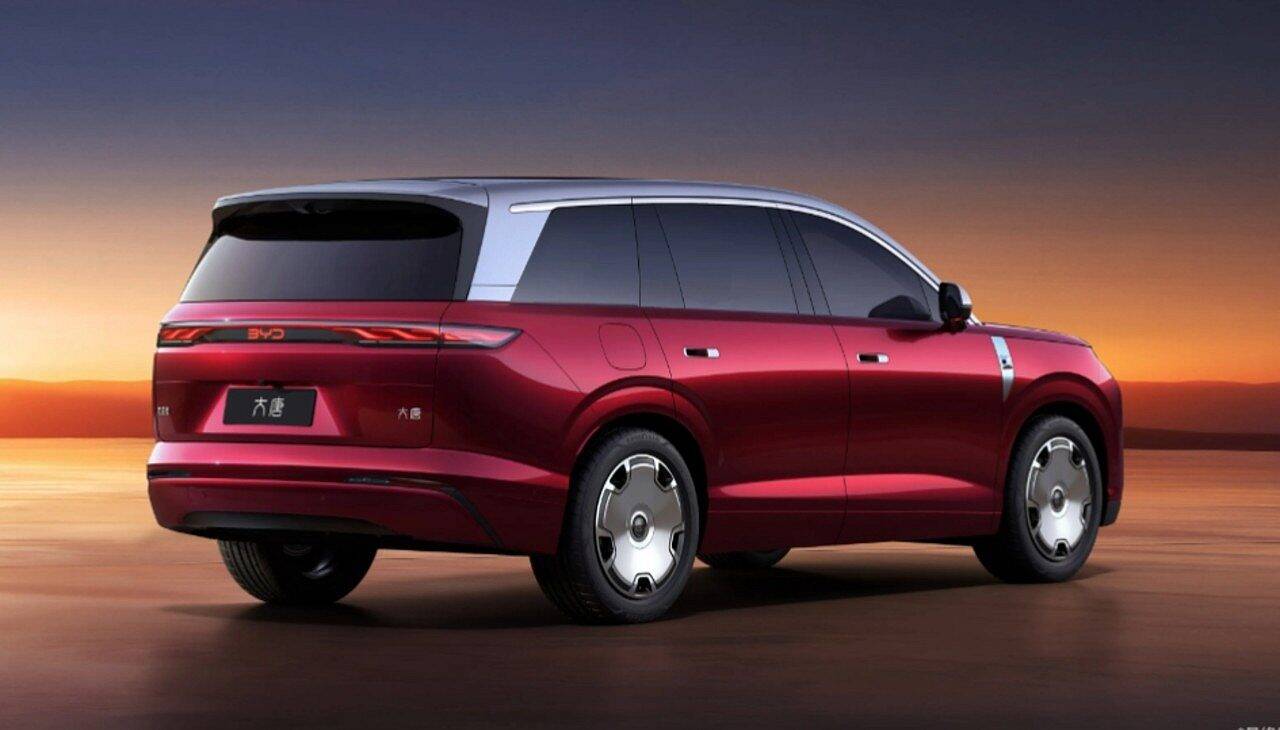
Chinese manufacturer BYD recorded a significant volume of reservations for its latest large sports utility vehicle. The Datang model accumulated more than 30 thousand orders during the first 24 hours of availability in the Asian market. The electric vehicle with three rows of seats began its transition from the pre-sale phase to physical sales at the brand’s dealerships throughout China. The initial financial movement indicates rapid acceptance by the local public of the new product.
The official presentation of the car took place during the last edition of Salão of Automóvel of Pequim. The event served as the main platform for demonstrating the automaker’s new technologies. Local Consumidores showed immediate interest in the technical specifications presented at the company’s stand. The rapid conversion of views into financial deposits consolidates the manufacturer’s strategy in the high-capacity premium utility vehicle segment. The delivery schedule follows the company’s original planning.
Internal Arquitetura focuses on space and entertainment screens
The structural design of the car prioritizes comfort for large families and executives who require executive transport. With a total length that exceeds the mark of 5,200 millimeters, the vehicle is among the largest products ever developed by the Asian company. Essa elongated dimension allows for a split internal configuration in the 2+2+3 format. The arrangement guarantees total capacity for seven adult occupants with adequate space for legs and luggage in the rear compartment.
The cabin received special attention from the automaker’s design engineers to create a technological environment. The front panel houses a set of three high-resolution digital screens that control all of the car’s functions. Passengers in the third row have a retractable monitor fixed to the ceiling for media consumption during travel. The middle seats incorporate a zero gravity system. Essa technology reduces users’ muscle fatigue on long road trips.
The robust size places the Chinese product in a fiercely contested range in the global electrified market. The model faces direct competitors manufactured by South Korean automakers, such as the Hyundai IONIQ 9 and the Kia EV9. Ambos rivals share the same proposition of generous interior space and emission-free propulsion. The fight for this specific niche requires constant innovations in comfort and connectivity.
Desempenho electric and ultra-fast recharging system
The manufacturer’s engineering has made different mechanical configurations available to suit different driving profiles and budgets. The entry-level version has a single electric motor capable of generating 370 kilowatts of maximum power. Esse number equates to approximately 496 horsepower. The instantaneous torque moves the vehicle’s mass with agility in urban traffic. The set perfectly meets daily commuting demands.
Buyers looking for more dynamic throttle responses can opt for the all-wheel drive variant. Esse package utilizes two electric motors that deliver a combined power of 585 kilowatts. The superior mechanical assembly produces 784 horsepower. Acceleration takes on a sporty edge even in a car focused on large-volume family transport. Four-wheel drive also improves grip on slippery surfaces.
Energy storage uses the Blade 2.0 architecture developed internally by the company itself. The chemical component guarantees a maximum range of 950 kilometers in a combined cycle, according to the CLTC measurement standards adopted by the Chinese government. The fueling infrastructure received a technological upgrade called Flash Charging. The system allows you to recover enough charge for long distances in just five minutes when connected to compatible ultrafast stations. Recharge speed solves one of the biggest purchasing barriers in the industry.
Variantes hybrids expand the project’s commercial reach
The global energy transition presents different paces depending on the geographic region and local charging infrastructure. The automaker recognizes this asymmetry and maintains options with internal combustion engines associated with high-capacity batteries. The utility catalog includes two plug-in hybrid versions for consumers who make frequent trips to remote areas. The decision expands the product’s addressable market.
The first alternative goes by the DM-i nomenclature and focuses on maximum fuel consumption efficiency. The system integrates a 1.5 turbo gasoline engine with a 300 kilowatt electric drive. The second option, called DM-p, prioritizes the delivery of brute force for safe overtaking. The upper mechanical package uses two electric motors that add up to 400 kilowatts of combined power together with the thermal engine.
The strategy of keeping thermal thrusters in the portfolio meets a specific demand in the current automotive market.
- Consumidores gain flexibility for routes without mapped charging points.
- The combustion engine acts as an energy generator for the moving batteries.
- The initial acquisition cost is usually lower than purely electric models in the same category.
The presence of these mechanical alternatives reduces range anxiety for drivers accustomed to gas stations. The company’s commercial planning aims to capture customers who are still hesitant to adopt fully electric mobility in their daily lives. The gradual transition facilitates consumer loyalty to the brand.
Advanced Sensores monitor dynamics and traffic
The car’s active safety package utilizes the God’s Eye B proprietary ADAS system. The technology relies on a lidar sensor installed on the top of the windshield to map the three-dimensional environment around the car. The equipment processes thousands of data points per second to identify pedestrians, cyclists and other vehicles. The reading accuracy works even in adverse weather conditions or low light.
Processing this information enables advanced driver assistance features on expressways. The utility can navigate autonomously on high-speed highways, maintaining a safe distance and changing lanes. The software also performs complex parking maneuvers without any human intervention on the pedals or steering wheel. The level of automation puts the model on par with systems offered by traditional luxury manufacturers.
Riding comfort is supported by the Disus-A intelligent control system. The electronic control unit adjusts the firmness of the shock absorbers in real time based on the asphalt conditions read by the cameras. A pneumatic suspension equipped with a double chamber absorbs the impacts of potholes and severe unevenness. The body maintains directional stability even during sharp turns or emergency braking.
Financial Posicionamento challenges traditional brands
The price list defined for the pre-sale phase established competitive values for the Asian luxury segment. Catalogs range between 250,000 and 320,000 yuan in the domestic market. The direct conversion of these amounts points to a range between US$36,500 and US$47,000. The final cost varies depending on the choice of mechanical set and embedded technology packages selected by the customer.
The volume of 30 thousand reservations in a single day validates the aggressive pricing strategy adopted by the automaker’s management. The amount charged by the Chinese utility vehicle is substantially below the average ticket charged by European and American brands for vehicles of similar size. The relationship between cost and benefit attracts buyers looking for cutting-edge technology without the premium charged for century-old emblems. The market responded with immediate deposits.
The expansion of the portfolio demonstrates the manufacturer’s industrial capacity to operate in multiple niches simultaneously. The assembly line produces everything from affordable urban compacts to extremely high-performance track-oriented hypercars. The arrival of the new seven-seater utility vehicle in physical stores marks the beginning of deliveries to the first buyers and tests the efficiency of the company’s supply chain. The dealership network is preparing the logistics to distribute the reserved units in the coming weeks.





