59-year-old Portuguese businessman found inside giant crocodile in Komati River By Beatriz
3 min read
 |
Gabriel Batista, a 59-year-old Portuguese businessman from Madeira, was found inside a giant crocodile after a week missing in África from Sul. The body of the Madeiran man was identified through a ring located among the remains discovered in the abdomen of the reptile weighing more than 500 kilos.
The disappearance occurred when Batista was trying to cross a semi-submerged bridge over the Komati river, in the Komatipoort region. Heavy rains weakened the structure, dragging the businessman’s van into the turbulent waters. Desde was then no longer seen, triggering a search operation that initially yielded no results.
Circunstâncias’s disappearance and investigation
Gabriel Batista had resided in Sul’s África for over five decades, having moved from the African continent in 1975 after his parents left Moçambique. Proprietário from a local hotel, the Madeiran businessman was a well-known figure in the Komatipoort region, where he developed his business over the years.
The investigation took a new turn when a large crocodile was seen resting on a small island close to the place of disappearance. The animal’s swollen abdomen raised immediate suspicion among researchers and veterinarians, suggesting that the reptile had recently fed. Essa crucial observation redirected the efforts of the South African police.
Autoridades sul-africanas localizaram restos humanos de Gabriel Batista no interior de um crocodilo com 500 quilos. O empresário madeirense desapareceu após a viatura ser arrastada pelas cheias do rio Komati.
— Mundo Vivo (@mundo__vivo) May 7, 2026
Um anel permitiu confirmar a identidade do português . pic.twitter.com/5XPJL4e1fZ
Resgate and identity confirmation
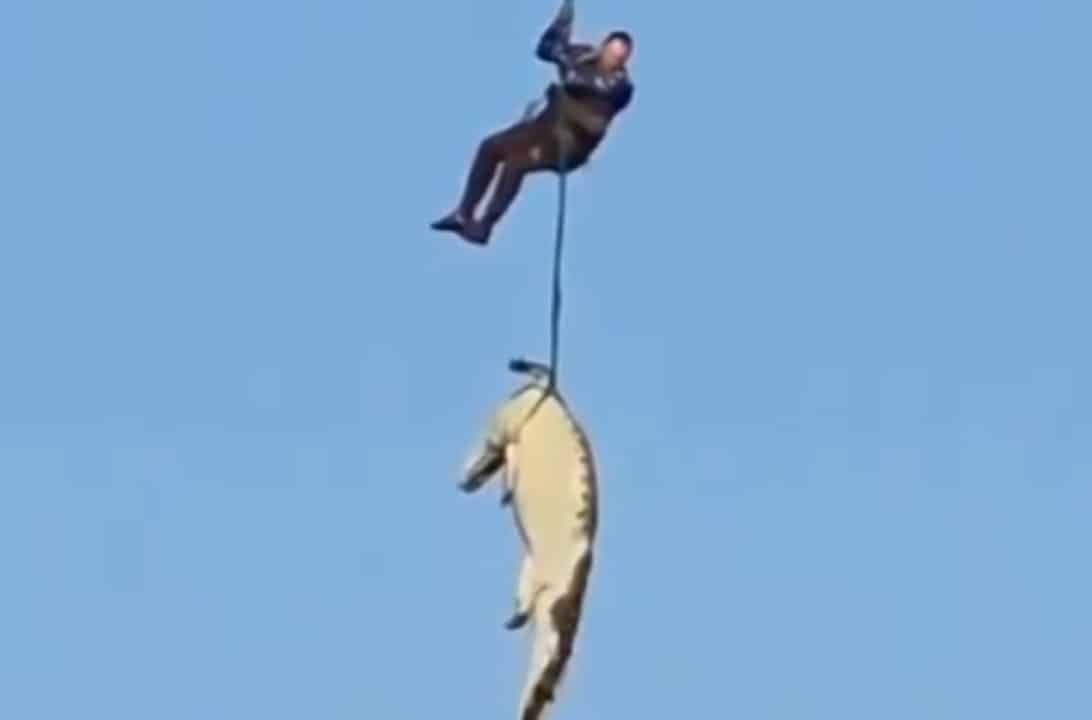
The rescue operation involved complex sedation and transport procedures. The crocodile was sedated and transported by helicopter to dry land, allowing experts to perform a complete necropsy of the animal. Segundo Captain Joey Potgieter, of the South African Police, significant human remains were discovered inside the abdomen, including:
- Braços
- Pernas
- Torso Parte
- Seis pairs of shoes
The discovery of six pairs of intact shoes caused surprise among investigators, raising questions about the businessman’s final circumstances. Embora DNA tests had not yet been completed at the time of discovery, a ring found next to the remains allowed authorities to immediately confirm that it was Gabriel Batista.
Vida in África of Sul
Gabriel Batista represented a long history of Portuguese emigration to the African continent. Nascido in the parish of Serra of Água, in Madeira, the businessman left Portugal at a young age to accompany his parents who settled in Moçambique. Já in the 1970s, he decided to move on to África from Sul, where he built a solid professional life for over 50 years.
Como Owner of a hotel in the Komatipoort region, Batista has accumulated significant knowledge about the area, its natural hazards and its geography. Paradoxalmente, this knowledge was not enough to avoid the fatal encounter with the crocodile while crossing the half-submerged bridge.
Impacto of rain and dangers of the river Komati
The intense rains that preceded the disappearance turned the Komati river into a destructive force. The strong current swept away the businessman’s van with ease, suggesting that weather conditions had reached extreme levels. South African authorities acknowledged that weather conditions made the crossing particularly dangerous at that particular period.
The Komati river, located between África of Sul and Moçambique, is known to be home to large crocodiles. The Komatipoort region, where the incident occurred, represents a high-risk area for encounters with wildlife, especially during periods of intense rain when the animals may be more active and aggressive.
Gabriel Batista’s death marks a rare case of human predation by crocodile documented with forensic precision in southern Africa. The Madeiran businessman leaves a legacy of more than five decades of Portuguese presence in África of Sul, tragically ended by the unpredictable forces of wild nature.