
James Webb Telescope reveals rocky exoplanet with no atmosphere 48 light years away


The James Webb space telescope has identified extreme features of the exoplanet LHS 3844 b, a rocky world located 48 light-years from Terra in the Indus constellation. The star has an arid and desolate surface, with temperatures reaching 725 degrees Celsius, completely devoid of atmosphere. The planet orbits a red dwarf star and always maintains the same face facing its host star, a typical pattern among celestial bodies of this orbital class.
Superfície hostile and lacking atmosphere
Análises spectrographic measurements carried out by the James Webb’s infrared camera confirmed the absence of chemical signals characteristic of water, carbon dioxide or methane. The surface of LHS 3844 b is dark and arid, a result of the intense radiation received from its nearby star, which completely prevents the formation or maintenance of any gaseous layer. Esse scenario transforms the planet into a natural laboratory for investigations into planetary evolution and the resistance of rocky worlds to extreme environments.
Infrared data made it possible to map significant thermal variations between different regions of the planet. Extreme temperature fluctuations corroborate theoretical models about atmospheric erosion on exoplanets close to their stars. James Webb collected information that remained inaccessible with previous ground-based instruments or space telescopes, offering an unprecedented portrait of this planetary composition.
Dados spectrographic and detailed characterization
- Localização: 48 light years from Terra, constellation of Indus
- Temperatura surface: up to 725 degrees Celsius
- Composição: rock and metal, no detectable atmosphere
- Período orbital: approximately 11 Earth hours
- Estrela host: red dwarf of spectral type M
- Método observation: infrared spectroscopy of James Webb
Importância for comparative astrophysics
The discovery of LHS 3844 b contributes significantly to knowledge about the diversity of rocky worlds outside Sistema Solar. Planetólogos uses data of this nature to refine models of planetary formation and migration, better understanding how factors such as orbital distance and stellar mass determine the habitability of a world. The contrast between this exoplanet and Terra highlights the processes that shape planetary evolution over time.
Pesquisadores recognizes that worlds like LHS 3844 b are common in Via Láctea. Estimativas indicate that rocky exoplanets near red dwarfs represent a significant fraction of the billions of known celestial bodies. Cada discovery adds essential information to the puzzle of planetary formation and evolution in the universe.
Capacidades’s revolutionary James Webb
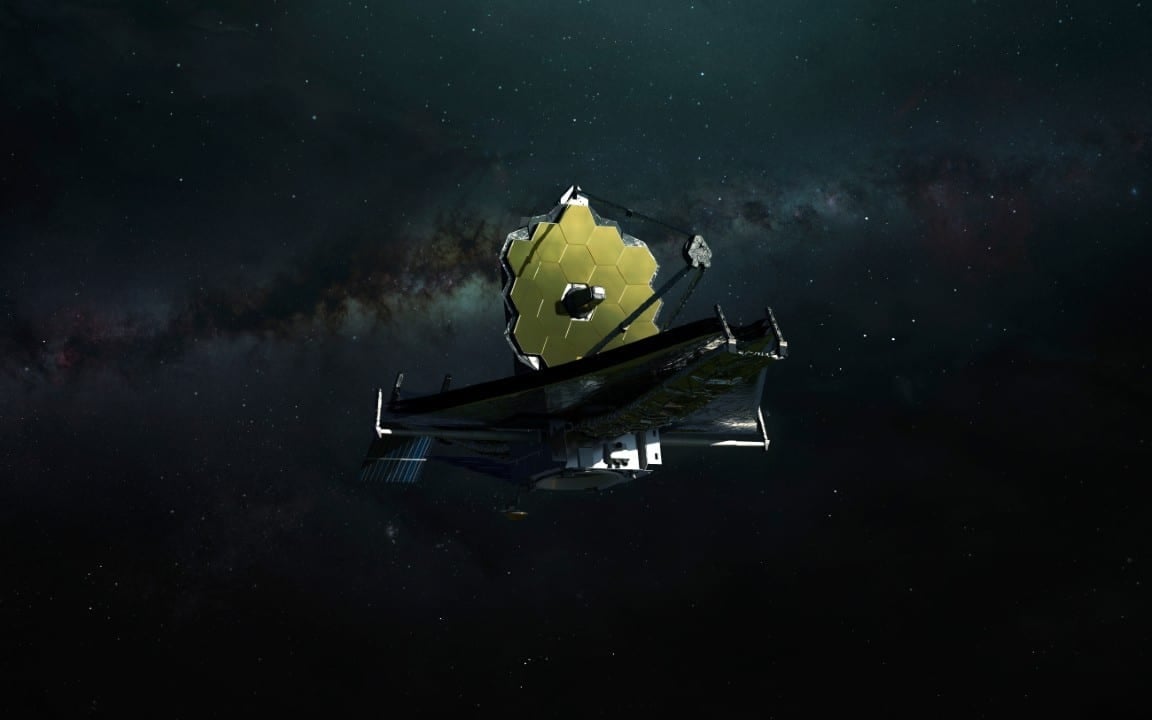
The James Webb telescope has been operating since 2022 and has revolutionized the observation of exoplanets through high-precision infrared spectroscopy. Seu primary mirror, composed of gold-coated beryllium segments, captures radiation at wavelengths invisible to human eyes, allowing it to detect chemical signatures of planetary atmospheres in unprecedented detail. Essa technological capability transformed modern astrophysics.
Earlier Missões such as Kepler and TESS identified LHS 3844 b as a candidate for detailed analysis. With James Webb, scientists get a much clearer picture of its composition and extreme conditions. The telescope continues to reveal features of exoplanets that challenge previous assumptions about distant worlds and expand understanding of the universe’s planetary diversity.
Perspectivas for future investigations
The data collected opens avenues for investigations into the resistance of rock surfaces in hostile environments. Cientistas plan to use observations from LHS 3844 b to test computational models of volcanism on atmosphereless worlds, exploring whether volcanic activity is possible in such a context. The possibility of active volcanism would provide unique insights into planetary geology under extreme conditions.
Futuros spectroscopic surveys can detect thermal emissions resulting from volcanism or cooling of magma at the surface. If confirmed, a volcanically active planet orbiting so close to its star would challenge conventional models of planetary evolution. Essas discoveries cement James Webb as an indispensable tool for contemporary astrophysics and for understanding worlds beyond Sistema Solar.



