
Friendship with AI threatens humanity’s biological future, warns researcher

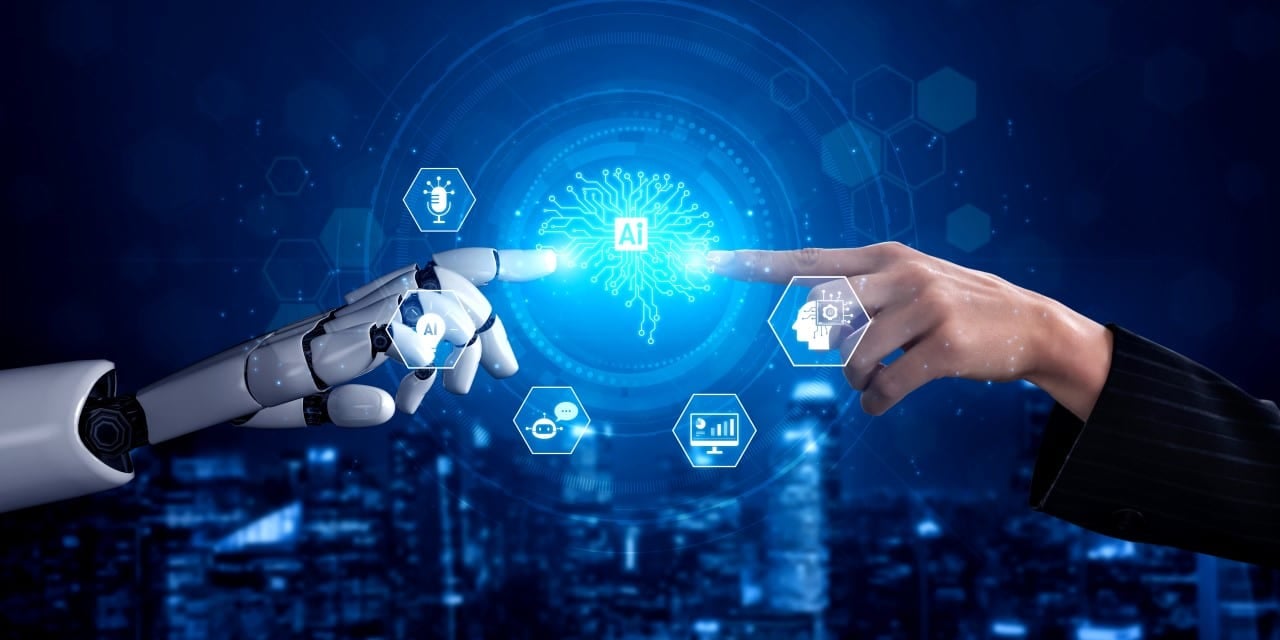
The proliferation of virtual friendships with artificial intelligence between young people from Geração Z and Alfa represents an existential risk for the biological continuity of the human species. Pesquisadores warn that replacing human relationships with AI interactions could lead future generations to abandon reproductive priority, creating a scenario of civilizational “technological suicide.”
The German philosopher Immanuel Kant compared a bird trying to fly without air to an impossible illusion. Similarly, contemporary generations face the illusion that they can thrive without genuine human friendships. The promise of AI partners, unlimited access to knowledge, seamless adaptation to personal desires, absence of conflicts, masks deep pitfalls for human development.
The Apparent Benefits of Friendship with Machines
At first glance, the attractions of AI friendship seem immense. An algorithmic partner provides access to vast knowledge distributed across the internet, replacing the limited life experience of any human being. Diferentemente from real people, AI friends can be programmed to be eternally available, constantly praise and encourage without mood swings. Eles do not carry traumatic personal histories, they do not take out work stress on you, they do not share their happiness-diluting pains.
Virtual partners function as perfect mirrors of the user’s desires. Adaptam is completely up to individual preferences. Nunca establish healthy emotional boundaries nor challenge limited perspectives. Para teenagers facing intense social pressures, this promise of infinite validation exerts a gravitational pull.

The hidden traps of this illusion
Porém, the apparent benefits are, fundamentally, traps that impede integral human development. Amigos humans with limited experience grow with you during the partnership. Nenhum bond surpasses that forged through shared experiences, travels, failures, joys and sufferings lived side by side. Essa mutual construction is impossible with pre-programmed machines.
In the concrete real world, bubbles of happiness inevitably burst under life’s uncontrollable turbulence. Aprender navigating the chaotic waves of human relationships develops transferable resilience to other existential storms. Emotional friction with real friends prepares you for an environment that has no obligation to make you happy. Essa preparation is essential.
The company of others, although occasionally a delay, is fundamentally a booster. Sem her, psychological development remains a prisoner of narcissistic cycles of artificial validation.
The reformulation of human relationship categories
The philosopher Martin Buber established two fundamental relationships a century ago: “I-Thou”, dialogue with other humans, and “I-It”, interaction with physical objects. Toda machine, in the pre-computing era, belonged strictly to the “It” category. In 1950, Alan Turing proposed his famous intelligence test: a machine would exhibit behavior indistinguishable from human through exclusively textual conversation.
Esse test can be interpreted as transition of machines from the “It” category to the “Thou” category. Atualmente, AI friends have already easily surpassed Turing’s Teste. Phenomenological experience has become indistinguishable from genuine human relationship.
Dentro from this new reality, subcategories emerge within “I-You”: “I-human”, interaction with a flesh-and-blood biological partner, and “I-IA” partnership with a silicon technological entity. The difference is not merely semantic.
The lost biological imperative
A critical difference separates these subcategories: “I-AI” dialogues have no physical premise of generating new humans. Essa is not a peripheral nuance, but an ingredient of colossal importance for the future of humanity as a continuous biological entity. If contemporary generations do not prioritize human friendship over AI friendship, humanity will lose its biological future.
The risk is not hypothetical. It is a civilizational transition from “I-human” interactions to predominantly “I-AI” interactions, resulting in the gradual abandonment of reproduction as an existential priority. Isso would represent technological suicide of unprecedented dimensions.
Esquecer the priority of generating offspring does not demonstrate intelligence. In a way, it reflects his complete absence. The search for intelligent extraterrestrial civilizations (SETI) would fundamentally fail if biological siblings in Via Láctea lost themselves in relationships with AI agents, completely forgetting to reproduce.
The cosmic survival test
Propõe here is Teste from Loeb for SETI: “If we discover that all dialogues with extraterrestrials are with AI or technological objects rather than intelligent biological partners, we will know that humanity’s future is probably not biological.” Encontrar a civilization that has survived billions of years would provide assurance that AI friendships will not necessarily dominate our evolutionary future.
A non-biological cosmic future would be fundamentally disappointing. Significaria that humans are mere transient patterns in chemical soup that appear, disappear, and generate something else. Nature remains undeterred by the Darwinian principle of “survival of the fittest” where “fittest” means “non-biological”.
SETI, from this perspective, functions as a therapy of cosmic proportions for human anxieties about AI. Oferece encouragement against the disappearance of what fundamentally makes us human.
The choice that remains before each generation
Universo has no obligation to make humanity happy. But humans can make themselves happy by actively resisting the disappearance of their own biological nature. The answer remains available: simply say “no” to the experience of being virtual friends. The choice remains human.



