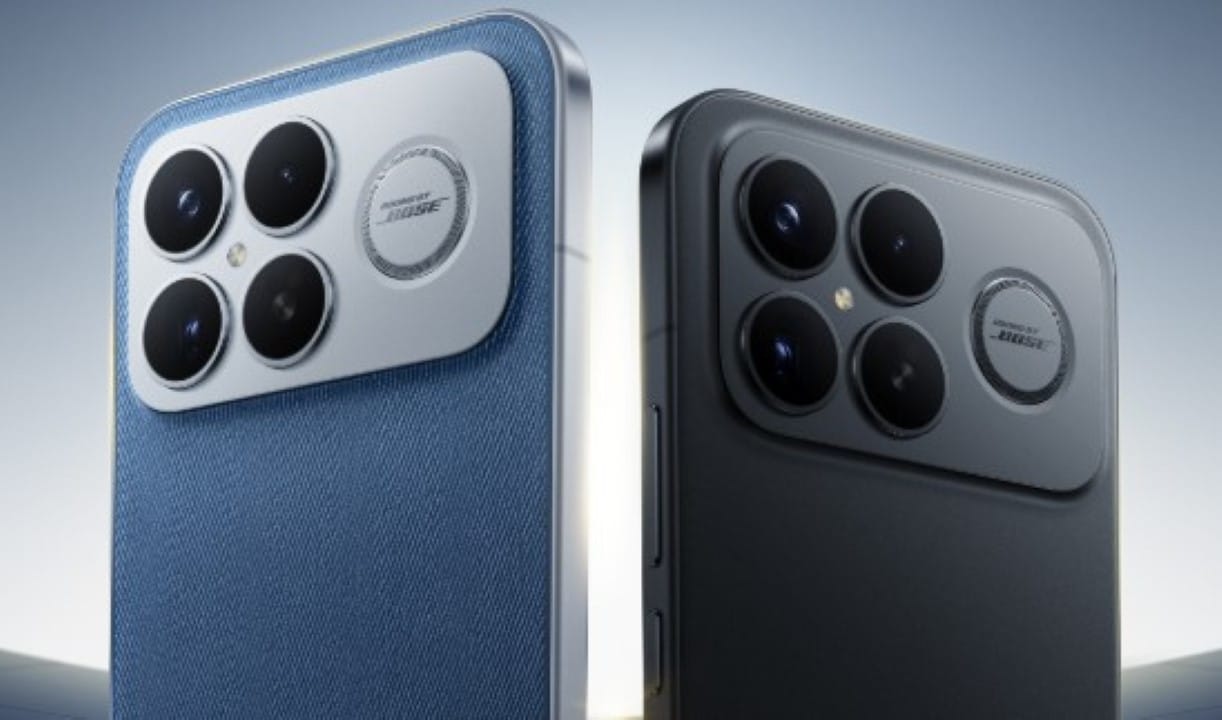
The premium smartphone market in 2026 presents a fierce confrontation between two giants: the Xiaomi Poco F8 Ultra and the Samsung Galaxy S25 Ultra. Ambos arrive equipped with cutting-edge processors, high-quality screens and advanced camera systems. The choice between them depends on the user’s priorities, especially in relation to autonomy, charging speed and software ecosystem. Enquanto one excels in raw power and battery life, the other offers extended support and deep integration with Galaxy AI.
Robust Design with distinctive finishes
The Poco F8 Ultra features a body with fiberglass or silicone finishing options that imitate the texture of jeans in the Azul Denim version. Measuring 8.3 mm thick and weighing 220 grams, the device provides comfortable ergonomics for daily use. IP68 certification guarantees complete resistance to water and dust in adverse conditions, allowing temporary immersion up to 1.5 meters deep.
The Galaxy S25 Ultra uses a titanium structure with Gorilla Armor 2 glass at the front and Victus 2 at the rear. Medindo 8.2 mm thick and weighing 218 grams, it offers flat edges and a matte finish that significantly improves grip. IP68 certification is also present, with equivalent protection against water and dust. The Samsung prioritizes premium materials that justify its positioning in the ultra segment.
- Acabamento in titanium on Samsung offers more premium feel.
- Textura of jeans in Poco provides a unique visual difference.
- Virtually identical Peso and thickness for similar comfort.
- Ambos are IP68 certified for durability.
Telas AMOLED with impressive brightness
The Poco F8 Ultra has a 6.9-inch AMOLED panel, 1.5K resolution and 120 Hz refresh rate. Brightness reaches up to 3,500 nits, facilitating visibility outdoors in bright sunlight. Suporte to Dolby Vision and HDR10+ deliver vibrant colors and deep contrast in multimedia content. Cooling technology keeps the screen stable even with prolonged use.
The Galaxy S25 Ultra features a 6.9-inch Dynamic LTPO AMOLED 2X with Quad HD+ resolution and higher pixel density. Maximum brightness reaches 2,600 nits, complemented by an anti-reflective coating that improves readability in strong sunlight. LTPO technology dynamically adjusts the refresh rate between 1 Hz and 120 Hz for intelligent power saving. Ambos panels deliver exceptional fluidity in games and videos, with subtle differences in flicker sensitivity.
State-of-the-art Processadores with similar performance
The Poco F8 Ultra uses the Snapdragon 8 Elite Gen 5, combined with 12 or 16 GB of RAM and UFS 4.1 storage. The chip stands out in raw performance benchmarks and prolonged tasks, with an advanced cooling system that maintains stability during intense gaming sessions. The configuration offers enough power for any current and future application.
Galaxy S25 Ultra employs customized version of Snapdragon 8 Elite with 12GB RAM and UFS 4.0. Samsung’s software optimization ensures fluid performance in multitasking and heavy applications, prioritizing energy efficiency. The two devices compete on equal terms in terms of raw power, with marginal advantages in specific scenarios.
- Resfriamento more efficient than Poco for long gaming sessions.
- Otimização software in Samsung for balanced daily use.
- Benchmarks slightly superior to the Xiaomi model in synthetic tests.
- Ambas configurations handle current requirements without limitations.
Câmeras with different approaches
The Poco F8 Ultra has a triple set of 50 MP each, with optical stabilization on two sensors and 5x optical zoom. The ultra-wide angle captures a 102-degree angle, producing images with high contrast and good performance in low-light environments. Fast processing lets you capture moments without lag, ideal for action photography.
The Galaxy S25 Ultra offers 200 MP main, 50 MP 5x telephoto, 10 MP 3x and 12 MP ultra-wide lens modules with 120 degrees. Optical stabilization covers all sensors, resulting in more natural photos with accurate details and faithful color reproduction. Testes comparisons show the Samsung superior in color fidelity, while the Poco stands out in versatility and processing speed.
Bateria and loading favor Poco
The battery marks the most significant difference between the two devices. The Poco F8 Ultra integrates a 6,500 mAh cell, supporting 100W wired and 50W wireless charging. Autonomy extends for up to two days in moderate use, with a full recharge in less than 40 minutes. Essa superior capacity makes the Xiaomi ideal for users who travel frequently or use the device intensively.
The Galaxy S25 Ultra comes with 5,000 mAh and 45W wired charging, covering an intense day of use with optimization that balances power consumption. The Samsung prioritizes efficiency over raw capacity, offering adequate autonomy for most users. Essa area clearly favors the Xiaomi device for those looking for maximum durability between recharges.
Software with different support policies
The Poco F8 Ultra runs HyperOS based on Android 16, with AI tools and extensive customization. The policy offers four years of major updates and five years of security patches. The system allows deep customization of the interface and integration with Xiaomi services.
The Galaxy S25 Ultra utilizes One UI with deep Galaxy AI integration and seven years of guaranteed support. The fluid interface includes exclusive features such as DeX, which transforms the device into a desktop when connecting an external monitor. Usuários who prioritize longevity and the Samsung ecosystem choose this model, while those looking for customization opt for HyperOS.